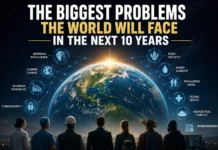


We are entering a period marked by profound unpredictability. Economic systems are shifting, political alliances are fragmenting, and technological change is accelerating faster than societies can adapt.
While humanity has faced major crises before, today’s risks are more interconnected, more global, and more challenging to contain. Events in one region can now spread worldwide, influencing the lives of billions.
Understanding these global risks is no longer optional—it is essential.
The Global Dangers Set to Change Humanity Forever
Climate Change and Environmental Collapse
Climate change remains the most far-reaching threat facing humanity. Rising temperatures are already intensifying extreme weather, disrupting food systems, and accelerating sea-level rise.
Environmental degradation compounds the problem. Deforestation, biodiversity loss, and water scarcity are weakening natural systems on which human survival depends.
Failure to coordinate global action on climate stress could unleash mass displacement, economic turmoil, and conflict.Growing Global Inequality
Income and wealth inequality continue to widen, both within and between countries. A small share of the global population controls a disproportionate amount of resources, while billions struggle to meet their basic needs.
This imbalance fuels social unrest, political polarization, and a decline in trust in institutions. Rural and low-income communities often experience severe impacts, frequently lacking access to healthcare, education, and economic opportunities.
Unchecked inequality threatens long-term global stability.Geopolitical Tensions and Power Rivalries
The global balance of power is shifting. Competition between major powers is intensifying, while international cooperation is weakening.
Regional conflicts, trade disputes, and military escalation increase the risk of broader confrontation. Global institutions responsible for managing disputes are under increasing strain.
A more fragmented world makes collective problem-solving increasingly difficult.Artificial Intelligence and Technological Disruption
Artificial intelligence is transforming economies, warfare, and governance at unprecedented speed. While AI offers enormous benefits, it also introduces serious risks.
Automation threatens millions of jobs, widening inequality if reskilling efforts fail. Advanced AI systems raise concerns about misinformation, surveillance, and loss of human control.
Technology could outstrip ethical and regulatory frameworks unless the world establishes clear global standards.Global Health Threats and Pandemics
The COVID-19 pandemic revealed serious weaknesses in global health systems. Future outbreaks could spread more quickly and cause greater disruption.
As cities expand, climates change, and global travel intensifies, new diseases can surge and leap across borders at unprecedented speed.
Weak health infrastructure in poorer regions makes global containment harder, placing everyone at risk.Food Insecurity and Resource Scarcity
Global food systems face mounting pressure from climate change, population growth, and geopolitical instability.
Droughts, soil degradation, and supply chain disruptions compromise food availability and affordability. Water scarcity is emerging as a critical issue, particularly in vulnerable regions.
Competition over essential resources could become a major driver of future conflict.Mass Migration and Displacement
Millions are being forced to flee their homes due to conflict, climate stress, and economic collapse, with migration flows expanding in size, speed, and complexity.
Many countries struggle to handle these movements in a way that is both humane and effective. Poorly handled migration can strain social cohesion and fuel political extremism.
Global displacement is no longer a temporary issue—it is a defining challenge of the future.Democratic Decline and Institutional Erosion
Democratic systems are under pressure worldwide. Political polarization, disinformation, and declining trust in institutions weaken governance.
In some regions, authoritarianism is gaining ground as citizens lose faith in democratic solutions. This trend endangers human rights, press freedom, and the capacity of nations to collaborate effectively.
Strong institutions remain essential for managing every other global risk.
Major Global Risks and Their Impacts
| Global Risk | Primary Impact | Long-Term Consequence |
|---|---|---|
| Climate Change | Extreme weather and displacement | Global instability |
| Income Inequality | Social unrest | Weakened institutions |
| Geopolitical Conflict | Regional wars | Global insecurity |
| AI Disruption | Job displacement | Economic inequality |
| Pandemics | Health system strain | Economic shocks |
Why These Risks Are Interconnected
These challenges do not exist in isolation. Climate stress worsens migration. Inequality fuels political instability. Technological disruption reshapes labor markets and governance.
As risks overlap, their combined impact becomes more severe. This interconnectedness makes prevention more difficult, but it also makes coordinated action more crucial than ever.
What Can Be Done?
Addressing global risks requires:
- Strong international cooperation
- Investment in resilient systems
- Inclusive economic growth
- Ethical technology governance
- Long-term political leadership
No single country can tackle these challenges alone.
Frequently Asked Questions (FAQs)
What is the leading global risk facing humanity today?
Experts consider climate change the most significant risk, given its worldwide effects and lasting consequences.
Why is global inequality such a serious issue?
It undermines social stability, limits economic growth, and weakens trust in institutions.
How does AI pose a global risk?
AI has the potential to disrupt workforces, spread misinformation, and outpace regulation—unless we act decisively.
Are future pandemics likely?
Yes. Globalization and environmental change increase the likelihood of new outbreaks.
How does climate change affect global security?
It contributes to resource scarcity, displacement, and conflict.
Can global cooperation still work?
Yes, but it requires renewed commitment and stronger international institutions.
Which regions are most vulnerable to these risks?
Developing countries and low-income communities face the leading exposure and the least capacity to adapt.
- The 10 Biggest Risks to the Global Economy
- The World’s Most Resilient Countries
- Why Mega Cities Will Determine the Future of Humanity