

The global economy is more connected than ever. A crisis in one region now ripples across the entire world almost instantly.
Today’s risks—from inflation to conflict to technological disruption—move quickly and interlock across systems. Understanding them is essential for investors, businesses, governments, and everyday citizens.
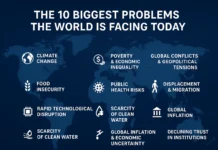
The 10 Biggest Global Economic Risks
| # | Risk | Threat | Global Impact |
|---|---|---|---|
| 1 | Inflation & Interest Rates | Rising costs and borrowing pressure | Slows consumer spending and growth |
| 2 | Global Debt Crisis | Excessive government and corporate debt | Financial system instability |
| 3 | Geopolitical Conflicts | Wars and regional instability | Disrupts trade and energy markets |
| 4 | Supply Chain Disruptions | Logistics and production breakdowns | Higher prices and shortages |
| 5 | Climate Change | Extreme weather and resource strain | Food, energy, and insurance crises |
| 6 | Energy Market Volatility | Oil and gas price instability | Inflation and national insecurity |
| 7 | AI & Automation Disruption | Rapid job displacement | Workforce instability |
| 8 | Banking & Financial Crises | Bank failures and credit freezes | Economic contraction |
| 9 | Demographic Imbalance | Aging populations and low birth rates | Labor shortages and tax pressure |
| 10 | Loss of Global Trust | Political polarization and policy instability | Reduced investment and growth |
Inflation and High Interest Rates
Rising prices reduce consumer purchasing power. Central banks raise interest rates to curb borrowing and investment.
If prolonged, inflation can choke business growth and trigger recessions.The Global Debt Crisis
Many nations now carry record-high debt levels. Corporations and households are also heavily leveraged.
If growth slows, debt servicing becomes dangerous, and defaults can cascade across financial systems.Geopolitical Conflicts
Wars and political instability disrupt trade routes, energy supplies, and food production worldwide.
Even regional conflicts can trigger global inflation and market volatility within days.Supply Chain Disruptions
Modern economies rely on fragile international logistics networks.
Pandemics, wars, cyberattacks, and port shutdowns can rapidly create shortages and push prices higher.Climate Change and Environmental Disasters
Floods, droughts, wildfires, and heat waves damage crops, infrastructure, and entire national economies.
Insurance systems and food supply chains are especially vulnerable.Energy Market Volatility
Geopolitics and energy transitions trigger rapid changes in oil, gas, and electricity prices.
Energy instability fuels inflation and poses a risk to national economic security.Artificial Intelligence and Job Disruption
Automation is accelerating across finance, transfer, manufacturing, media, and customer service.
Without reskilling at scale, job displacement could widen inequality and suppress consumer spending.Banking and Financial System Failures
Bank collapses erode confidence and freeze credit markets.
When lending stops, businesses fail, unemployment rises, and economies contract rapidly.Demographic Collapse in Major Economies
Many developed nations now confront aging populations and declining birth rates.
Shrinking workforces reduce productivity while increasing healthcare and pension costs.Loss of Global Trust and Policy Stability
Political polarization, sudden policy reversals, and trade wars weaken investor confidence.
Uncertainty discourages long-term investment and slows innovation.
Why These Risks Matter Now
These risks no longer operate independently. Inflation impacts debt. War impacts energy. Climate disasters impact food security.
Frequently Asked Questions (FAQs)
What is the significant risk to the global economy right now?
Inflation, combined with high interest rates, remains the most immediate global threat.
Could another global recession happen soon?
Yes. Rising debt, weak growth, and geopolitical tensions increase the economic crisis.
How does war affect the global economy?
It raises energy costs, disrupts food supplies, and destabilizes financial markets.
Is climate change really an economic risk?
Yes. It damages infrastructure, agriculture, insurance systems, and national budgets.
Will AI cause mass unemployment?
AI will displace some jobs but also create new roles. The transition remains the major challenge.
Why is global debt so dangerous?
High debt limits government flexibility and increases the risk of systemic collapse.
How can individuals protect themselves economically?
Diversifying skills, building savings, reducing debt, and understanding global trends are key protections.
Final Takeaway
The global economy is entering its most uncertain era in decades. Inflation, debt, climate change, war, and technological disruption are reshaping how nations grow and compete.
Those who understand these risks early will be better prepared to protect their finances, careers, and businesses in an unpredictable future.