
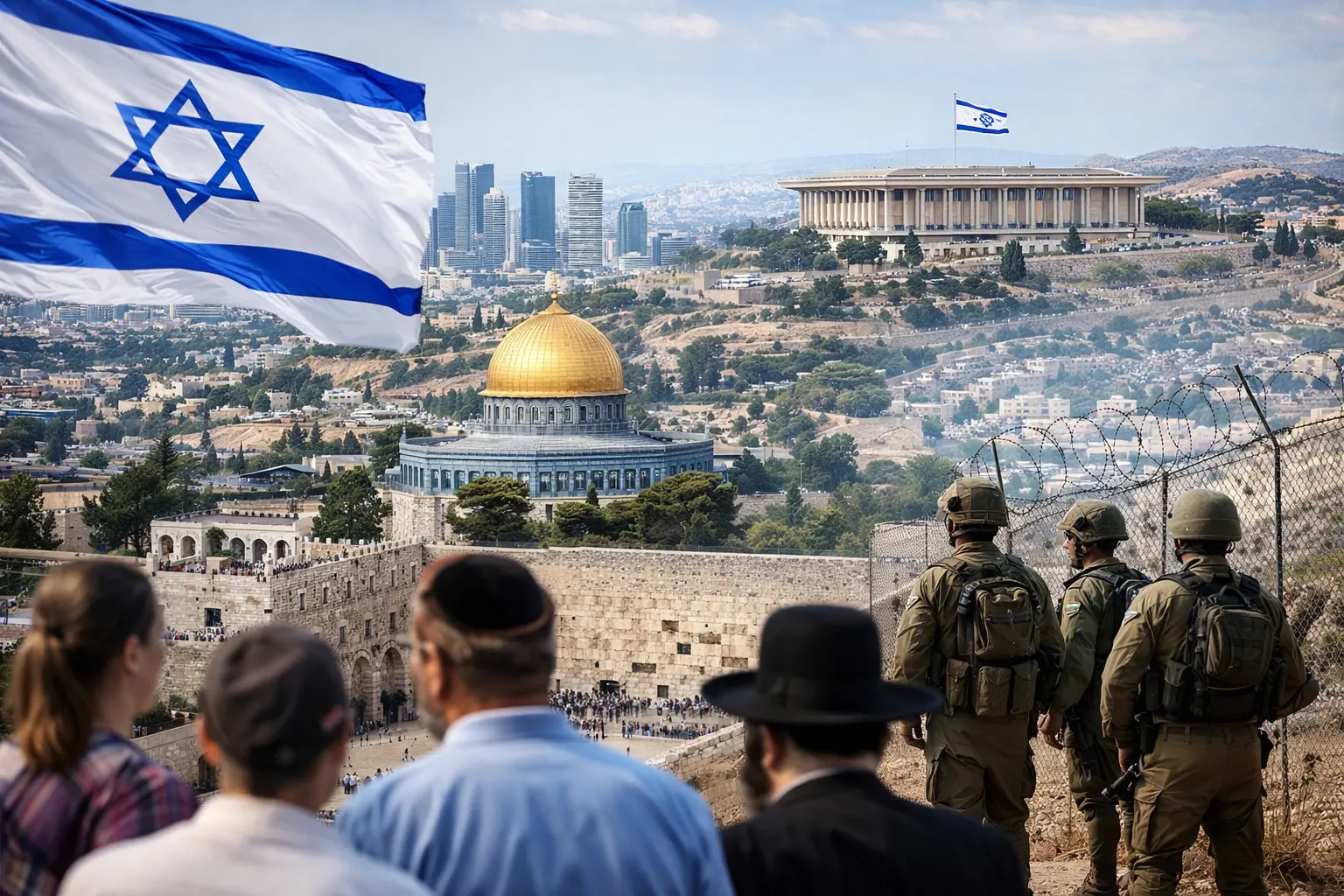
Narratives about Israel tend to emphasize either conflict or innovation.
But beneath the headlines lie deeper, structural challenges that shape the country’s long-term trajectory.
These issues are not temporary.
They are systemic, interconnected, and increasingly complex to ignore.
What follows is a neutral, analytical examination of the ten leading problems facing Israel today, grounded in long-term trends rather than short-term events.
Here Are The 10 Biggest Problems in Israel
Persistent Security and Regional Instability
Israel operates in a uniquely volatile security environment.
Ongoing tensions with neighboring actors impose constant strategic, financial, and human costs.
High defense spending remains necessary, but it also diverts resources from civilian priorities such as housing, infrastructure, and social services.
Reference: World Bank country-level economic indicatorsPolitical Fragmentation and Governance Gridlock
Israel’s highly fragmented political system has produced frequent elections and unstable coalitions.
This instability complicates long-term policymaking.
Structural reforms, budget planning, and institutional modernization often stall because governments are short-lived and alliances frequently shift.High Cost of Living and Housing Affordability
The cost of living in Israel is among the highest in the developed world.
Housing prices, in particular, have outpaced wage growth for years.
Limited land availability, regulatory constraints, and population growth continue to put pressure on affordability, especially for younger households.Social and Religious Polarization
Deep divisions exist between secular, religious, and ultra-Orthodox communities.
These differences extend beyond culture into education, military service, and labor participation.
Without effective integration strategies, social cohesion remains fragile.
Reference: Demographic and social cohesion indicatorsDemographic Pressures and Population Growth
Israel’s population is growing rapidly compared to other advanced economies.
This growth strains housing, transportation, healthcare, and education systems.
Managing expansion while maintaining service quality is an ongoing structural challenge.Economic Inequality
Even with a robust high-tech sector, income inequality remains a central challenge.
Massive gaps persist between different population groups and regions.
Economic growth has not been evenly distributed, creating long-term risks for social stability.Labor Market Participation Gaps
Certain groups—particularly ultra-Orthodox men and some minority populations—have lower participation rates in the workforce.
It limits overall productivity and tax revenue.
Closing these gaps is essential for sustaining long-term economic growth.Infrastructure Strain
Rapid population growth has outstripped infrastructure development.
Transportation congestion, housing shortages, and utility pressures are increasingly visible.
Without sustained investment and careful planning, these bottlenecks will only worsen.International Relations and Diplomatic Pressure
Israel faces ongoing diplomatic scrutiny on the global stage.
Shifting geopolitical alliances and public opinion trends complicate foreign relations.
These pressures influence trade, security cooperation, and international standing.Long-Term Social Cohesion
Many of Israel’s challenges converge on one core issue: cohesion.
Finding the right balance between security, diversity, economic growth, and democratic institutions remains an ongoing challenge.
If leaders fail to adopt inclusive, forward-looking policies, structural tensions will intensify over time.
Israel’s Difficulties
| Structural Area | Core Issue | Long-Term Impact |
|---|---|---|
| Security | Ongoing regional threats | High defense costs, policy trade-offs |
| Governance | Political fragmentation | Policy instability |
| Economy | High living costs | Household financial pressure |
| Society | Cultural polarization | Weakened cohesion |
| Demographics | Rapid population growth | Infrastructure strain |
| Inequality | Uneven income distribution | Social tension |
| Labor market | Participation gaps | Slower growth |
| Infrastructure | Capacity shortfalls | Reduced productivity |
| Diplomacy | External pressure | Strategic constraints |
| Cohesion | Fragmented society | Long-term instability |
Why These Problems Are Structural, Not Temporary
- These challenges are interconnected.
- Security affects budgets.
- Demographics affect housing.
- Politics affects reform capacity.
Addressing one in isolation rarely works.
Durable progress depends on coordinated, long-term policy design rather than short-term fixes.
Frequently Asked Questions (FAQs)
Is Israel’s economy strong despite these problems?
Yes. Israel has a resilient and innovative economy, with technology as a key driver.
However, structural gaps limit how evenly that success is shared.
Are these challenges unique to Israel?
Some aspects are unique, particularly Israel’s security dynamics.
Others—such as inequality, housing, and political fragmentation—are shared with many developed countries.
Can these problems be solved?
They can be managed and mitigated.
However, achieving this requires political stability, institutional reform, and long-term planning.
Why is social cohesion such a central issue?
Because it influences nearly every other challenge—from labor participation to governance and public trust.
Are these issues worsening?
Some are intensifying due to population growth and regional dynamics.
Others depend heavily on policy choices made over the next decade.
- The 10 Biggest Problems in Egypt Today
- The 10 Biggest Problems in Argentina Today
- The Hidden Costs of Rapid Population Growth
- The 10 Biggest Problems in Estonia