
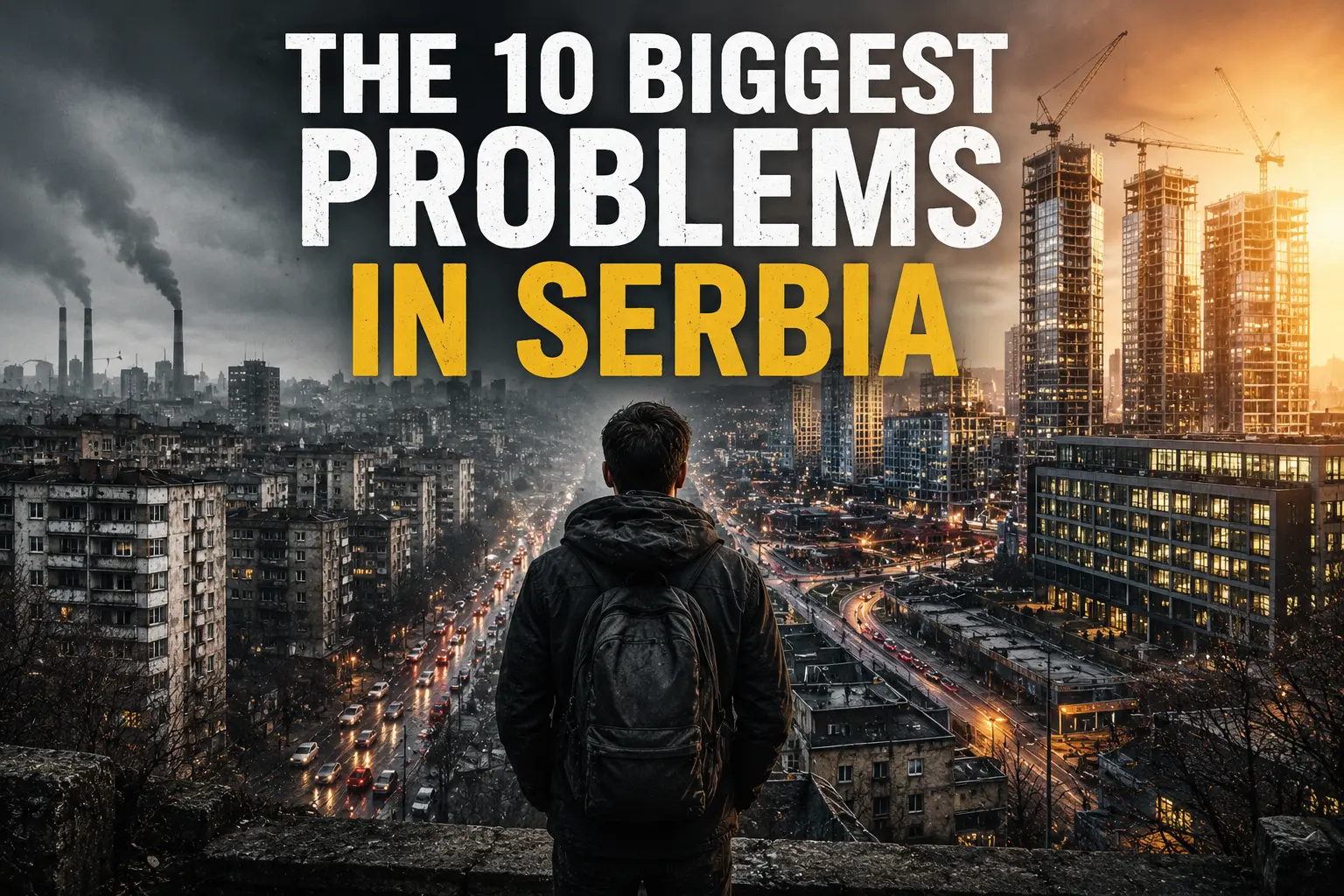
Serbia is a country defined by a strong cultural identity, historical resilience, and a strategically important position in Europe. Yet beneath the energy of Belgrade, its expanding modern skyline, and ongoing development, many citizens continue to face persistent structural challenges that shape daily life and long-term prospects.
For younger generations, the pressure is especially visible. Rising living costs, low wages, political frustration, pollution, and limited opportunities have pushed many people to look abroad for a better future.
At the same time, Serbia finds itself caught between two realities: one defined by economic hardship and institutional pressure, and another driven by efforts to modernize, attract investment, and push the country forward.
The result is a country with enormous potential — but also a growing list of structural problems that continue to affect everyday life.
These challenges are not unique to one country. Similar patterns appear across the region, especially in The 10 Biggest Problems in Bosnia and Herzegovina, where political fragmentation, economic pressure, and youth emigration remain central issues.
This article breaks down the 10 biggest problems in Serbia, from brain drain and corruption to healthcare pressure, demographic decline, and economic uncertainty.
Similar long-term pressures are evident in The 10 Biggest Problems in Portugal, although the economic and demographic dynamics differ significantly across Southern and Eastern Europe.
Here are the 10 Biggest Problems in Serbia
1. Low Wages and Limited Purchasing Power
One of Serbia’s biggest ongoing problems is relatively low income levels compared to much of Europe.
Although wages have improved over time, many workers still struggle with:
- Rising living costs
- Housing affordability
- Limited savings potential
It creates pressure, particularly among younger professionals seeking better opportunities abroad.
- Long-Term Impact
- Slower wealth growth
- Reduced consumer spending
- Higher emigration pressure
Wage and affordability pressures are also evident in broader European comparisons, such as Portugal vs Spain: Which Country Offers the Better Life?, which examines income levels and overall living standards in a wider context.
2. Brain Drain and Youth Emigration
Serbia has experienced significant outward migration for years.
Many young and skilled workers leave for:
- Germany
- Austria
- Switzerland
- Other EU countries
The main reasons include:
- Higher salaries abroad
- Better career opportunities
- More stable institutions
- Why It Matters
When educated workers leave, the country loses long-term economic and innovation potential.
3. Corruption and Institutional Trust Issues
Public trust in institutions remains a challenge in Serbia.
Common concerns include:
- Political favoritism
- Bureaucratic inefficiency
- Lack of transparency
- Weak institutional accountability
Organizations, including Transparency International, regularly publish analyses on corruption levels and public trust.
Structural Effect
Lower institutional trust can discourage investment and slow reforms.
4. Aging Population and Demographic Decline
Like many Eastern European countries, Serbia faces population decline.
It is driven by:
- Low birth rates
- Emigration
- Aging population trends
Demographic trends and population pressures in Europe are widely studied using data compiled by Eurostat.
- Long-Term Risks
- Smaller workforce
- Pension system strain
- Reduced economic growth potential
5. Political Polarization
Political division remains a recurring issue in Serbia.
Debates often center around:
- Governance
- Media freedom
- Foreign policy direction
- EU integration
It contributes to long-term uncertainty and social tension.
6. Air Pollution and Environmental Problems
Serbia faces air pollution as one of its most visible environmental challenges, especially during the winter months.
Major contributors include:
- Coal-based energy
- Industrial emissions
- Traffic pollution
Environmental Impact
- Health concerns
- Reduced urban quality of life
- Pressure on healthcare systems
7. Healthcare System Pressure
Serbia’s healthcare system provides broad access but faces structural limitations.
Challenges include:
- Staff shortages
- Aging infrastructure
- Regional inequality in healthcare access
Many healthcare systems across Eastern Europe face similar pressures due to demographic and economic constraints.
8. Economic Inequality and Regional Gaps
Economic development in Serbia is uneven.
Belgrade and larger urban centers often experience:
- More investment
- Higher wages
- Better infrastructure
Meanwhile, smaller towns and rural regions may struggle with:
- Fewer opportunities
- Population decline
- Lower economic activity
- Result
Regional imbalance contributes to migration toward cities or abroad.
9. Slow Infrastructure Modernization
Infrastructure development has improved in recent years, but gaps remain.
Key concerns include:
- Transportation networks
- Rail modernization
- Public infrastructure quality
- Long-Term Challenge
Modern infrastructure is essential for investment, trade, and economic competitiveness.
10. Uncertainty Around EU Integration
Serbia has pursued closer integration with the European Union for years, but progress remains complex.
Challenges involve:
- Political reforms
- Governance standards
- Geopolitical balancing
Why This Matters
EU integration affects:
- Investment confidence
- Economic policy
- Long-term strategic direction
Serbia’s Biggest Challenges
| Problem | Category | Main Impact |
|---|---|---|
| Low Wages | Economic | Reduced purchasing power |
| Brain Drain | Demographic | Talent loss |
| Corruption | Governance | Lower institutional trust |
| Population Decline | Demographic | Workforce pressure |
| Political Polarization | Social | National instability |
| Air Pollution | Environmental | Public health concerns |
| Healthcare Pressure | Social | Service limitations |
| Regional Inequality | Economic | Opportunity imbalance |
| Infrastructure Gaps | Development | Slower modernization |
| EU Integration Uncertainty | Political | Strategic uncertainty |
Frequently Asked Questions (FAQs)
What is the biggest problem in Serbia today?
Low wages, emigration, and weak institutional trust remain among Serbia’s most persistent long-term challenges.
Why are young people leaving Serbia?
Many leave for better salaries, stronger career opportunities, and more stable economic conditions abroad.
Is Serbia’s economy growing?
Serbia has experienced economic growth in some sectors, but structural challenges remain significant.
Does Serbia face population decline?
Yes. Low birth rates and outward migration contribute to demographic decline.
Is pollution a serious issue in Serbia?
Yes. Air pollution is a major environmental concern, especially in urban and industrial areas.