

For generations, students grew up hearing a simple formula:
Study hard.
Get good grades.
Build a successful future.
The message seemed straightforward. Schools rewarded academic performance, universities selected top students, and employers often looked first at qualifications and transcripts.
For decades, that system worked reasonably well.
But today, something feels different.
More graduates are entering the workforce with excellent academic records, only to discover that success in school and success in life are not always the same thing.
At the same time, many individuals with average academic performance are still building successful careers, launching businesses, and developing strong personal brands.
It raises an uncomfortable question:
Has the importance of good grades changed in the modern job market?
A straightforward yes-or-no answer fails to capture the underlying complexity of the issue.
Good grades still matter.
But they are no longer the powerful predictor of future success that many people assume.
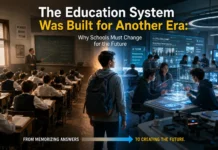
The Education Model Is Changing
The modern economy is evolving faster than traditional education systems.
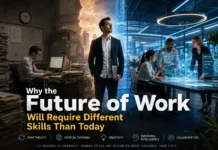
Technology, automation, artificial intelligence, and global competition are transforming how people work and how companies hire.
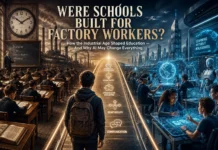
Academic success is now part of a wider discussion about the evolving role of education. This issue is explored further in Is School Still Relevant in 2030?, which examines how AI, technology, and changing workforce demands are reshaping schools worldwide.
Today, employers increasingly recognize that high grades alone do not necessarily demonstrate:
- adaptability
- creativity
- leadership
- communication
- resilience
- problem-solving
These skills often determine success in modern workplaces.
Why Employers Are Looking Beyond Grades
Many companies still value education.
However, hiring practices are gradually changing.
Employers increasingly seek candidates who can:
- solve unfamiliar problems
- learn new technologies quickly
- communicate effectively
- work in teams
- adapt to rapid change
A perfect exam score does not automatically prove these abilities.
Research from organizations such as the World Economic Forum and LinkedIn Economic Graph has repeatedly highlighted the growing importance of human skills, adaptability, and lifelong learning in the modern workforce.
As industries evolve faster than ever, employers are placing greater emphasis on practical capability rather than academic achievement alone.
The Skills School Often Fails to Measure
One of the biggest criticisms of modern education is that many important life skills are difficult to test.
Examinations are structured to evaluate how well students understand defined academic content.
Real life often demands much more.
Success frequently depends on:
- emotional intelligence
- networking
- initiative
- decision-making
- leadership
- negotiation
- adaptability
Critics argue that some education systems continue to prioritize test performance over practical readiness. This issue is discussed more extensively in The Hidden Damage of an Incompetent Education System, particularly the mismatch between formal education outcomes and real-life expectations.
A student may demonstrate strong performance in mathematics, science, or literature, yet still face difficulties in areas such as workplace communication, financial decision-making, or professional relationship management.
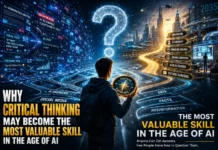
The Growing Importance of Adaptability in the AI Era
The rise of artificial intelligence is accelerating change across industries, from operations to decision-making frameworks.
Jobs are evolving.
New roles are emerging.
Some traditional career paths are disappearing entirely.
It means adaptability may become one of the most valuable skills a person can develop.
The growing influence of artificial intelligence is also transforming how students learn and develop skills. Will AI replace teachers in the future, or redefine their role? explores how AI-powered education may redefine traditional learning models.
In an environment where technology changes constantly, success increasingly depends on a person’s ability to:
- learn continuously
- embrace change
- acquire new skills
- solve new problems
These qualities often matter more than academic rankings.
Why Some Average Students Thrive After School
One reason the relationship between grades and success has weakened is that the real world rewards a wider range of abilities.
Many successful individuals excel because they possess strengths that schools rarely measure.
Examples include:
- entrepreneurial thinking
- creativity
- persistence
- social intelligence
- risk-taking
- self-motivation
These characteristics can have a significant impact on career growth and personal achievement.
In many cases, individuals who struggled academically develop exceptional skills in areas that become highly valuable later in life.
School Success vs Real-World Success
Below is a simplified comparison.
| Traditional School Strength | Increasingly Important Real-World Skill |
|---|---|
| Memorization | Problem-solving |
| Test performance | Adaptability |
| Individual work | Collaboration |
| Subject knowledge | Communication |
| Following instructions | Initiative |
| Fixed learning paths | Continuous learning |
Good Grades Still Matter
It is important not to overcorrect.
Good grades are not useless.
Academic achievement can still provide important benefits:
- university admission opportunities
- scholarship access
- foundational knowledge
- discipline and work ethic
- professional qualifications
Strong academic achievement frequently creates opportunities that would not be inaccessible.
The problem is not that grades are worthless.
The problem is assuming grades alone guarantee future success.
For many graduates, the challenge begins after they leave the classroom. Despite years of education, many discover they feel unprepared to manage finances, build careers, make major life decisions, and navigate adult responsibilities.
→ Why Many Students Feel Unprepared for Real Life After Graduation explores the growing gap between academic achievement and real-world readiness.
What Success Looks Like Today
The definition of success has expanded dramatically.
In today’s economy, successful individuals often combine:
- technical knowledge
- communication skills
- adaptability
- emotional intelligence
- continuous learning
- digital literacy
Organizations such as the OECD Education Directorate and Harvard Business Review have increasingly emphasized the importance of lifelong learning and human-centered skills in a rapidly changing economy.
As automation and AI continue reshaping industries, the ability to learn and adapt may become more valuable than any single qualification.
The Bigger Lesson Students Need to Hear
Perhaps the most important lesson is this:
Good grades are a tool.
They are not a guarantee.
Academic success can open doors.
But what happens after those doors open often depends on entirely different qualities.
The students most likely to thrive in the future may not be those with the highest scores alone.
They may be the individuals who combine knowledge with:
- curiosity
- resilience
- adaptability
- communication
- creativity
- lifelong learning
In a world changing faster than ever before, those skills may become the true foundation of long-term success.
Frequently Asked Questions (FAQs)
Yes. Good grades can provide access to educational opportunities, scholarships, and certain career paths. However, they are no longer the sole predictor of future success.
Success often depends on qualities such as adaptability, communication, resilience, creativity, and leadership—skills that do not always translate into exam or academic evaluation.
Many employers increasingly value problem-solving, adaptability, teamwork, communication, emotional intelligence, and the ability to learn continuously.
Technology has increased the importance of adaptability and lifelong learning. As industries evolve rapidly, practical skills often complement academic qualifications.
In many industries, employers are placing greater emphasis on experience, skills, portfolios, and practical abilities alongside formal education.
Yes. Many successful entrepreneurs, business leaders, and professionals achieved success through a combination of skills, persistence, creativity, and continuous learning.
School success often focuses on academic performance, while real-world success depends on a broader combination of skills, relationships, adaptability, and practical experience.
No single factor defines success, but adaptability is becoming one of the most important skills in a rapidly shifting world.