
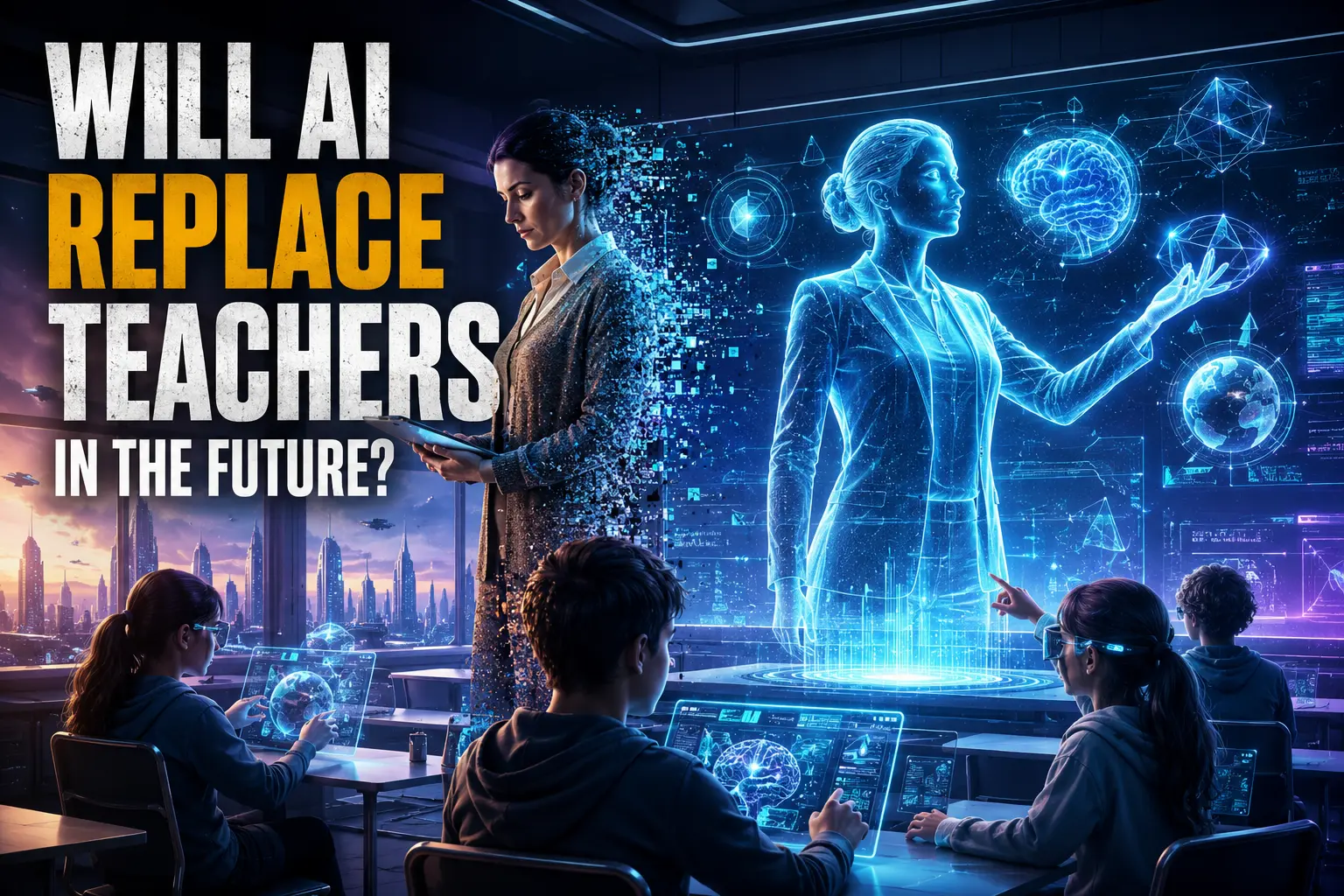
Artificial intelligence is transforming education faster than many people expected.
AI systems can already:
- explain lessons instantly
- answer questions 24/7
- personalize learning
- generate practice materials
- assist with tutoring
- adapt to student performance in real time
As these tools become more advanced, a growing global debate is emerging:
Could AI eventually replace teachers?
What once felt like science fiction is rapidly becoming a global conversation in education and technology.
And the answer may reshape the future of education itself.
Why AI Education Is Growing So Quickly
One reason AI learning tools are expanding rapidly is simple:
They solve problems that traditional classrooms often struggle with.
Students frequently complain about:
- overcrowded classrooms
- inconsistent teaching quality
- limited individual attention
- rigid learning speeds
- outdated teaching methods
AI systems attempt to solve many of those frustrations through:
- personalized pacing
- instant feedback
- unlimited explanations
- adaptive learning systems
For some students, AI already feels:
- faster
- easier
- more accessible
- less intimidating
than traditional learning environments.
Organizations such as UNESCO Education Research and the OECD Education Reports continue to study how artificial intelligence and digital learning may reshape education globally.
The Rise of AI Tutors
AI tutoring platforms are becoming increasingly sophisticated.
Modern systems can:
- Identify learning weaknesses
- generate custom quizzes
- explain difficult concepts repeatedly
- provide instant assistance
- track learning progress
Unlike human instructors, AI tools:
- never become tired
- remain available continuously
- can scale globally
- deliver consistent responses
This accessibility is one reason digital education platforms continue expanding worldwide.
The growing role of AI-powered learning is also explored further in Is School Still Relevant in 2030?, which examines how technology may fundamentally reshape classrooms and education systems over the next decade.
Why Some People Believe AI Could Replace Weak Teachers
One of the most controversial aspects of this debate involves teacher performance.
Critics argue that AI may outperform:
- Ineffective Teacher
- Poorly prepared instruction
- Repetitive teaching methods
- Emotionally hostile environments
- Outdated classroom systems
- Toxic Teacher
AI systems can explain topics repeatedly without frustration or inconsistency.
For struggling students, that level of patience and accessibility can feel transformative.
This growing disconnect between modern technology and outdated education systems is also evident in The Hidden Damage of an Incompetent Education System, which shows how many schools struggle to adapt to the realities of modern learning.
What AI Still Cannot Fully Replace
AI still has significant limitations despite its rapid progress.
Teaching is not only about delivering information.
Human educators also provide:
- emotional support
- mentorship
- social guidance
- discipline
- motivation
- human connection
Children especially develop through:
- teamwork
- friendships
- communication
- conflict resolution
- real-world interaction
These dimensions of human experience continue to resist full replication by AI systems.
The Most Likely Future: AI + Human Teachers
The future of education may not become:
AI vs Teachers
Instead, it may evolve into:
AI + Teachers
In this hybrid model:
AI handles:
- repetitive instruction
- grading assistance
- personalized tutoring
- adaptive exercises
- instant feedback
Human teachers focus on:
- leadership
- emotional intelligence
- mentorship
- creativity
- classroom culture
- social development
This combination could create more personalized and efficient learning environments than traditional systems alone.
Schools That Refuse to Adapt Could Face Serious Problems
The biggest disruption may not come from AI itself.
It may be resistance to change.
As younger generations become increasingly comfortable with:
- digital learning
- online education
- AI assistance
- self-paced study
Traditional schools may face growing pressure to modernize.
Especially if students increasingly feel they learn:
- faster online
- cheaper online
- more flexibly online
than inside rigid classroom systems.
Why This Debate Is Becoming Global
The future of education now affects:
- governments
- technology companies
- universities
- employers
- parents
- students
Organizations such as the World Economic Forum have repeatedly discussed how automation, AI, and digital transformation may reshape future workforce requirements and educational systems.
At the same time, AI technology continues to advance rapidly.
It means the conversation about schools, teachers, and digital learning is just getting started.
How Classrooms May Change by 2030
By 2030, classrooms could look dramatically different from today.
Possible changes include:
- AI-assisted instruction
- personalized learning systems
- fewer memorization-heavy exams
- virtual tutoring
- adaptive lesson plans
- real-time performance analysis
- hybrid online/offline classrooms
Some education systems may adapt rapidly.
Others may struggle to keep pace with technological change.
Global education reform trends are also explored further in How Education Systems Worldwide Are Adapting to the Future of Work, which examines how schools are responding to AI, automation, and changing career demands.
AI Education Comparison Table
| Traditional Teaching | AI-Assisted Learning |
|---|---|
| Fixed classroom pace | Personalized learning speed |
| Limited availability | 24/7 accessibility |
| One-size-fits-all instruction | Adaptive explanations |
| Manual grading workload | Automated assistance |
| Classroom-dependent learning | Remote and hybrid access |
The Bigger Question Nobody Can Ignore
The future debate may not simply be:
But rather:
That question may define the future of learning for an entire generation.
Frequently Asked Questions (FAQs)
Most experts believe AI will assist teachers rather than fully replace them, especially in areas involving emotional support and human interaction.
AI tutors provide instant explanations, personalized learning, unlimited repetition, and 24/7 accessibility.
AI can deliver fast and adaptive instruction, but human teachers still provide mentorship, emotional intelligence, and social development.
Potential concerns include overdependence on technology, reduced human interaction, data privacy issues, and unequal access to digital tools.
Traditional classrooms will likely evolve rather than disappear entirely, with hybrid digital learning becoming more common.
Rapid technological change, AI advancement, and evolving workforce demands are forcing education systems to adapt more quickly.
Educators and employers increasingly recognize critical thinking, adaptability, creativity, communication, and digital literacy as essential future skills.
Online learning is growing rapidly, but many experts expect future education to combine both digital and in-person learning models.