

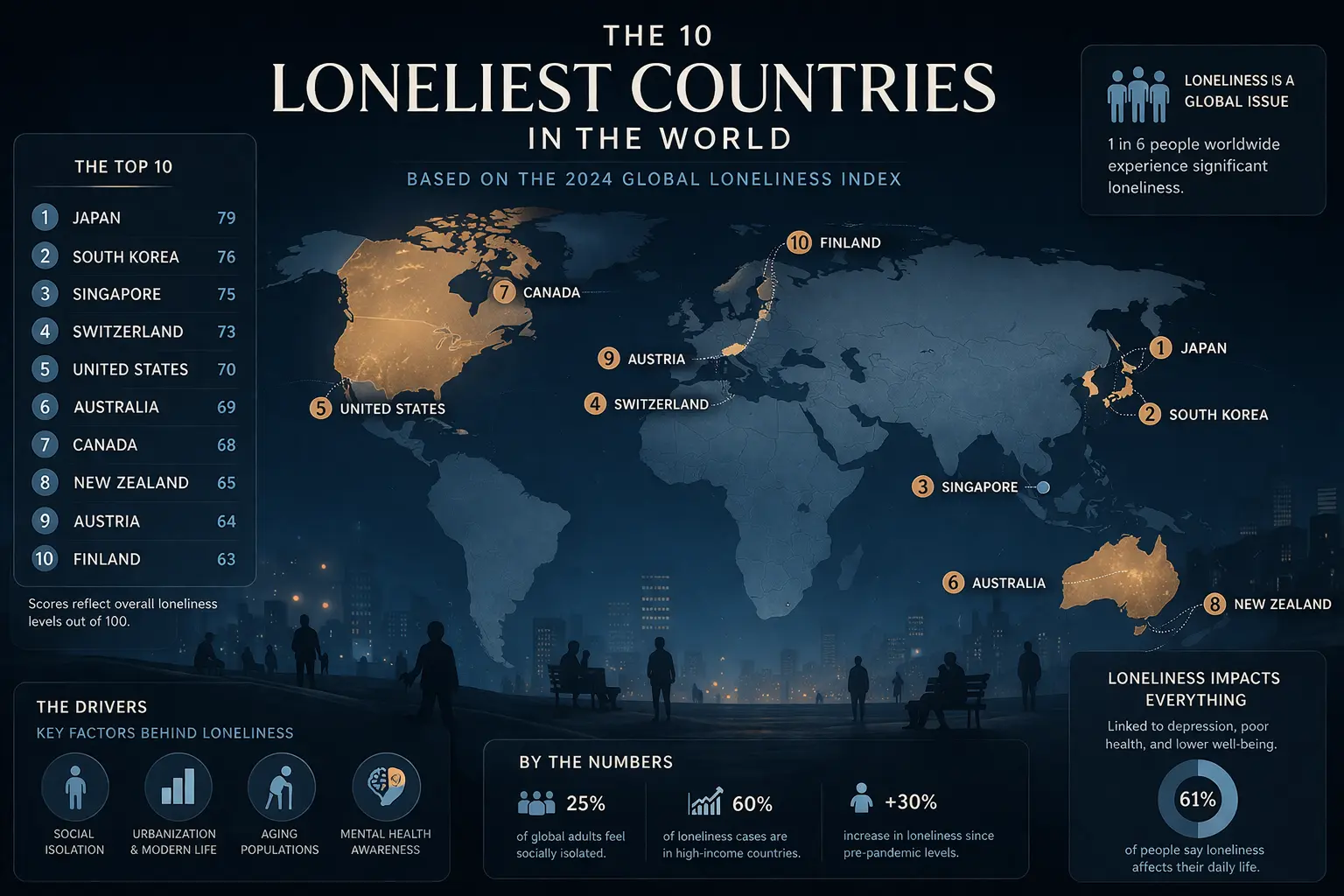
Loneliness goes beyond emotion—it has become a serious public health concern.
Social isolation, aging populations, urbanization, and cultural shifts have made loneliness a global challenge.
The World Health Organization (WHO) reports that chronic loneliness increases the risk of depression, heart disease, and can even shorten life expectancy.
This article examines the 10 loneliest countries, drawing on data from international surveys, UN statistics, and social research studies.
How Loneliness Is Measured
Measuring loneliness is tricky, but key indicators include:
- Social isolation: number of people living alone
- Self-reported loneliness: surveys like OECD Better Life Index
- Demographics: aging populations, birth rates, and household size
Note: Lower loneliness figures in certain countries may reflect silence rather than absence.
| Rank | Country | Key Factors | Loneliness Indicators | Sources |
|---|---|---|---|---|
| 1 | Japan | Aging population, social withdrawal (hikikomori), declining birth rate | High social isolation, moderate self-reported loneliness | UN, OECD, Japan Ministry of Health |
| 2 | South Korea | Urbanized society, high-pressure work culture, low birth rate | High survey-reported loneliness among youth and older adults | Korea National Statistical Office, OECD |
| 3 | United States | Individualistic culture, rising single-person households, urban isolation | High self-reported loneliness, social disconnectedness | Cigna Loneliness Index 2023, CDC |
| 4 | United Kingdom | Aging population, smaller households, urban lifestyles | High prevalence of loneliness among adults 45+ | Office for National Statistics (ONS), Age UK |
| 5 | Finland | Sparse population, long winters, social independence norms | Moderate-high social isolation, low social interaction frequency | Nordic Statistics, OECD |
| 6 | Germany | High urbanization, nuclear households, and an aging society | Growing single-person households, moderate self-reported loneliness | Federal Statistical Office, OECD |
| 7 | Italy | Aging population, low birth rates, and family structure shifts. | High older adults isolation | ISTAT, WHO |
| 8 | Canada | Urbanization, single-person households, remote living | Moderate social isolation, high urban loneliness | Statistics Canada, Canadian Mental Health Association |
| 9 | France | Urbanization, aging population, and smaller families | Moderate loneliness prevalence | INSEE, WHO |
| 10 | Australia | Remote living, single-person households, aging population | Moderate-high social isolation | Australian Bureau of Statistics, Beyond Blue |
Why Japan Often Stands Out
- High number of hikikomori (people withdrawing from society)
- Birth rates are falling while the population continues to age
- The government recognized loneliness as a public health issue (even appointed a Minister for Loneliness)
Japan often becomes the “poster child” for global loneliness, but it’s part of a broader global trend, not an isolated phenomenon.
Global Factors Behind Rising Loneliness
- Urbanization – Larger cities often mean smaller personal networks.
- Technology – Social media can increase perceived connection but reduce real-life interaction.
- Aging Populations – Older adults living alone are more isolated.
- Economic Pressures – Work stress and commuting reduce social time.
- Cultural Shifts – Individualism can reduce community engagement.
Loneliness vs Social Isolation
- Loneliness: Subjective emotional experience of being alone.
- Social Isolation: The objective experience of having a small social network.
A country can have high social isolation but not report high emotional loneliness, and vice versa.
Frequently Asked Questions (FAQs)
Which country is the loneliest in the world?
High social isolation and aging populations make Japan, South Korea, and the USA common examples in global discussions.
Why is loneliness a serious issue?
Chronic loneliness increases the risk of mental health problems, cardiovascular disease, and mortality.
Is loneliness more common in cities?
Yes, Urban living, smaller households, and longer commutes all contribute to a higher risk of social isolation.
Can social policies reduce loneliness?
Yes. Governments in Japan, the UK, and elsewhere have introduced initiatives to promote community engagement and support mental health.
- What Makes Australian Society Unique in the World Today
- Why Japan Is Often Called the Loneliest Country in the World