
Some buildings look so unusual that they seem to have come from a science-fiction film, a fantasy story, or an entirely different planet.
Their shapes challenge familiar ideas about houses, museums, places of worship, and public spaces.
Yet these structures are not simply architectural experiments designed to attract attention.
Many were created to solve practical problems, express cultural ideas, or change the way people experience a city.
From a home built around giant rocks to a museum that resembles a friendly alien, these ten buildings show how far architecture can move beyond conventional design.
How do people build lives in places with extreme climates, difficult terrain, or almost complete isolation?
These remarkable destinations are featured in 10 Places Around the World That Seem Almost Impossible to Live In.
1. Casa do Penedo, Portugal — A House Built Between Giant Rocks
Location: Fafe, Portugal
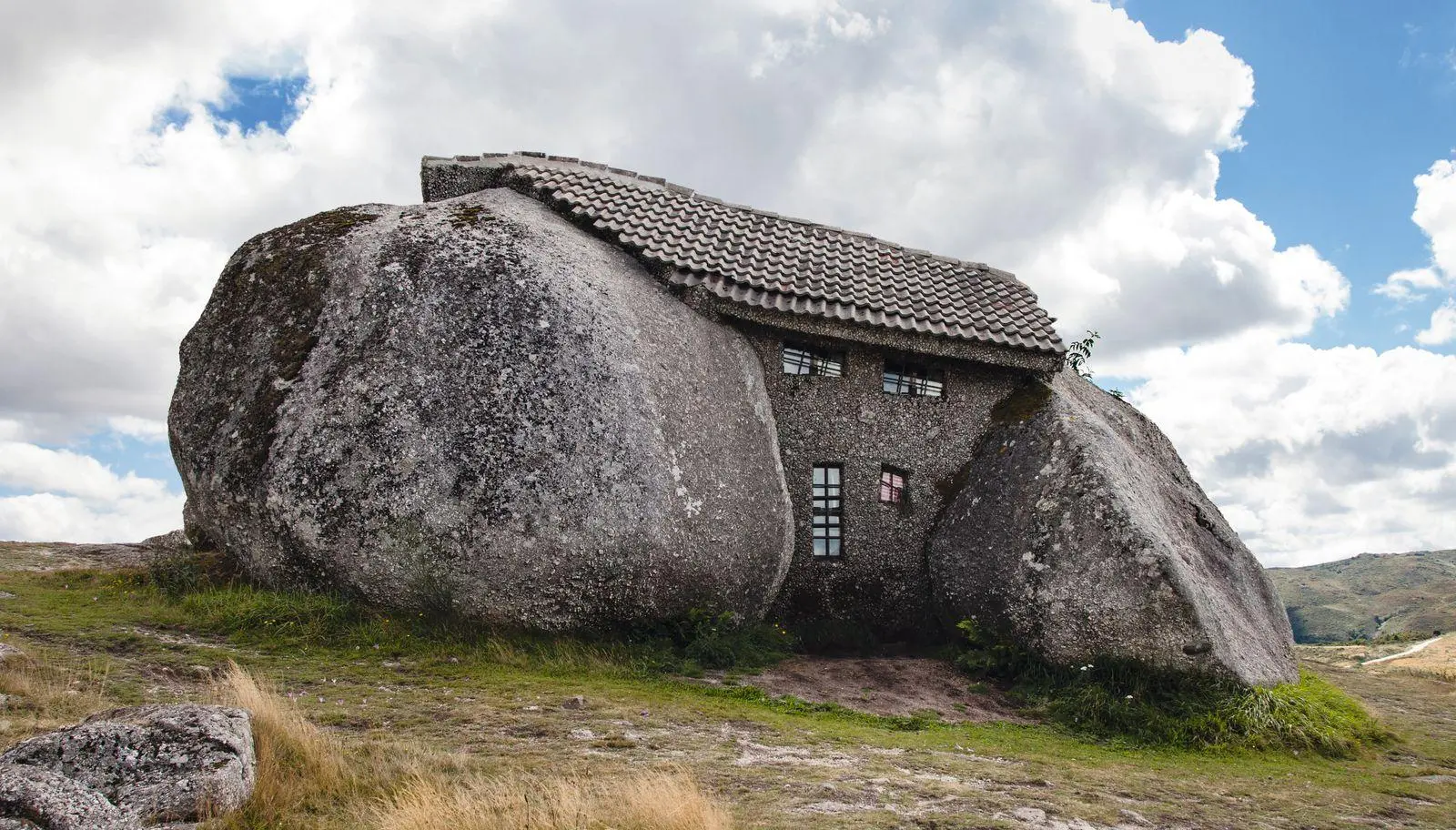
Built among giant granite boulders, Casa do Penedo in northern Portugal looks like a natural extension of the mountainside.
The house is nestled among massive granite boulders in Portugal’s Serra de Fafe. Rather than covering the landscape with a conventional structure, its design incorporates the natural stone formations into the house itself.
Casa do Penedo was inaugurated on October 13, 1974. It was intended as a family shelter and designed to fit naturally into its mountainous surroundings. Its distinctive design has since drawn interest from visitors, photographers, and architecture enthusiasts worldwide.
The result looks more like a prehistoric shelter or a home from a fantasy film than an ordinary residence. It also demonstrates how a building can work with its natural surroundings instead of completely transforming them.
Why it looks otherworldly: Its massive natural rocks, rugged stone surfaces, and unusual shape make it appear almost like part of the mountain itself.
Source: Casa do Penedo — Official History
2. Atomium, Belgium — A Giant Model of an Atomic Structure
Location: Brussels, Belgium
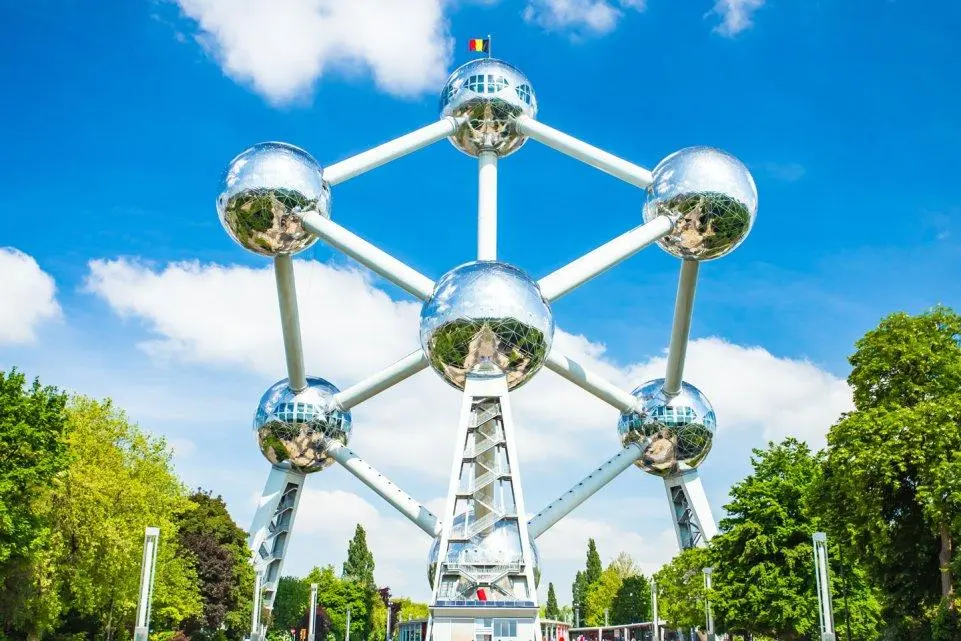
Few buildings look as unusual as the Atomium. Its enormous silver spheres connected by metal tubes resemble a giant scientific model suspended above Brussels.
The structure was created for the 1958 Brussels World’s Fair, also known as Expo 58. Engineer André Waterkeyn designed it to represent an iron crystal enlarged approximately 165 billion times.
The Atomium consists of nine connected spheres, each measuring 18 metres in diameter. Inside the structure, several spheres host exhibitions, while the highest sphere offers sweeping views of Brussels.
Its design reflected the optimism of the post-war period, when scientific progress and technological development were associated with hopes for a better future.
Interestingly, the Atomium was originally intended to be a temporary structure for the exhibition. Its popularity and symbolic importance eventually helped secure its place as one of Brussels’ most recognizable landmarks.
Why it looks otherworldly: Its enormous metallic spheres and connecting tubes resemble a futuristic machine or a structure from a science-fiction universe.
Source: Atomium — Official Website
3. Lotus Temple, India — A Giant Flower Made of Marble
Location: New Delhi, India
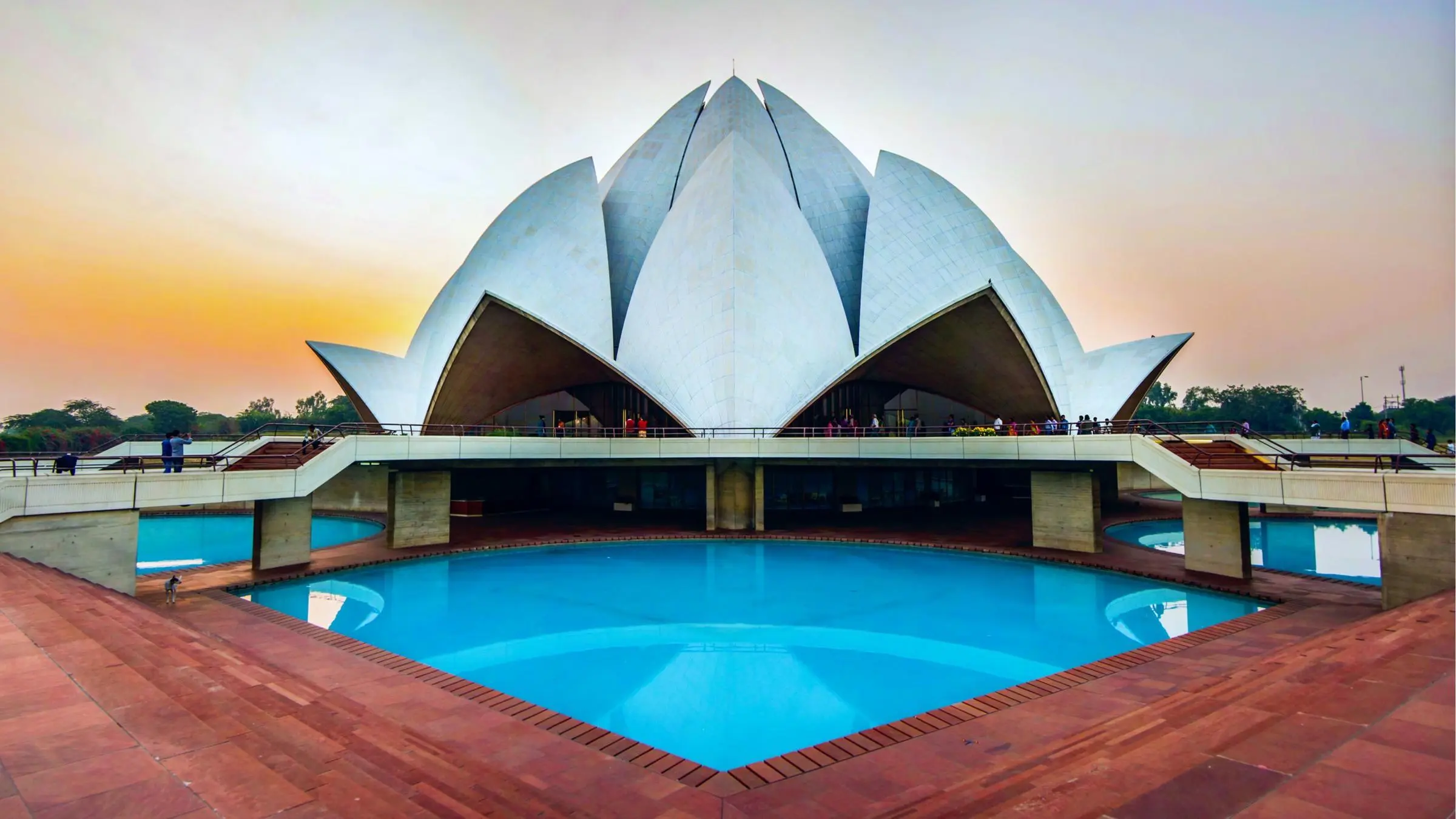
From a distance, the Lotus Temple looks like an enormous flower opening above a landscaped garden. Its white exterior and flowing curves give the building a distinctive architectural identity.
Completed in 1986, the structure serves as a Bahá’í House of Worship. Iranian-Canadian architect Fariborz Sahba designed it around the shape of a lotus, a flower with deep cultural and spiritual significance across several Asian traditions.
The structure features 27 marble-clad petals arranged in clusters to form nine distinct sides. These petals rise around a central prayer hall, giving the structure its distinctive flower-like appearance.
Its design is not only decorative. The temple follows the Bahá’í principle that houses of worship should welcome people of every religion and background. Beyond its distinctive architecture, the building offers a calm space for prayer and personal reflection.
The surrounding pools and gardens strengthen the impression that the building is a giant flower resting above the landscape.
Why it looks otherworldly: Its enormous white petal-like forms give the building the appearance of a futuristic flower, setting it apart from conventional religious architecture.
Source: Bahá’í House of Worship, New Delhi — Official Website
4. Habitat 67, Canada — A City Built From Stacked Concrete Boxes
Location: Montreal, Canada
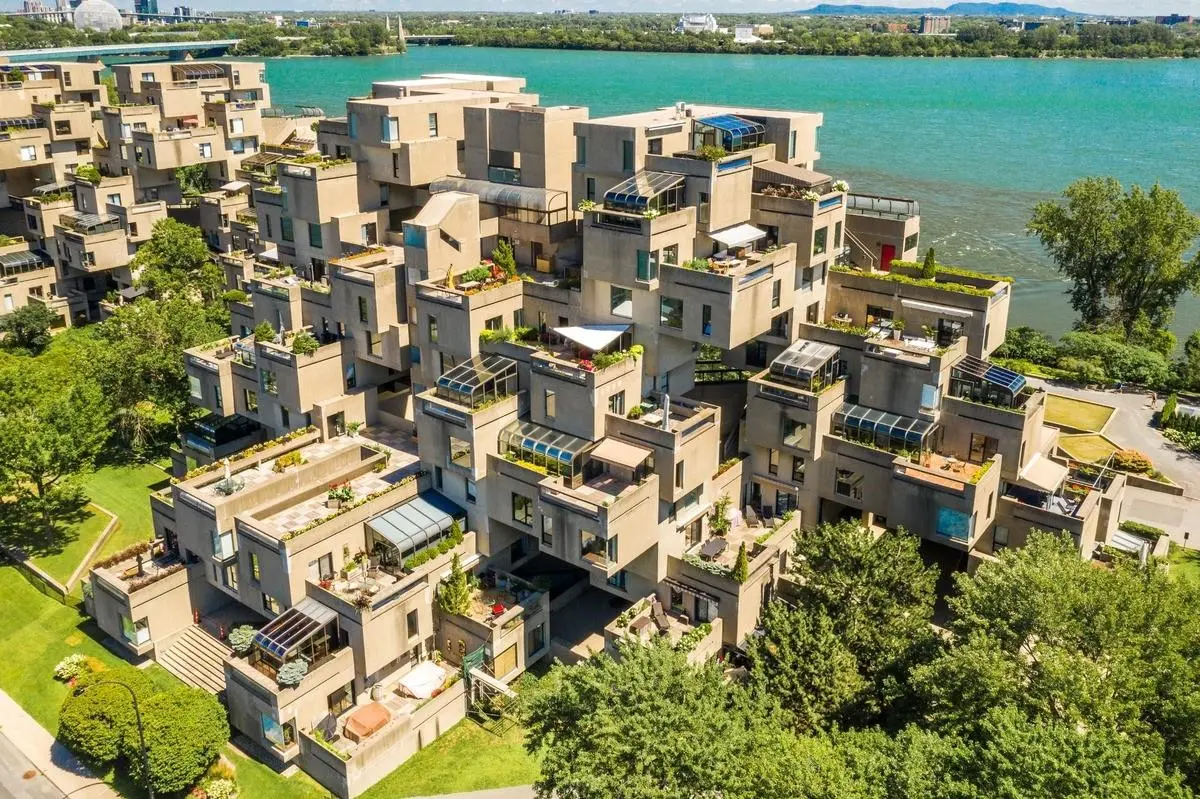
Habitat 67 looks less like a traditional apartment complex and more like a stack of giant concrete boxes.
Architect Moshe Safdie designed the complex for Expo 67, the 1967 World’s Fair held in Montreal. It explored a different approach to urban housing by combining the density of apartment living with features normally associated with individual houses.
The original design used 365 prefabricated concrete modules connected to create 158 residences. Their stepped arrangement provides many apartments with private rooftop garden terraces, outdoor space, and natural light.
The design challenged conventional approaches to high-density housing by offering an alternative to repetitive towers and cramped balconies. Safdie wanted residents to enjoy some of the advantages of suburban homes while living in a more compact urban environment.
Originally conceived as an experimental housing project, Habitat 67 later became an influential example of modular architecture.
Why it looks otherworldly: Its irregular arrangement of concrete modules resembles a futuristic settlement assembled from enormous building blocks.
Source: Safdie Architects — Habitat 67
5. Kunsthaus Graz, Austria — The Museum Known as the Friendly Alien
Location: Graz, Austria
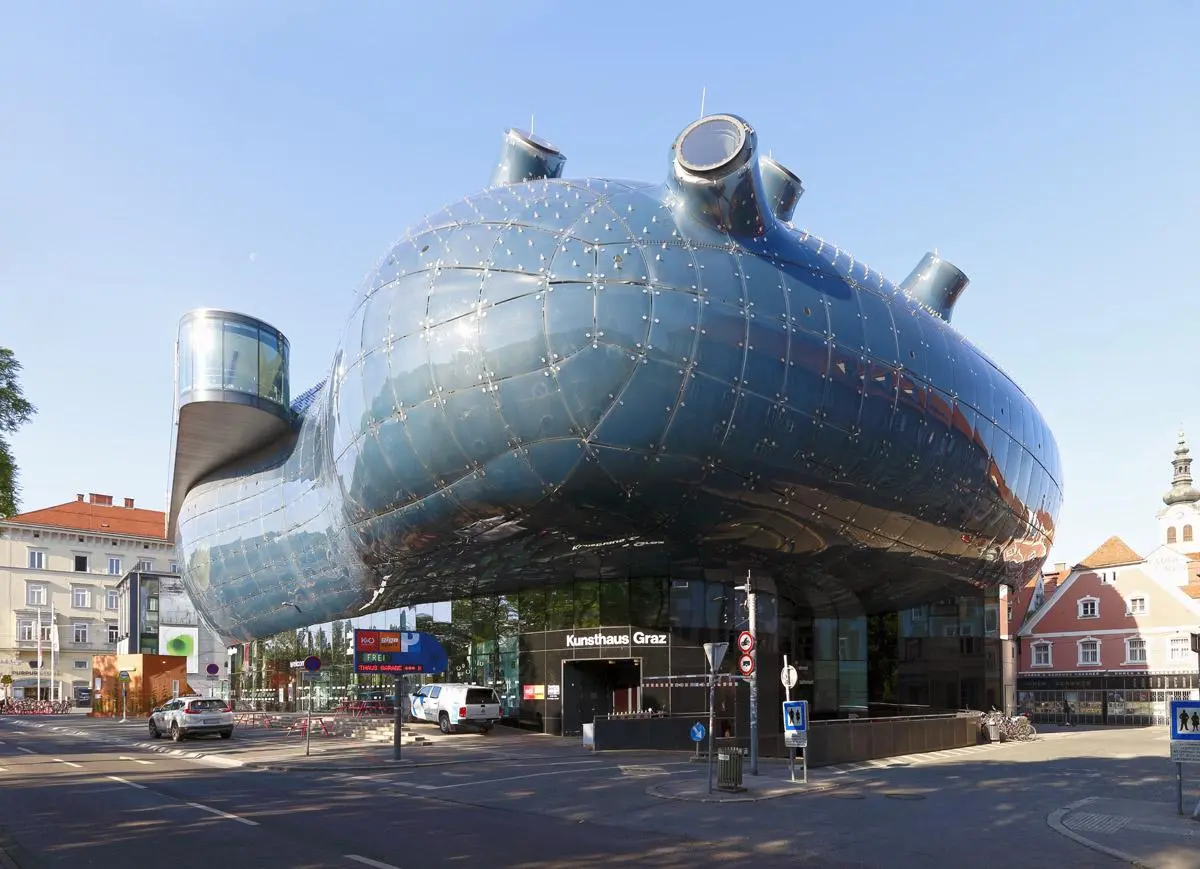
In a city filled with traditional European architecture, Kunsthaus Graz looks as though a spacecraft has landed in the middle of the historic streets.
Peter Cook and Colin Fournier designed the museum, which opened in 2003 as Graz celebrated its European Capital of Culture title.
Its unusual blue exterior has been compared to several different things, including a whale, a sea creature, and a giant animal. One nickname has become particularly popular: the Friendly Alien.
The building uses a biomorphic design, meaning its shape resembles forms found in nature rather than conventional geometric structures. The building also features the BIX media façade, an integrated lighting system that displays changing patterns and images across its exterior.
Kunsthaus Graz was intended to introduce a contemporary architectural landmark into a city known for its historic character. Rather than blending into the surrounding architecture, the building stands out through its distinctive form.
Why it looks otherworldly: Its rounded blue surface and unusual exterior features make it resemble a living creature or a spacecraft.
Source: Kunsthaus Graz — Official Website
6. Heydar Aliyev Center, Azerbaijan — A Building Without Ordinary Corners
Location: Baku, Azerbaijan
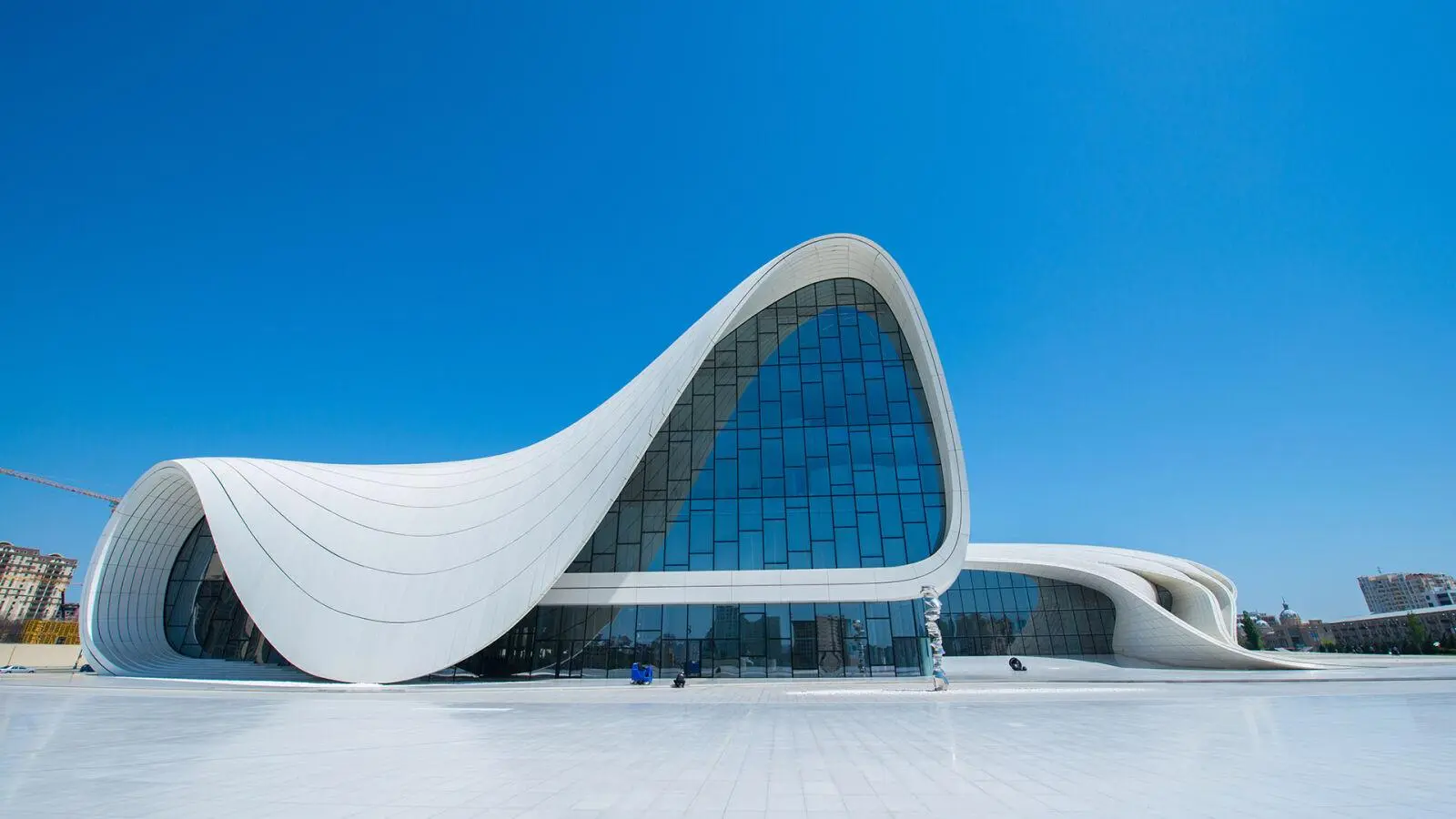
The Heydar Aliyev Center looks as though a giant white sheet has been lifted from the ground and shaped into a building.
Designed by Zaha Hadid Architects, the cultural complex was completed in 2012. It houses exhibition galleries, a museum, conference facilities, and spaces for cultural events.
Its defining feature is the seamless transition between the surrounding plaza and the building’s curved exterior surfaces. Rather than relying on the conventional combination of straight walls, sharp corners, and separate roof sections, the design creates a more fluid architectural form.
The project also presented significant engineering challenges. Its complex curves required advanced structural systems and detailed digital modeling to turn the original architectural vision into a functioning building.
Today, the center is one of Baku’s most recognizable contemporary landmarks.
Why it looks otherworldly: Its sweeping white surfaces make the building appear almost liquid, as if it is moving across the ground.
Source: Heydar Aliyev Center — Zaha Hadid Architects
7. Dancing House, Czechia — Two Buildings That Appear to Dance
Location: Prague, Czechia
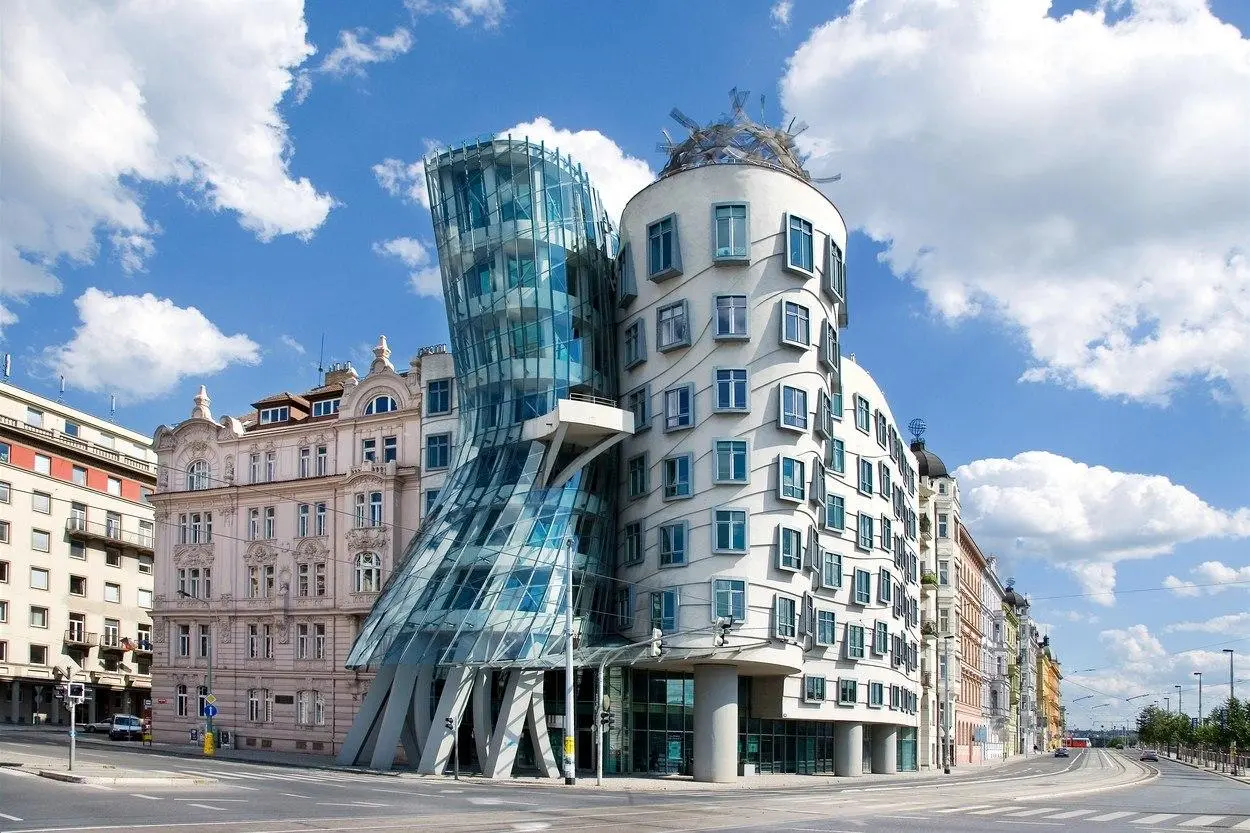
Prague is famous for its historic churches, medieval streets, and ornate buildings. Yet one of its most recognizable modern structures looks as though two towers are dancing together.
The Dancing House emerged from a collaboration between Vlado Milunić, a Croatian-Czech architect, and Frank Gehry, a Canadian-American architect. Completed in 1996, it introduced an unusual contemporary design to the city’s traditional architectural landscape.
The building has two distinct towers. One appears to lean and curve, while the other stands more upright. Together, they were designed to represent a dancing couple, popularly associated with Fred Astaire and Ginger Rogers.
The building was not universally accepted when it first appeared. Its unconventional shape contrasted sharply with the surrounding architecture. Over time, however, it became an important symbol of modern Prague.
Today, the structure houses a hotel, restaurant, gallery, and other public spaces.
Why it looks otherworldly: Its curved tower and leaning glass exterior create the impression of a building caught in the middle of a dance.
Source: Prague City Tourism — Dancing House
8. Cube Houses, Netherlands — A Forest Made of Tilted Homes
Location: Rotterdam, Netherlands
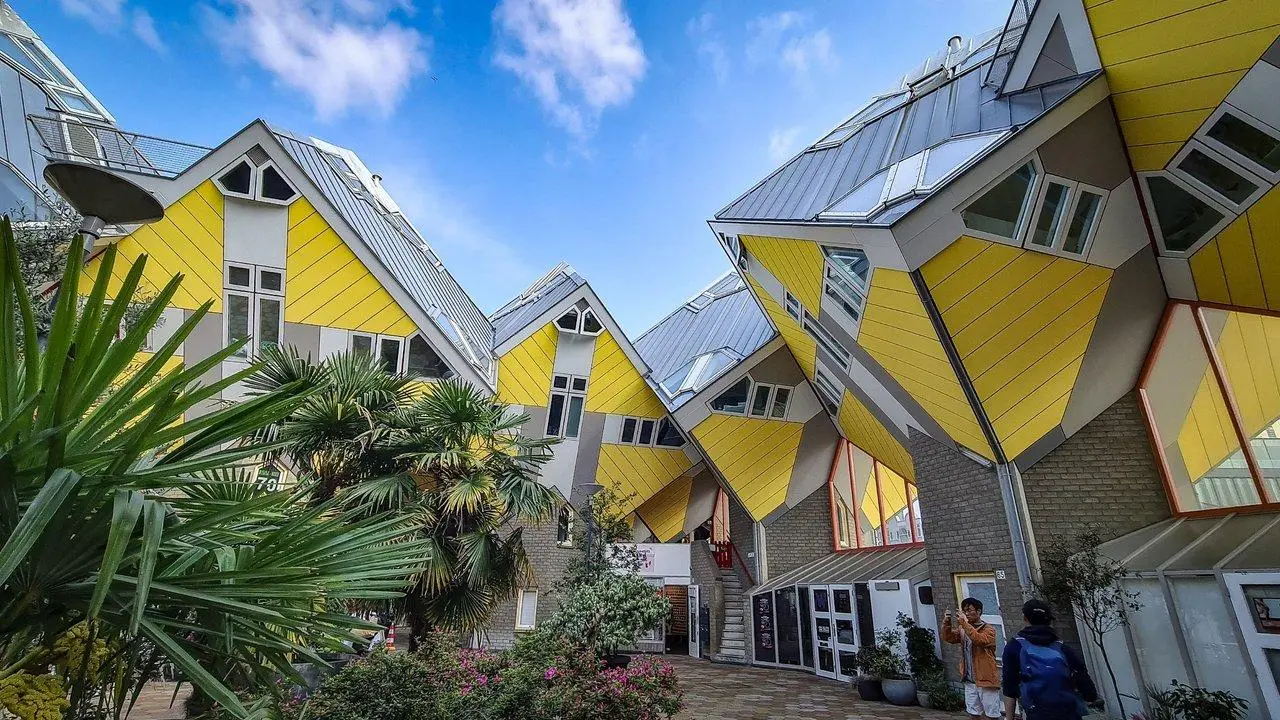
What happens when an architect decides that houses should look like trees?
In Rotterdam, Dutch architect Piet Blom turned that unusual idea into a real residential complex. Known as the Cube Houses, the development consists of yellow cube-shaped homes tilted at an angle and supported by concrete structures.
The project was developed between 1982 and 1984. Blom conceived each house as a tree, with its supporting structure resembling a trunk and the tilted cube serving as the crown. Arranged together, the houses form an architectural forest.
Their unusual shapes may look sculptural, but they are designed for everyday living. Each house contains multiple floors, with living areas, bedrooms, and other domestic spaces arranged inside the angled structure.
The design also aimed to create a lively urban environment by raising the homes above pedestrian areas and connecting different parts of the city.
Visitors can enter a specially furnished show house to see how people live inside the unusual geometry.
Why it looks otherworldly: The tilted yellow cubes appear to float above the ground, creating a geometric forest unlike an ordinary residential neighborhood.
Source: Kijk-Kubus — Official Visitor Information
9. Casa Batlló, Spain — A House That Looks Like a Living Creature
Location: Barcelona, Spain
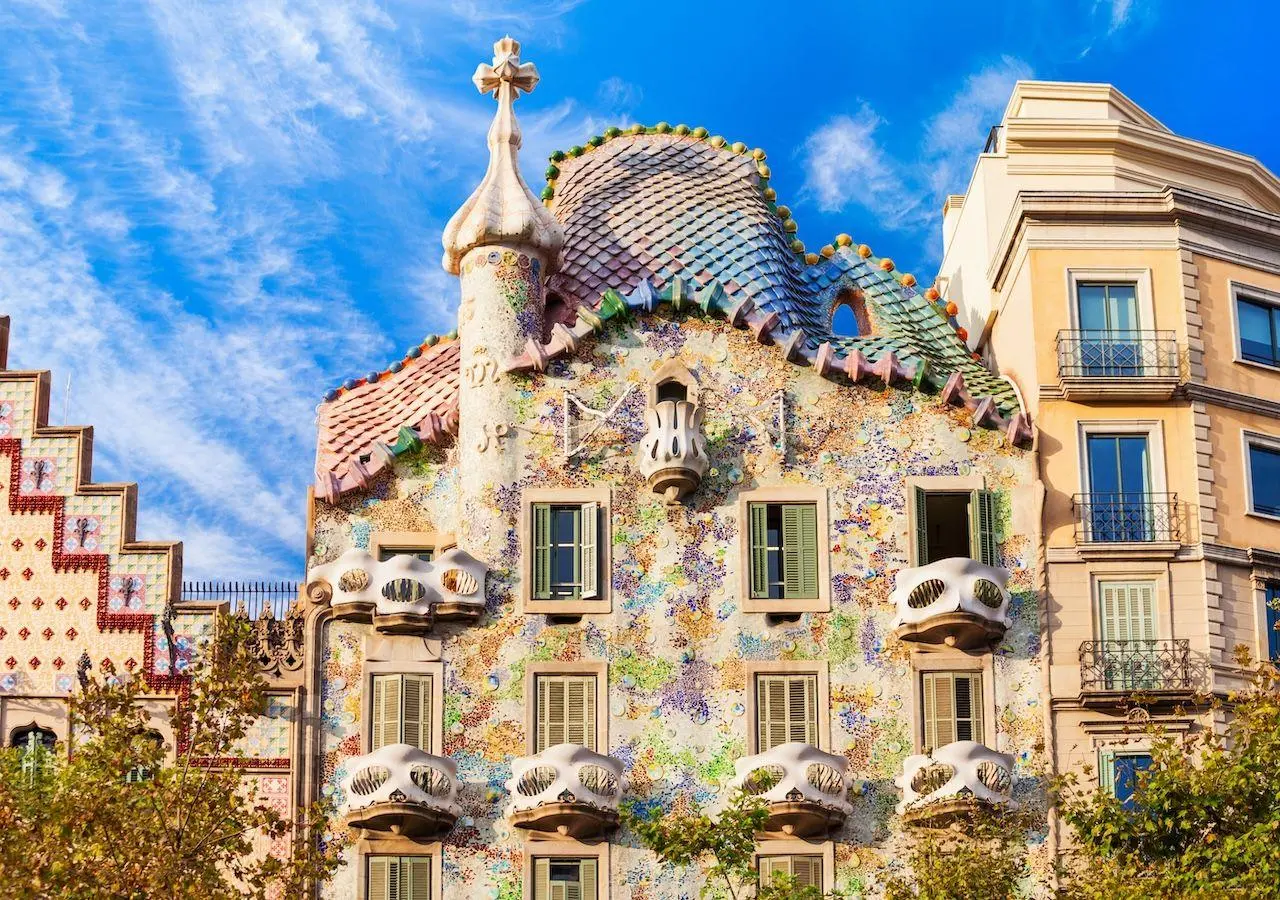
Some buildings look futuristic because they use glass and steel. Casa Batlló achieves a different effect through colors, curves, and details inspired by natural forms.
Located in Barcelona, the building was transformed by architect Antoni Gaudí between 1904 and 1906. Gaudí did not build the original structure. He renovated an existing residential building after its owner, industrialist Josep Batlló, decided to give the property a completely new appearance.
The facade features colorful ceramic and glass elements that reflect sunlight differently throughout the day. Its balconies resemble masks, and its curved roof is often compared to a dragon’s back.
The building also demonstrates Gaudí’s interest in natural forms. Rather than relying on straight lines and conventional decoration, he incorporated flowing shapes and carefully designed details throughout the structure.
Casa Batlló forms part of the UNESCO-listed works of Antoni Gaudí and remains one of Barcelona’s most distinctive architectural landmarks.
Why it looks otherworldly: Its colorful surfaces, unusual balconies, and dragon-like roof make it resemble a living creature from a fantasy world.
Source: Casa Batlló — Official Website
10. Crooked House, Poland — A Building Straight Out of a Fairy Tale
Location: Sopot, Poland
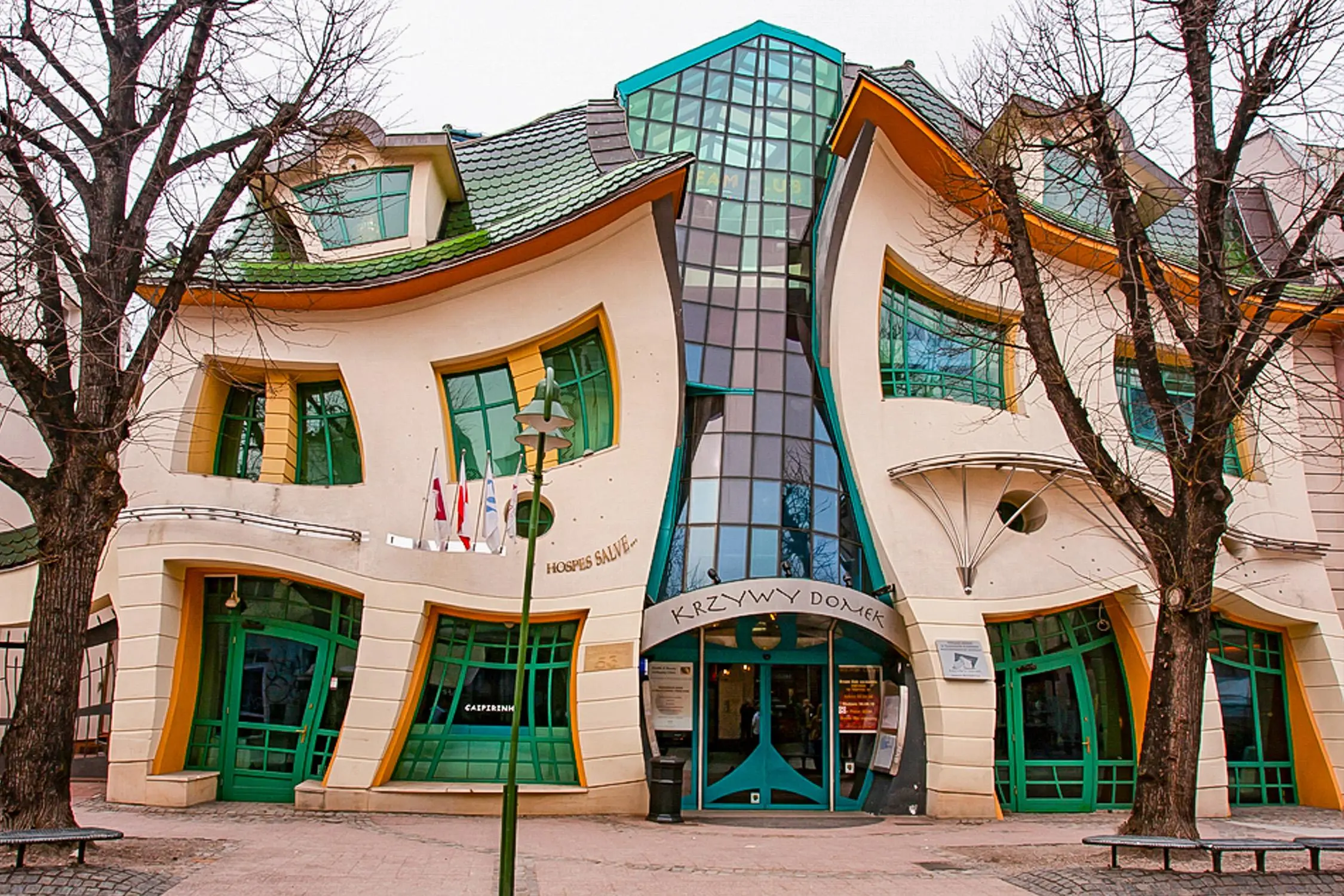
The Crooked House appears as though its walls and windows have been twisted into an unusual, distorted shape. Its walls bend, windows curve, and roofline appears to move in several directions at once.
Located in the seaside city of Sopot, the building was designed by architects Szotyńscy and Zaleski. Its distinctive design draws inspiration from the imaginative illustrations of Polish artist Jan Marcin Szancer and Swedish illustrator Per Dahlberg.
Completed in 2004, the structure was designed for commercial use rather than as an experimental art installation. It contains shops, restaurants, cafes, offices, and spaces for public activities.
Its unconventional appearance has made the building a standout attraction in Sopot. The building demonstrates how architecture can borrow ideas from illustration and fantasy while still serving everyday urban needs.
Why it looks otherworldly: Its warped walls and curved windows give the building a whimsical appearance rarely seen in conventional architecture.
Frequently Asked Questions (FAQs)
There is no universally accepted answer. Buildings such as Casa do Penedo in Portugal, the Atomium in Belgium, and Kunsthaus Graz in Austria are frequently recognized for their unconventional designs.
Kunsthaus Graz in Austria is often compared to a spacecraft because of its rounded blue exterior. Its nickname, the Friendly Alien, reflects its unusual appearance.
The Lotus Temple takes the form of a blooming lotus flower. Its 27 marble-clad petals surround a central worship hall.
Habitat 67 in Montreal, Canada, uses prefabricated concrete modules arranged in a stepped formation to create residential units with private outdoor terraces.
Architects may choose unusual shapes to solve problems, express ideas, use space more effectively, or make a building stand out.
No. Some unusual designs introduce challenges involving construction costs, maintenance, energy efficiency, and interior space. A building must still function safely and effectively, regardless of how impressive it looks.
Yes. Distinctive buildings can put a city on the map and become lasting symbols of its identity. However, their long-term value depends on more than appearance alone.
When Architecture Moves Beyond the Ordinary
Architecture does not always have to follow familiar shapes. Some buildings take inspiration from nature, others challenge traditional ideas about housing, and some turn ambitious artistic visions into functional public spaces.
Remarkable places are not defined by architecture alone. Islands around the world also preserve extraordinary stories of nature, history, culture, and human achievement. Discover ten of these destinations in 10 Islands Around the World With Remarkable Stories.
These ten structures demonstrate that unusual architecture can be more than a visual attraction. Behind their extraordinary appearances are ideas about culture, engineering, community, and the way people experience the built environment.