
Human civilization has always depended on technology.
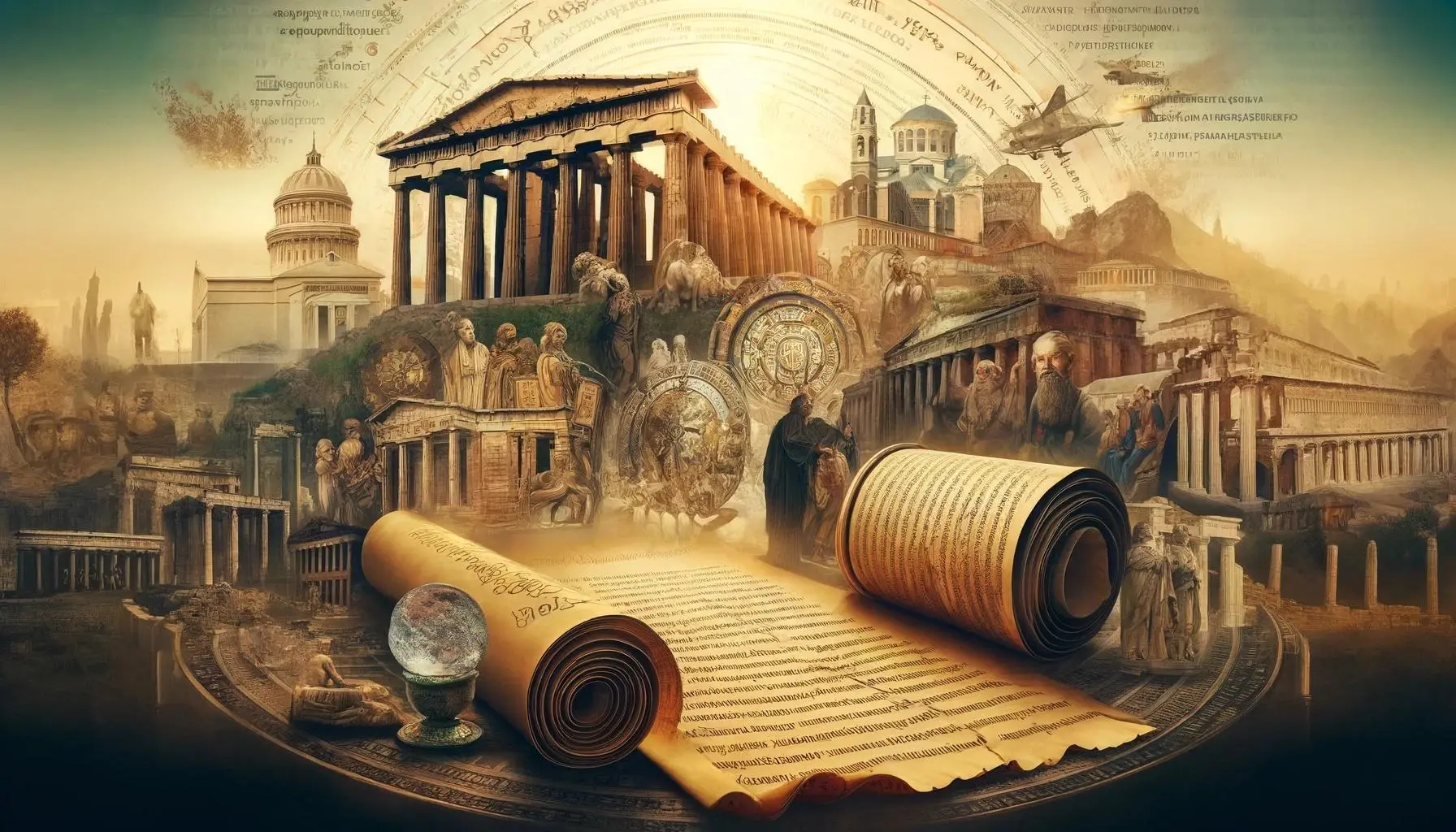
Ancient civilizations developed innovative tools, techniques, and systems to solve everyday problems long before modern technology and industry emerged.
They created tools to communicate, measure time, navigate unfamiliar places, transport water, construct buildings, and produce stronger materials.
Many of these achievements required remarkable observation, experimentation, and craftsmanship.
Some emerged thousands of years ago, yet their underlying principles remain part of modern life.
Ancient civilizations also exchanged knowledge through trade, migration, exploration, and cultural contact. As civilizations interacted through trade, migration, and cultural exchange, inventions evolved and reached societies far beyond their places of origin.
Many inventions from ancient times still influence how people live and work today.
Modern paper production, navigation instruments, mathematical systems, construction materials, and printing methods all reflect important stages in this long history.
Here are ten ancient technologies that continue to influence the modern world.
1. PaperMaking
Long before paper became widely used, ancient civilizations developed different ways to preserve information, using materials such as clay, animal skins, papyrus, bamboo, and wood.
These materials served important purposes, but some were heavy, expensive, difficult to transport, or unsuitable for producing large quantities of written documents.
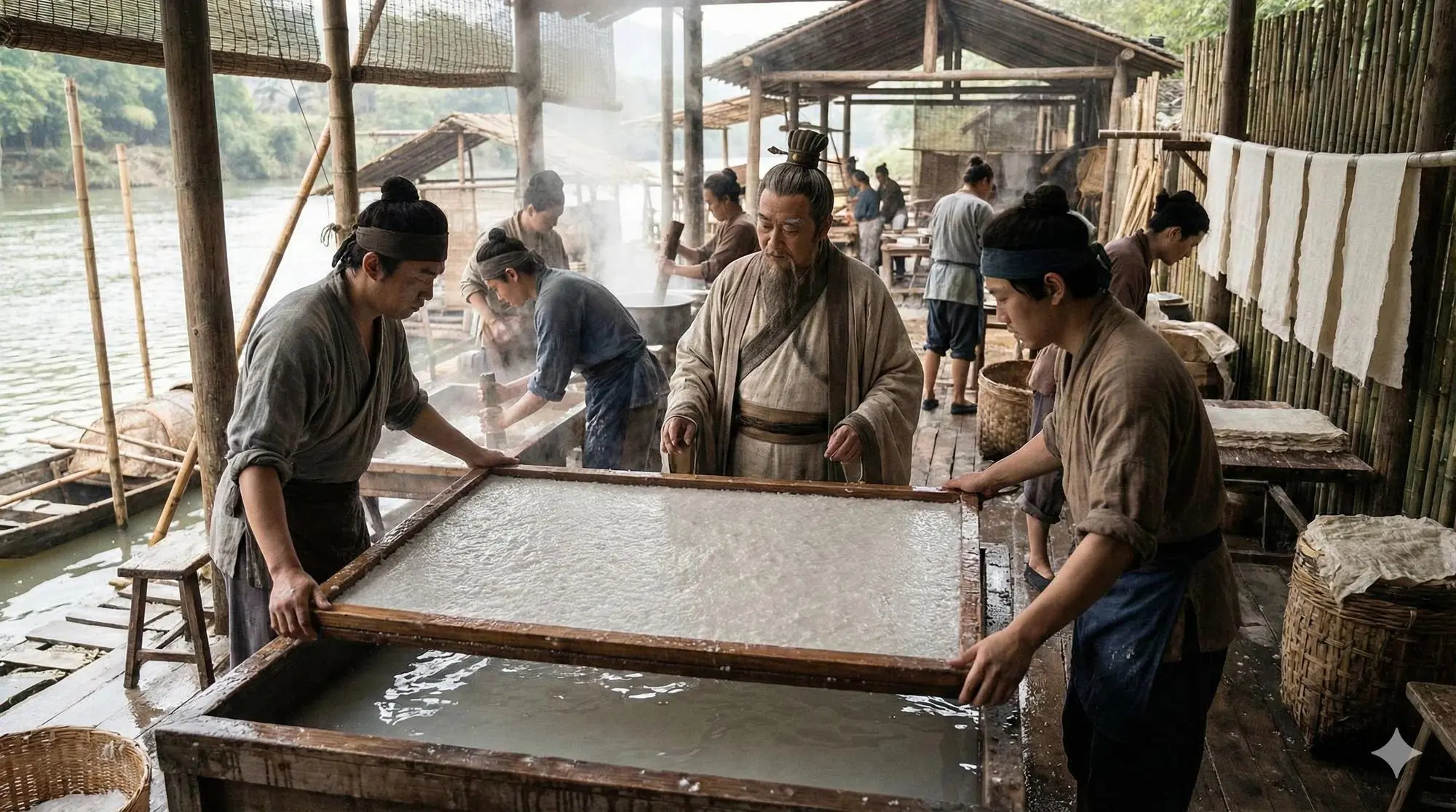
Ancient Chinese craftspeople developed papermaking techniques that offered a more practical alternative. Early paper was produced using plant fibers, including hemp and other materials. Around 105 CE, a court official named Cai Lun is traditionally credited with improving the papermaking process and promoting its wider use.
The technique involved breaking down plant fibers, mixing them with water, spreading the resulting pulp across a screen, and allowing the thin sheets to dry.
Paper gradually spread beyond China through cultural exchange and trade. It reached Korea and Japan before becoming established in parts of the Middle East and Europe.
Its availability changed how people preserved knowledge. Governments could maintain records, merchants could document transactions, scholars could exchange ideas, and writers could produce books more efficiently.
Modern paper manufacturing uses industrial machinery and advanced processing methods, but the basic principle remains recognizable: converting plant fibers into thin, usable sheets.
Paper also became essential to education, publishing, packaging, administration, and communication.
Although digital technology now stores enormous amounts of information, paper remains widely used in schools, offices, hospitals, businesses, and households.
Why it still matters: Modern publishing, education, documentation, and packaging all depend on the development of practical papermaking technologies.
2. The Number Zero and the Decimal System

The introduction of zero transformed mathematics by enabling new methods of calculation and numerical representation.
Today, people use zero in banking, engineering, scientific research, computer programming, measurements, and everyday calculations. However, the concept of zero evolved over several centuries before becoming a recognized part of mathematics.
Ancient civilizations developed different numerical systems to count objects, measure land, conduct trade, and solve practical problems.
Indian mathematicians made a particularly important contribution by developing the decimal place-value system and establishing zero as a number with its own mathematical role.
A place-value system assigns each digit a value based on its position within a number. For example, the number 505 contains two fives, but each represents a different quantity because of its position.
Zero makes this system work by representing an empty place. It also became an essential number in its own right, allowing mathematicians to develop more advanced calculations.
The Indian numerical system spread through the Middle East and eventually reached Europe, where it became widely known as the Hindu-Arabic numeral system.
This development transformed mathematical calculations. Instead of relying on cumbersome numerical systems, people could perform arithmetic more efficiently using ten basic digits, including zero.
Today, the same numerical framework supports modern accounting, scientific formulas, financial transactions, computer systems, and digital technologies.
Why it still matters: Modern mathematics, computing, finance, and scientific calculations would be far more difficult without zero and the decimal place-value system.
3. The Magnetic Compass
Traveling across unfamiliar landscapes and open seas was once extremely difficult.
Before magnetic compasses became widely used for navigation, travelers and sailors relied on landmarks, the Sun, the stars, and other natural signs to find their direction.
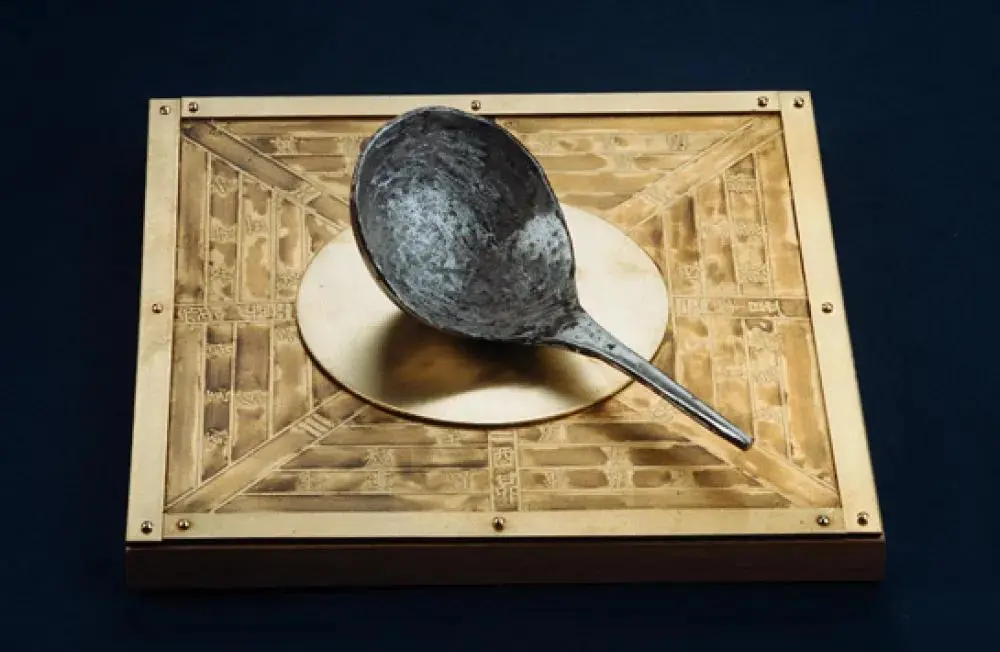
Ancient Chinese inventors developed early magnetic direction-finding devices using lodestone, a naturally magnetic form of iron ore.
An early compass design known as the sinan featured a spoon-shaped lodestone that aligned along a north-south axis.
However, early magnetic devices were not yet equivalent to modern navigational compasses. They evolved through several stages before becoming smaller and more practical instruments.
During the Song Dynasty, magnetic needles became increasingly useful for navigation, including maritime travel.
As knowledge of the compass spread to other regions, sailors gained a more reliable way to determine direction, particularly when familiar landmarks were no longer visible.
This technology supported long-distance trade, maritime exploration, and the development of international shipping routes.
Modern compasses use improved magnetic needles, precision instruments, and digital sensors. Satellite navigation systems also work alongside compass-based instruments in many transportation and outdoor applications.
Why it still matters: The magnetic compass helped transform navigation and remains an important directional tool in aviation, shipping, surveying, and outdoor activities.
4. Printing Technology
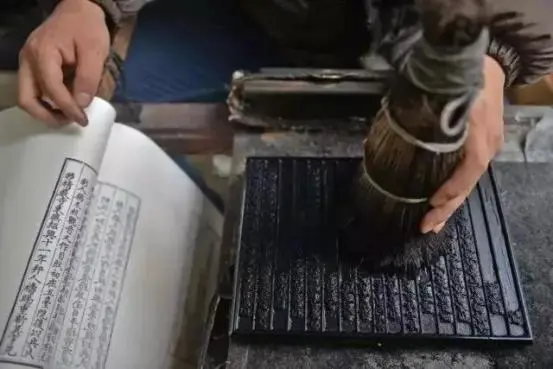
Before printing became widespread, people often copied books and written documents by hand.
Producing manuscripts required considerable time and skilled labor. As a result, written materials were expensive and access to information remained limited.
Ancient China developed woodblock printing, a technique that let people reproduce texts and images more efficiently.
The process involved carving characters or illustrations into a wooden block, applying ink to the raised surfaces, and pressing paper against the block to produce a printed copy.
Woodblock printing gained importance during the Tang Dynasty, allowing people to reproduce religious texts, educational materials, and other written works more efficiently.
Another major development followed during the Song Dynasty, when Bi Sheng developed movable-type printing using individual pieces of baked clay.
Unlike woodblock printing, movable type allowed printers to arrange separate characters into different combinations without carving an entirely new block for every page.
Centuries later, Johannes Gutenberg developed a movable metal-type printing system in Europe that helped transform book production.
Printing technology eventually supported the expansion of education, scientific communication, journalism, literature, and public access to information.
Modern printing uses digital files, advanced machinery, and automated production systems. Nevertheless, the central principle remains the same: reproducing information in multiple copies.
Why it still matters: Modern newspapers, books, educational materials, commercial printing, and packaging all reflect the historical development of printing technology.
5. Roman Concrete

Concrete is a fundamental material in modern construction worldwide.
It supports buildings, bridges, roads, tunnels, foundations, and major infrastructure projects.
Despite its importance in modern construction, concrete has ancient roots that date back thousands of years.
Ancient Romans developed a particularly influential form of concrete using a mixture of volcanic materials, lime, water, and other aggregates.
Roman builders incorporated volcanic ash, known as pozzolana, into their concrete mixtures to improve hardening and strength, even in certain underwater conditions.
Roman builders used this material to construct harbors, baths, aqueducts, temples, and other large structures.
One of the most impressive examples is the Pantheon in Rome, whose massive concrete dome has survived for nearly two thousand years.
Roman builders also used different materials for different parts of their structures. Lighter aggregates helped reduce the weight of large architectural elements.
Modern concrete production is different. Contemporary Portland cement-based concrete uses industrially manufactured cement and carefully controlled mixtures. It should not be confused with ancient Roman concrete.
Nevertheless, researchers continue studying ancient Roman construction materials to understand their durability and potentially apply useful findings to modern building science.
Why it still matters: Roman concrete demonstrates how ancient material science and engineering continue to inform modern construction research and infrastructure development.
6. Underground Water Channels (Qanats)
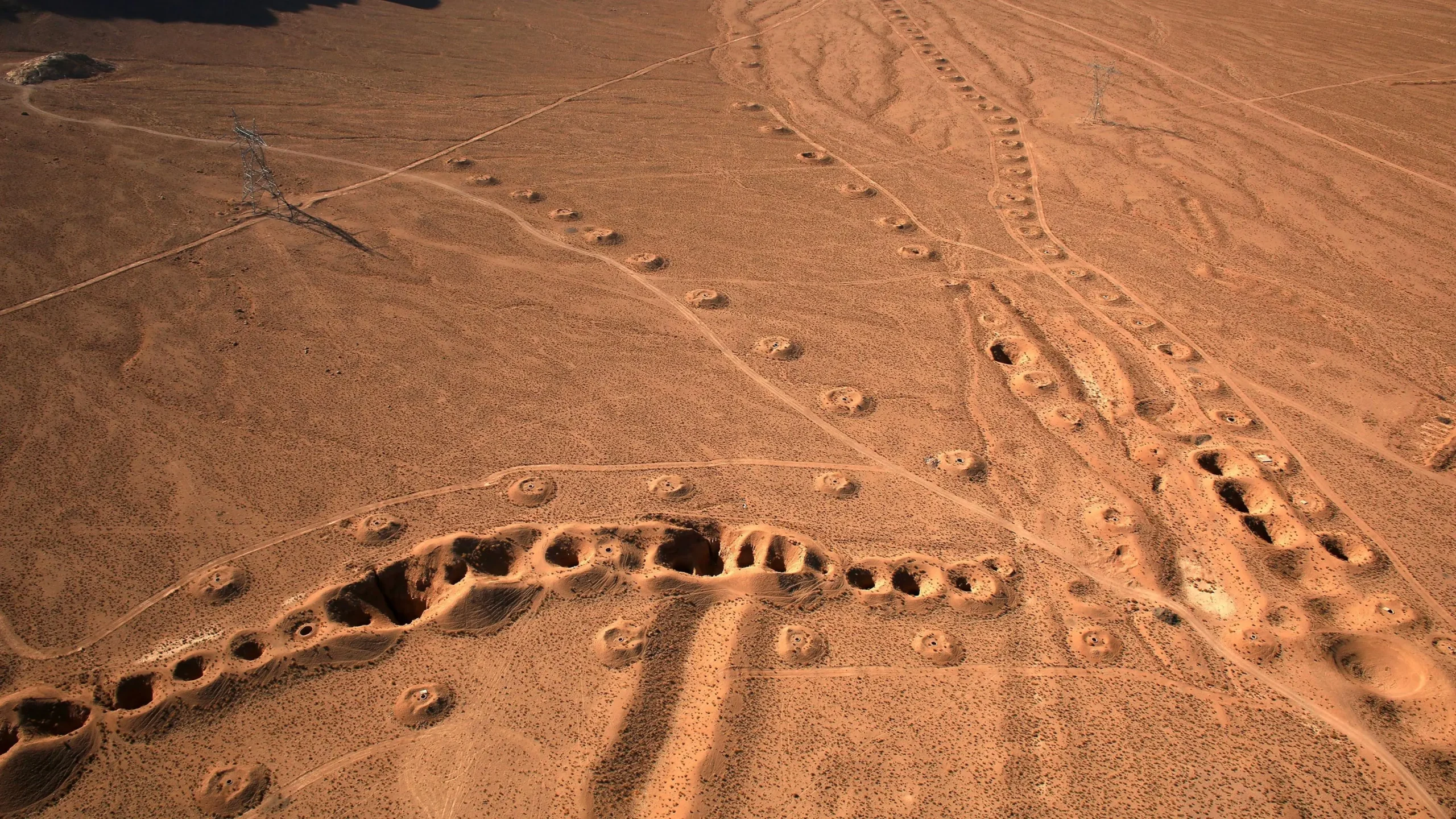
Providing a dependable water supply has always been one of the greatest challenges facing communities in dry regions.
In regions where rivers and other surface water sources were scarce, ancient societies developed systems to access groundwater and distribute it to settlements and agricultural areas.
One important example is the qanat system, which originated in ancient Persia and spread across several regions.
A qanat consists of a gently sloping underground tunnel that collects groundwater from an aquifer and carries it toward an outlet using gravity.
Vertical shafts are placed at regular intervals along the tunnel. These shafts allow workers to remove excavated material, provide ventilation, and maintain the underground passage.
Unlike systems that rely on mechanical pumps, qanats use gravity to move water over long distances without external power.
The technology helped communities establish settlements, cultivate crops, and manage limited water resources in arid environments.
Some qanat systems have operated for centuries, supported by traditional maintenance practices and community-based water management.
This principle remains relevant today, especially in regions focused on groundwater conservation, sustainable irrigation, and water security.
Although modern water systems often rely on pumps, pipelines, and treatment facilities, qanats show how well-designed gravity-based systems can provide a reliable water supply over time.
Why it still matters: Qanats offer valuable lessons in groundwater management, low-energy water distribution, and sustainable irrigation.
7. Glassmaking
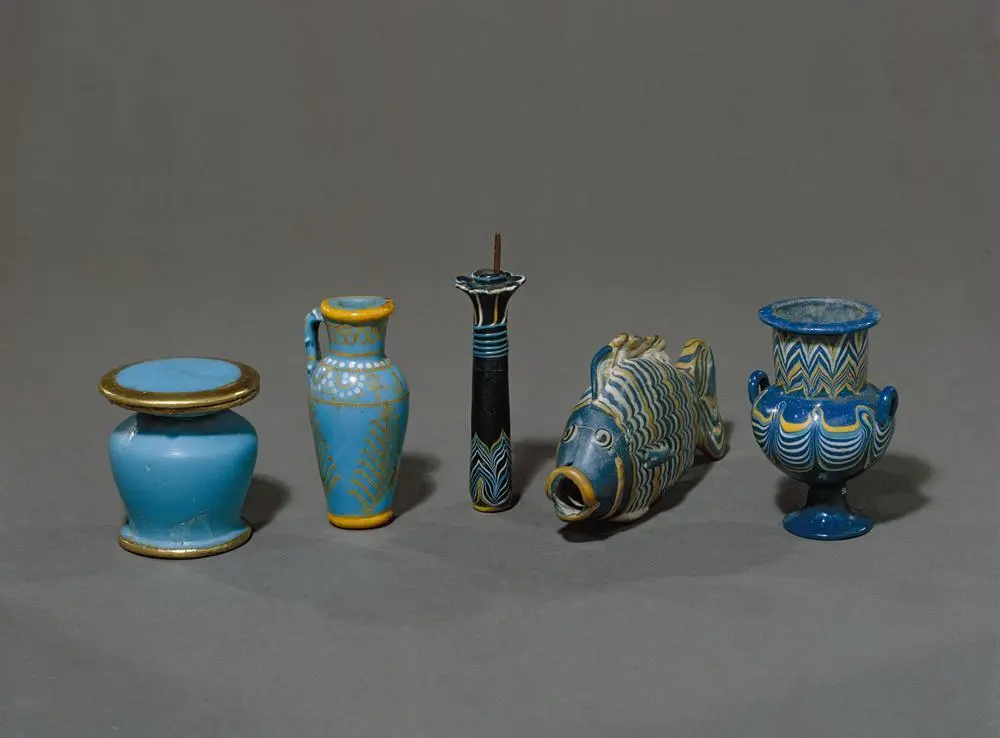
Glass is so common today that people rarely consider how difficult it was to produce in ancient times.
Modern societies use glass in windows, bottles, laboratory equipment, optical instruments, medical devices, and electronic displays.
Glass also plays an important role in modern healthcare, where specialized glass products and technologies support medical diagnosis and treatment. Read 10 Medical Inventions That Changed Human Life to learn about other innovations that have transformed medicine.
The history of glassmaking stretches back thousands of years, with early large-scale glass production developing in the ancient Near East.
By around 1600 BCE, glass vessels were being produced in parts of Mesopotamia and neighboring regions.
Early craftspeople used specialized techniques to shape molten glass around cores or into molds. These methods allowed them to create containers, decorative objects, and luxury items.
A breakthrough came with the development of glassblowing in the eastern Mediterranean region during the first century BCE.
This technique involved gathering molten glass onto the end of a hollow tube and inflating it to create a vessel.
Glassblowing increased production efficiency and enabled craftspeople to produce glass objects in a greater range of shapes and sizes.
During the Roman period, glass production expanded considerably, making glass containers and household objects more accessible.
Modern manufacturing has replaced many traditional techniques with industrial furnaces, precision machinery, and automated processes. However, glass still depends on the controlled heating and shaping of raw materials.
Why it still matters: Ancient glassmaking helped establish a material that remains essential to architecture, scientific research, medicine, transportation, and modern electronics.
8. Metallurgy and Steelmaking
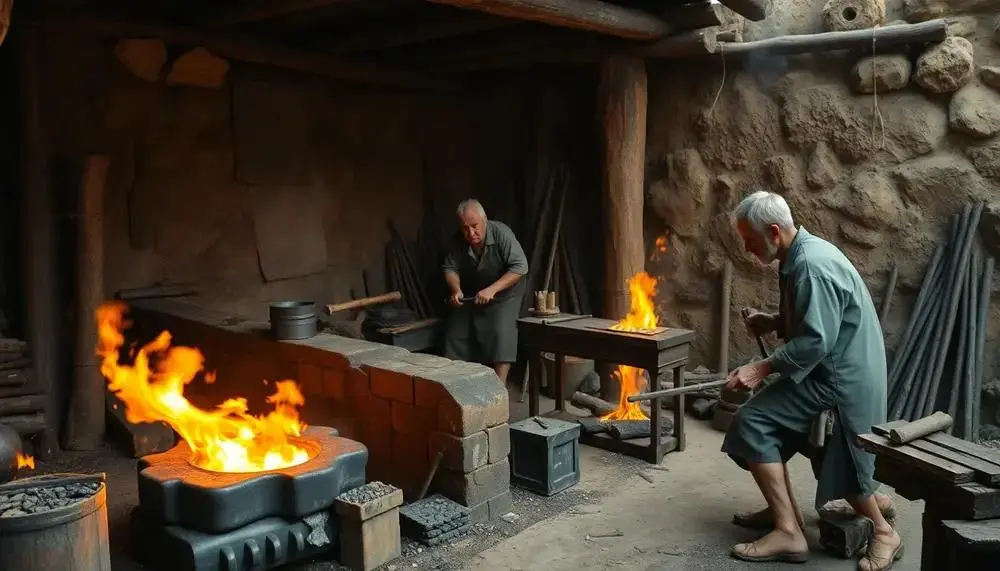
Advances in metal extraction and metalworking significantly transformed ancient societies.
Before advanced metalworking techniques emerged, people relied mainly on stone, wood, and other natural materials to make tools and equipment.
Early metallurgists learned how to extract metals from ores, heat them, shape them, and combine different materials to create stronger products.
Copper and bronze became important materials for tools, weapons, ornaments, and agricultural equipment.
Later advances in ironworking and steelmaking expanded the range of metal products people could produce.
Different civilizations contributed to these advances. Ancient India became particularly well known for crucible steel production, including the development of high-quality steel associated with the historical wootz tradition.
This process involved heating iron and carbon-rich materials inside sealed crucibles under controlled conditions to produce steel with distinctive characteristics.
Metallurgy also developed across China, the Middle East, Europe, and other regions, with different societies creating their own techniques for smelting, forging, casting, and refining metals.
These developments gradually improved the production of agricultural tools, construction equipment, machinery, and transportation components.
Modern steelmaking uses large industrial furnaces, chemical controls, and sophisticated manufacturing processes. Modern metal production still rests on the basic principles of extraction and processing.
Why it still matters: Ancient metallurgy laid important foundations for modern manufacturing, construction, transportation, machinery, and industrial production.
9. Road and Bridge Engineering
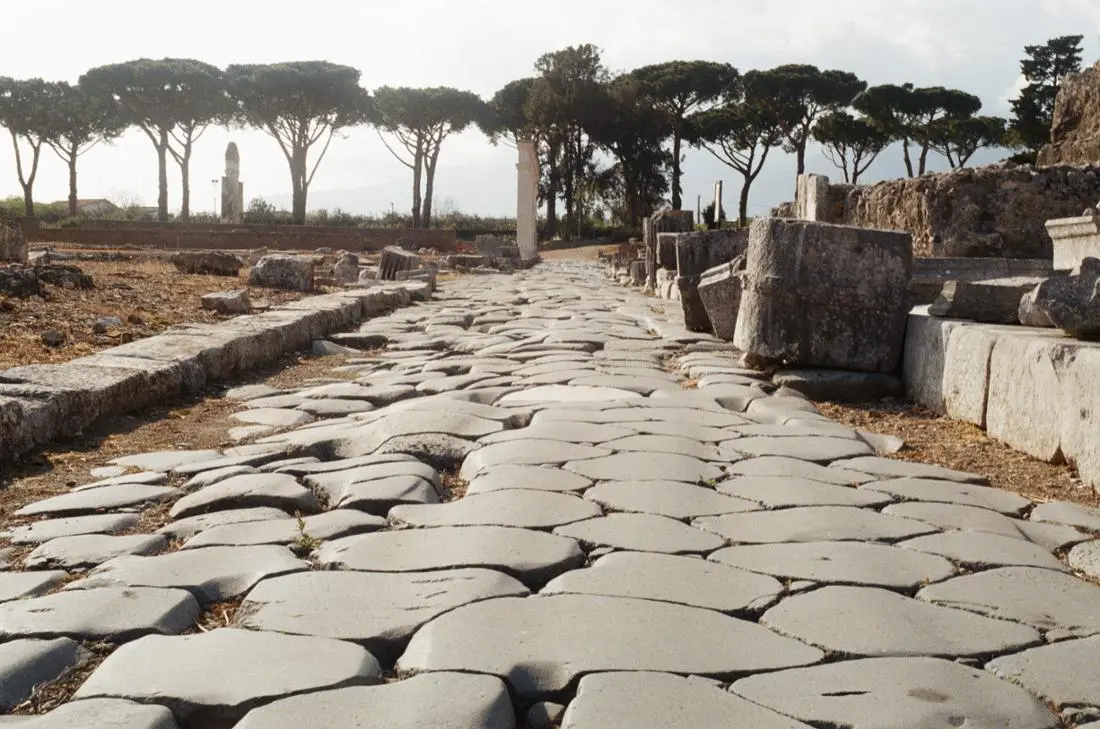
Transportation networks have played an important role in the growth of civilizations for thousands of years.
Ancient societies needed reliable routes to move soldiers, merchants, agricultural products, building materials, and other goods between settlements.
The Romans became particularly well known for their extensive road network, which connected cities and territories across their empire.
Roman roads were constructed using carefully prepared foundations and layers of different materials. Depending on local conditions, builders used compacted earth, gravel, crushed stone, and large paving stones.
Drainage was also important because standing water could weaken road foundations and damage surfaces.
Bridges extended these transportation networks across rivers, valleys, and other natural obstacles.
Roman engineers developed different bridge designs using arches, stone, and other construction materials. Their engineering methods allowed some structures to remain in use for centuries.
Other civilizations, including those in China and the Andes, also developed impressive road and bridge systems adapted to their landscapes.
Modern highways and bridges use asphalt, reinforced concrete, steel, advanced surveying equipment, and computer-based structural analysis.
Modern cities are also rethinking how transportation networks, public spaces, and infrastructure can improve urban life. See 10 Cities That Are Redesigning Urban Life for the Future for examples of these changes.
Road construction methods have improved over time, but building reliable roads still requires strong foundations, good drainage, durable materials, and proper planning.
Why it still matters: Ancient transportation infrastructure established important engineering principles that continue to influence modern highways, bridges, and transportation networks.
10. The Babylonian Base-60 Number System
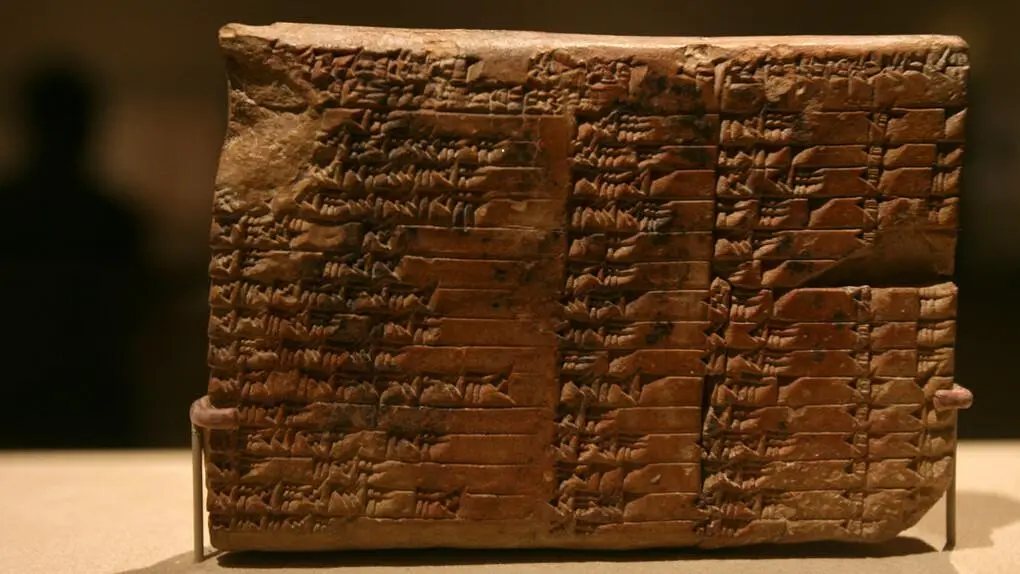
One of the most recognizable features of modern timekeeping comes from an ancient mathematical system.
Today, we still use 60 minutes in an hour, 60 seconds in a minute, and 360 degrees in a full circle.
These measurements reflect the influence of the sexagesimal, or base-60, number system developed by ancient Mesopotamian civilizations, particularly the Babylonians.
Unlike the decimal system, which uses ten as its base, the Babylonian system organized numbers around groups of 60.
Babylonian mathematicians used this system for calculations involving trade, land measurement, astronomy, and other practical needs.
They also developed sophisticated mathematical methods, including procedures for solving problems involving squares, cubes, and geometric relationships.
The system offered practical advantages for mathematical calculations because 60 has several divisors, including 2, 3, 4, 5, and 6.
Its influence continued through later mathematical and astronomical traditions.
Although modern societies use the decimal system for most everyday calculations, the base-60 system remains deeply embedded in timekeeping and angular measurement.
Every time someone checks a clock, calculates an angle, or studies the movement of celestial objects, they encounter part of this ancient mathematical legacy.
Why it still matters: The Babylonian base-60 system continues to influence how people measure time, calculate angles, and organize astronomical observations.
How Ancient Technologies Continue to Shape Modern Life
The ten technologies discussed above emerged in different civilizations and historical periods, but their influence extends far beyond their original purposes.
Some changed how people communicate and preserve knowledge. Others transformed transportation, construction, mathematics, and access to essential resources.
Their influence also demonstrates that technological progress rarely happens in isolation. New inventions often build on earlier discoveries, while improvements made by one civilization can become valuable to societies thousands of miles away.
Modern technology may appear very different from its ancient predecessors, but many of its underlying principles have deep historical roots.
The development of civilization has therefore been shaped not only by spectacular inventions but also by practical technologies that gradually improved everyday life.
Frequently Asked Questions (FAQs)
There is no single answer because different inventions changed different aspects of human civilization. Paper, printing, mathematics, metallurgy, and the magnetic compass all had far-reaching effects on communication, knowledge, transportation, and economic development.
Several ancient civilizations made major technological contributions. China, India, Mesopotamia, Egypt, Greece, Persia, and Rome all developed important inventions and engineering methods. Their achievements influenced one another through trade, migration, and cultural exchange.
Yes. Some ancient technologies remain in recognizable forms, including paper production, glassmaking, and the base-60 system used in timekeeping. Others, such as ancient concrete and qanats, continue to influence modern research, engineering, and resource management.
Technologies spread through trade routes, migration, exploration, warfare, and cultural exchange. Merchants, craftspeople, scholars, and travelers carried knowledge from one civilization to another, helping people improve and adapt inventions to their needs.
Studying ancient technologies helps explain how human societies solved practical problems and developed the foundations of modern civilization. It also provides valuable lessons about innovation, resource management, engineering, and the long-term effects of technological progress.
Conclusion
The modern world is built on thousands of years of human innovation.
From paper and mathematical systems to navigation, construction, and metalworking, ancient civilizations developed technologies that transformed how people lived and organized their societies.
Many of these inventions have evolved considerably. Modern factories, digital systems, industrial materials, and advanced engineering have replaced much of the original equipment and production methods.
Although developed centuries ago, these innovations still influence many of the technologies and systems people use today.
A clock still reflects an ancient mathematical system. Modern printing continues a tradition that began with carved wooden blocks. Roads, bridges, glass products, and construction materials also reflect centuries of accumulated knowledge.
These achievements remind us that technological progress is not simply about creating something entirely new. It also involves improving existing ideas, learning from previous generations, and finding better ways to solve human problems.
The technologies that shape the future may look very different from those of the past, but many will continue to build on the discoveries that first changed human civilization.
Research References
- Smithsonian National Museum of Asian Art – Technology and Production
- UNESCO – Ways of Scientific Exchange
- The Metropolitan Museum of Art – Ennion: Master of Roman Glass
- The Metropolitan Museum of Art – Ars Vitraria: Glass in The Metropolitan Museum of Art
- UNESCO World Heritage Centre – The Persian Qanat
- UNESCO – The United Nations World Water Development Report 2022: Groundwater – Making the Invisible Visible
- OIML – The Importance of Metrology: From Early Civilization to Digitalisation
- OpenStax – East-West Interactions in the Early Middle Ages
- James E. McClellan III and Harold Dorn – Science and Technology in World History