
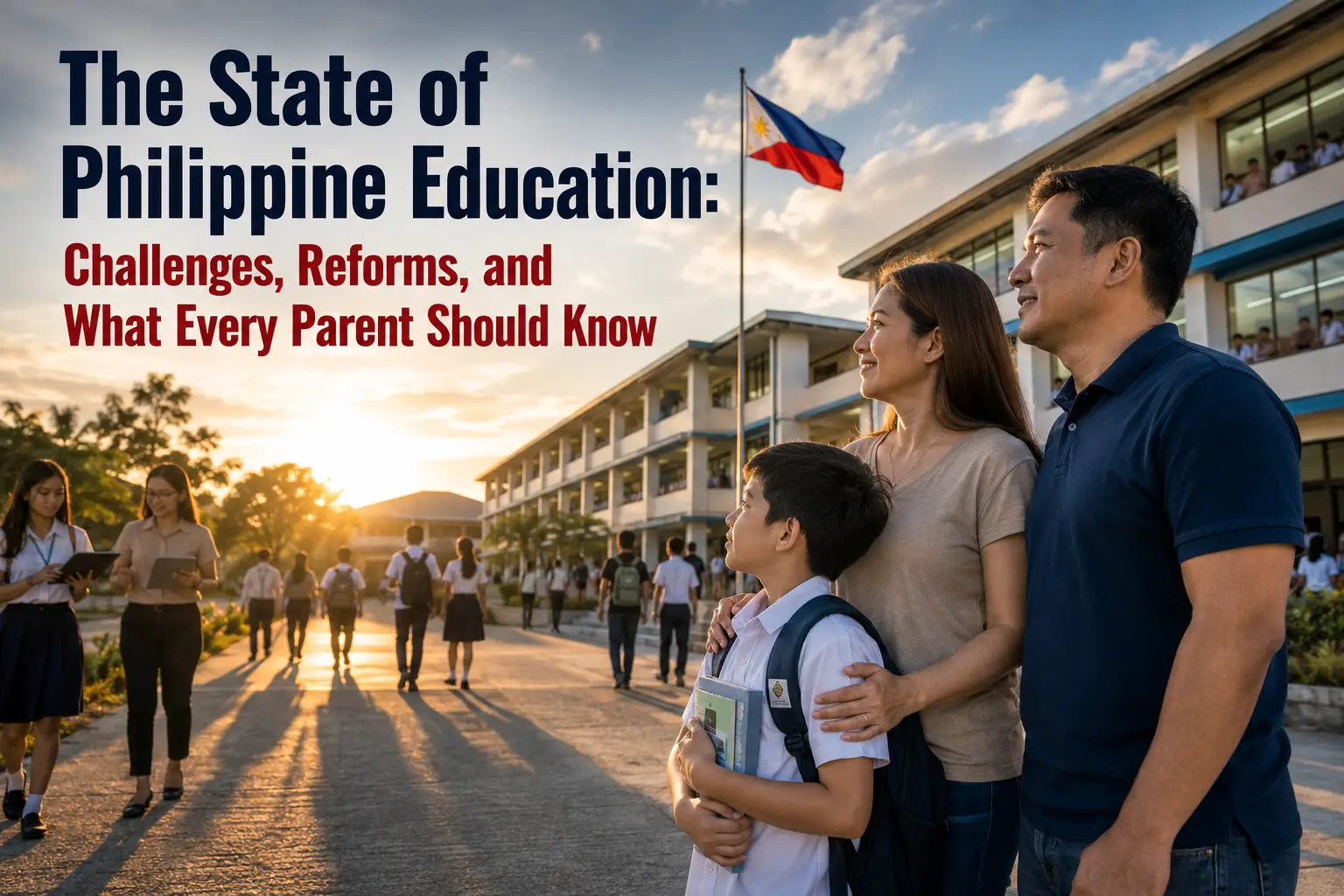
The Future of Every Filipino Child Begins With Education
Education has long been regarded as one of the most powerful tools for changing lives.
For generations, Filipino parents have made enormous sacrifices to ensure their children can attend school, earn a diploma, and build a better future.
Many families work long hours.
Some parents take multiple jobs.
Others leave the country to provide opportunities they never had themselves.
Behind these sacrifices is a simple hope:
That education will provide them with greater opportunities for economic mobility and a better quality of life.
For millions of Filipino students, school remains the foundation for future careers, financial stability, and personal growth.
Yet education today faces challenges that are far more complex than simply providing classrooms and textbooks.
The world is changing rapidly.
Artificial intelligence is transforming industries.
Technology is reshaping how people learn and work.
New careers are emerging while others disappear.
At the same time, Philippine schools continue to face long-standing issues such as learning gaps, overcrowded classrooms, teacher shortages, bullying, limited resources, and unequal access to quality education.
Recent discussions surrounding education reforms—including proposals to end mass promotion, strengthen literacy and numeracy programs, and improve learning outcomes—have also sparked national conversations about whether the current education system is truly preparing students for the future.
These developments raise important questions for every parent.
Is the education system giving children the knowledge and skills they need to succeed?
What reforms are being introduced?
What challenges still need to be addressed?
And perhaps most importantly:
What can parents do to support their children’s education in a rapidly changing world?
Understanding these issues has never been more important.
Education affects far more than report cards and examinations.
It influences career opportunities.
Economic growth.
Social mobility.
Mental well-being.
National development.
The future of every Filipino child—and ultimately the future of the country itself.
Why Philippine Education Matters More Than Ever
Education is one of the largest public investments in the Philippines.
Millions of students fill classrooms across the country each year, and behind their education stands a vast network of teachers, administrators, and education professionals working to ensure that learners gain the knowledge and skills necessary to succeed in adulthood.
When education works well, the benefits extend far beyond the classroom.
Students are more likely to:
- Develop strong literacy and numeracy skills.
- Think critically and solve problems.
- Build confidence and resilience.
- Find better employment opportunities.
- Contribute positively to their communities.
- Adapt to technological and economic change.
A strong education system also benefits society.
It supports economic growth, reduces poverty, strengthens democratic participation, and helps prepare future generations to solve increasingly complex challenges.
However, education systems must continuously evolve.
The skills that prepared students decades ago are no longer enough for today’s world.
Employers increasingly value communication, adaptability, collaboration, creativity, and critical thinking alongside academic knowledge.
Artificial intelligence has made access to information easier than ever before.
Success now depends not only on what students know but also on how effectively they can apply that knowledge in real-world situations.
This changing landscape has led many educators, policymakers, and parents to ask whether schools are evolving quickly enough to meet the needs of modern learners.
Philippine Education Is at a Turning Point
In recent years, the Philippine education system has entered a period of significant reflection and reform.
National and international assessments have highlighted persistent learning gaps among many students, particularly in foundational skills such as reading comprehension and mathematics.
At the same time, policymakers have introduced reforms aimed at improving the quality of education rather than merely advancing students from one grade level to the next.
Initiatives aimed at strengthening literacy, improving numeracy, expanding learning interventions, reviewing promotion policies, and modernizing classroom instruction demonstrate a growing recognition that educational success should be measured by genuine learning—not simply by completing another school year.
Beyond academic performance, schools are also facing new responsibilities.
Student mental health has become an increasingly important concern.
Bullying continues to affect learners across different age groups.
Technology has introduced both valuable learning opportunities and new risks, including cyberbullying and digital distractions.
Meanwhile, artificial intelligence is reshaping expectations about the skills students will need to succeed in higher education and the future workforce.
These developments do not suggest that Philippine education is failing.
Rather, they illustrate that the system is navigating a period of transformation, with educators, parents, policymakers, and communities working to address both long-standing challenges and emerging realities.
The decisions made today will help shape the educational experiences of millions of Filipino students for years to come.
What This Guide Covers
The Philippine education system is a complex and constantly evolving subject.
Rather than focusing on a single issue, this guide brings together the most important topics affecting students, parents, teachers, and schools today.
Throughout this comprehensive guide, we’ll explore:
- The biggest challenges facing Philippine education.
- Learning gaps and academic performance.
- Bullying and student safety.
- Mental health and student well-being.
- Major education reforms and government initiatives.
- The role of teachers and school leaders.
- Why future-ready skills matter more than ever.
- Artificial intelligence and the future of learning.
- How Parents Can Help Their Children Learn, Grow, and Succeed
Where appropriate, you’ll also find links to more detailed articles that examine these topics in greater depth, making this guide a central resource for understanding Philippine education as a whole.
Whether you’re a parent, educator, student, or simply interested in the future of education in the Philippines, this guide aims to provide balanced, evidence-informed insights into both the challenges and the opportunities ahead.
The future of Philippine education is still being written.
Understanding where it stands today is the first step toward building something even better.
The Biggest Challenges Facing Philippine Education
No education system is perfect.
Every country faces challenges that influence how effectively students learn and how well schools prepare young people for the future.
The Philippines is no exception.
Despite the dedication of countless teachers, school leaders, parents, and education professionals, the Philippine education system continues to face complex challenges that affect millions of learners each year.
Some of these challenges have existed for decades.
Others have emerged as technology, society, and the global economy continue to evolve.
Understanding these issues is the first step toward understanding why education reform remains one of the country’s most important priorities.
1. The Learning Crisis
One of the most significant concerns facing Philippine education today is the learning crisis.
Over the past several years, national and international assessments have shown that many students struggle with foundational skills such as reading, writing, comprehension, and mathematics.
For many educators, this is not simply an issue of test scores.
It raises deeper concerns about whether students are mastering the essential knowledge they need before moving to more advanced grade levels.
Learning gaps often widen over time.
Students who struggle with basic reading in the early grades may find it increasingly difficult to understand science, mathematics, history, and other subjects as they progress through school.
The result is that some learners advance through the education system while still lacking important foundational skills.
Recognizing this challenge, education leaders have increasingly emphasized improving literacy and numeracy through targeted interventions rather than relying solely on grade completion as a measure of success.
2. Unequal Access to Quality Education
Educational opportunities vary significantly across the Philippines.
While many schools provide supportive learning environments and dedicated teachers, others continue to face serious resource limitations.
Students living in remote, rural, or geographically isolated communities often experience additional challenges, including:
- Limited classroom facilities
- Shortages of teachers
- Fewer learning materials
- Reduced access to technology
- Longer travel times to school
Even within urban areas, differences in school resources and student populations can influence educational experiences.
Expanding equitable access to quality education remains one of the country’s most important long-term goals.
3. Overcrowded Classrooms
Many public schools continue to manage large class sizes.
When one teacher is responsible for dozens of students, providing individualized instruction becomes much more difficult.
Large classes may affect:
- Student participation
- Classroom management
- Personalized feedback
- Early identification of struggling learners
- Academic intervention
Teachers often work incredibly hard to support every learner despite these challenges.
However, classroom size remains an important factor influencing educational quality.
4. Teacher Workload and Resource Challenges
Teachers play one of the most important roles in education.
Their responsibilities extend far beyond classroom instruction.
Many educators also spend considerable time preparing lessons, assessing student work, completing administrative requirements, attending professional development activities, communicating with parents, and participating in school programs.
In some schools, limited resources and staffing can further increase these responsibilities.
Supporting teachers through professional development, adequate resources, manageable workloads, and strong institutional support benefits both educators and students.
A well-supported teacher is generally better positioned to provide high-quality learning experiences.
5. Bullying and Student Well-Being
Academic achievement cannot be separated from student well-being.
Children learn best when they feel safe, respected, and supported.
Unfortunately, bullying continues to affect many students across different schools and communities.
Bullying may involve:
- Physical aggression
- Verbal harassment
- Social exclusion
- Psychological intimidation
- Cyberbullying
Its effects often extend far beyond the classroom.
Students who experience repeated bullying may struggle with:
- Anxiety
- Depression
- Reduced self-confidence
- School avoidance
- Lower academic performance
- Difficulty building healthy relationships
Creating safer learning environments requires collaboration between schools, parents, students, and communities.
6. Mental Health Is Becoming an Increasing Priority
Modern education involves more than academic performance.
Student mental health has emerged as a key priority for education systems worldwide, driven by growing recognition of its influence on educational outcomes and lifelong development.
range of factors—including academic pressure, family circumstances, bullying, social media, and personal challenges—can significantly influence students’ emotional well-being.
Many schools are expanding efforts to provide:
- Guidance services
- Counseling support
- Mental health awareness
- Social-emotional learning
- Student wellness programs
Although significant progress has been made, expanding access to mental health support remains an important objective for many education systems, including the Philippines.
7. The Digital Divide
Technology has transformed education.
Digital platforms, online resources, educational videos, and artificial intelligence now provide students with unprecedented access to information.
However, not every learner has equal access to these opportunities.
Some students continue to face challenges related to:
- Internet connectivity
- Device availability
- Digital literacy
- Electricity access in remote areas
Reducing these inequalities is increasingly important as technology becomes more integrated into modern education.
Ensuring that all students can benefit from digital learning remains an ongoing challenge.
8. Preparing Students for a Changing Workforce
The workplace is changing faster than ever.
Artificial intelligence, automation, and emerging technologies are reshaping industries and creating new career opportunities.
Many jobs that today’s students will eventually hold may not yet exist.
This means schools must prepare learners not only with academic knowledge but also with transferable skills such as:
- Critical thinking
- Communication
- Collaboration
- Creativity
- Adaptability
- Problem-solving
- Digital literacy
These abilities increasingly complement traditional academic subjects and help students adapt to future economic and technological change.
Every Challenge Also Represents an Opportunity
Although these challenges are significant, they also present opportunities for meaningful improvement.
Many educators, policymakers, researchers, and parents are actively working to strengthen Philippine education through reforms, innovation, teacher development, improved student support, and updated learning strategies.
Education is not static.
It continues to evolve as society changes.
Recognizing today’s challenges helps create better solutions for tomorrow’s learners.
Part 3: Education Reforms and Government Initiatives
Identifying problems is only one part of improving education.
The more difficult challenge is finding practical solutions that produce lasting results.
In recent years, the Philippine education system has embarked on a significant reform agenda, reflecting growing efforts to improve learning outcomes, strengthen educational quality, and better prepare students for the future.
Government agencies, education experts, researchers, teachers, and policymakers have increasingly recognized that improving educational quality requires more than simply increasing enrollment or graduation rates.
Instead, the focus is gradually shifting toward ensuring that students genuinely learn the knowledge and skills they need for higher education, employment, and lifelong success.
While many reforms are still evolving, they reflect a growing commitment to strengthening Philippine education for future generations.
1. From Access to Learning
For many years, one of the country’s greatest educational achievements was expanding access to schooling.
Millions of Filipino children who previously had limited educational opportunities were able to attend school.
Increasing enrollment was an important milestone.
Today, however, education leaders are placing greater emphasis on a different question:
Are students actually learning what they need to learn?
Attendance alone cannot guarantee educational success.
Students must also develop strong literacy, numeracy, critical-thinking, and problem-solving skills before progressing to higher grade levels.
This shift—from measuring attendance to measuring learning—is becoming one of the defining priorities of Philippine education.
2. EDCOM II and the Long-Term Vision for Education
One of the most significant recent developments is the work of the Second Congressional Commission on Education (EDCOM II).
After conducting extensive nationwide consultations with educators, students, government agencies, employers, and education experts, EDCOM II developed a long-term roadmap to strengthen Philippine education and better prepare the country’s future workforce.
Its recommendations address issues such as:
- Learning recovery
- Teacher development
- Curriculum improvement
- School leadership
- Digital transformation
- Workforce readiness
- Student assessment
- Governance and accountability
Rather than focusing on short-term solutions, the commission proposes reforms designed to strengthen education over the next decade.
Many of these recommendations are still under review and may require further policy action before they can be fully implemented.
3. Strengthening Literacy and Numeracy
One of the clearest priorities in recent education reforms is improving foundational learning.
Reading, writing, and mathematics form the basis for success in nearly every other subject.
When students struggle with these essential skills during their early years, the effects often continue throughout their education.
To address this challenge, schools have increasingly emphasized:
- Early reading interventions
- Numeracy improvement
- Targeted learning support
- Diagnostic assessments
- Learning recovery programs
Among these initiatives is the ARAL Program, which aims to provide additional academic support for students who need help strengthening foundational skills.
Rather than allowing learning gaps to widen over time, these interventions are designed to provide support before students fall further behind.
4. Rethinking Mass Promotion
One of the most widely discussed education proposals involves the long-standing practice commonly referred to as mass promotion.
Traditionally, many students advance to the next grade level even when they have not fully mastered all expected learning competencies.
Education leaders have raised concerns that this approach may unintentionally allow learning gaps to accumulate over time.
Recent recommendations suggest placing greater emphasis on demonstrated learning rather than automatic progression through grade levels.
Under these proposals, students requiring additional support would ideally receive targeted interventions before advancing.
The objective is not to produce higher failure rates, but to ensure that students meet the learning standards required for meaningful academic progress.
It is to ensure that every learner builds a strong academic foundation before moving to more advanced material.
If adopted through future government policy, these reforms could represent one of the most significant changes to Philippine basic education in decades.
5. Reviewing the Grading System
Closely connected to discussions about promotion is the ongoing review of student assessment.
Some education experts have questioned whether certain grading practices accurately reflect student learning.
One proposal recommends reviewing the practice of grade transmutation, in which low raw scores may be converted into passing grades under existing grading systems.
Supporters of reform argue that grades should more accurately represent student mastery while ensuring that struggling learners receive appropriate academic support.
The broader objective is to create assessment systems that encourage genuine learning rather than simply meeting minimum passing requirements.
6. Supporting Teachers More Effectively
Education reforms increasingly recognize that student success depends heavily on teacher success.
Teachers cannot deliver high-quality instruction without adequate support.
Many reform proposals therefore include initiatives aimed at strengthening the teaching profession through:
- Professional development
- Continuing education
- Instructional coaching
- Leadership training
- Better access to teaching resources
- Improved classroom support
Empowering teachers ultimately benefits students by creating stronger learning environments and improving instructional quality.
7. Expanding Technology in Education
Technology continues to reshape education around the world.
Digital learning platforms, interactive resources, artificial intelligence, and online collaboration tools are becoming increasingly common in classrooms.
Philippine education reforms also recognize the growing importance of digital transformation.
Future priorities include:
- Improving internet connectivity
- Expanding access to digital devices
- Strengthening digital literacy
- Integrating educational technology responsibly
- Helping teachers use technology effectively
Technology alone cannot solve educational challenges.
However, when combined with effective teaching, it can greatly expand learning opportunities for students.
8. Preparing Students for the Future Economy
Education is no longer focused solely on preparing students for today’s jobs.
It must also prepare them for careers that may not yet exist.
Artificial intelligence, automation, renewable energy, biotechnology, cybersecurity, and other emerging industries are transforming workforce demands.
As a result, schools are placing greater attention on future-ready skills, including:
- Critical thinking
- Creativity
- Communication
- Collaboration
- Adaptability
- Digital competence
- Lifelong learning
Academic knowledge remains essential.
But the ability to continuously learn and adapt may become just as valuable throughout a person’s career.
Reform Is an Ongoing Process
Improving a national education system is never accomplished through a single law or policy.
Meaningful reform requires sustained collaboration among teachers, parents, school leaders, government agencies, researchers, and local communities.
Many of the initiatives currently being discussed are ambitious.
Some have already begun.
Others remain proposals that will require further policy development and implementation.
What they all share is a common objective:
Helping every Filipino learner receive an education that prepares them not only to pass examinations, but to succeed in an increasingly complex and rapidly changing world.
Student Safety, Mental Health, and the Essential Role of Parents
A quality education is about far more than textbooks, examinations, and report cards.
Children learn best when they feel safe.
When they feel respected.
When they know that teachers, parents, and school leaders genuinely care about their well-being.
Academic achievement and student welfare are deeply connected.
A child who feels anxious, frightened, isolated, or unsupported will often struggle to focus in the classroom, regardless of how talented they may be.
For this reason, modern education increasingly recognizes that creating safe, supportive learning environments is just as important as improving academic performance.
Safe Schools Are Better Schools
Every child has the right to attend school without fear.
Students should feel comfortable asking questions, participating in class, making friends, and developing their talents without worrying about intimidation or harassment.
Safe schools encourage:
- Better academic performance
- Higher attendance
- Greater student confidence
- Stronger relationships
- Improved classroom participation
- Better emotional well-being
When students feel secure, they are more willing to learn, explore new ideas, and reach their full potential.
Creating that environment requires cooperation from everyone involved in education.
Bullying Remains One of the Biggest Challenges
Despite increased awareness, bullying continues to affect many students throughout the Philippines.
Bullying can occur in many different forms, including:
- Physical aggression
- Verbal abuse
- Social exclusion
- Psychological intimidation
- Cyberbullying
Many incidents occur outside the classroom, making them difficult for teachers to witness directly.
Others continue online long after the school day has ended.
The effects can be serious.
Children who experience repeated bullying may develop:
- Anxiety
- Depression
- School avoidance
- Declining academic performance
- Low self-esteem
- Difficulty trusting others
Left unaddressed, bullying can influence both educational outcomes and long-term emotional health.
This is why early intervention remains essential.
Bullying remains another serious concern for Filipino families. When a child experiences repeated harassment, intimidation, or exclusion, parents need to know how to respond calmly, document incidents, work with the school, and protect their child’s well-being. Our guide on what parents should do if their child is being bullied at school provides a practical step-by-step approach for families facing this difficult situation.
Parents Are Partners in Education
Education does not begin and end at school.
Parents remain their children’s first and most influential teachers, shaping attitudes toward learning from an early age.
Schools provide instruction.
Parents provide daily guidance, encouragement, values, and emotional support.
When families and schools communicate effectively, students often benefit from:
- Stronger academic performance
- Better attendance
- Improved behavior
- Greater motivation
- Earlier identification of problems
- More consistent support
The strongest education systems encourage genuine partnerships between educators and families rather than viewing them as separate responsibilities.
Open Communication Matters
Children do not always tell adults when something is wrong.
Some fear getting into trouble.
Others worry they will not be believed.
Some do not know how to explain what they are experiencing.
Regular conversations about school help parents recognize concerns before they become larger problems.
Simple questions such as:
- What was the best part of your day?
- Did anything make you uncomfortable today?
- Who did you spend time with?
- Is there anything you’d like to talk about?
can encourage honest communication without making children feel pressured.
Listening calmly is often more important than having immediate solutions.
Recognizing Warning Signs
Academic performance is only one indicator of how a child is doing.
Parents should also pay attention to changes in behavior that may suggest underlying concerns.
Possible warning signs include:
- Reluctance to attend school
- Frequent unexplained headaches or stomachaches
- Changes in sleep patterns
- Loss of appetite
- Declining grades
- Sudden mood changes
- Withdrawal from family or friends
- Loss of interest in favorite activities
These signs do not necessarily indicate bullying.
However, they may suggest that a child needs additional support or an opportunity to talk.
Supporting Mental Health
Mental health is becoming an increasingly important part of education.
Students today face many pressures beyond academics.
They may struggle with:
- Academic expectations
- Family challenges
- Social relationships
- Online interactions
- Peer pressure
- Future uncertainty
Schools are expanding mental health awareness programs, but parents continue to play the most important role in helping children develop emotional resilience.
Supporting mental health includes:
- Listening without judgment
- Encouraging healthy routines
- Promoting balanced screen time
- Building confidence
- Teaching healthy coping strategies
- Seeking professional help when necessary
Early support often prevents small concerns from becoming much larger problems.
Building Character Alongside Academics
Success in life depends on far more than academic grades; it also requires skills, character, resilience, and the ability to adapt.
Children also benefit from developing qualities such as:
- Integrity
- Responsibility
- Respect
- Kindness
- Empathy
- Self-discipline
- Perseverance
These character traits influence relationships, careers, and personal well-being throughout adulthood.
Parents and schools both play important roles in helping children develop these lifelong values.
When Schools and Parents Work Together
The most successful educational outcomes often occur when communication flows in both directions.
Parents should feel comfortable:
- Asking questions
- Sharing concerns
- Participating in school activities
- Supporting learning at home
Likewise, schools should strive to:
- Communicate clearly
- Listen respectfully
- Keep families informed
- Address concerns promptly
- Build trust with parents
Mutual respect creates stronger educational communities where everyone shares the same goal:
Helping children succeed.
Helpful Resources for Parents
Parents seeking more detailed guidance may find these related articles useful:
- Why Bullying Continues in Some Philippine Schools Despite Anti-Bullying Laws
- Why Parents Lose Trust in Schools After Bullying Is Ignored
- Our Painful Experience in Public School in Cebu
- Barrio Luz National High School: Why Parents Are Concerned
Together, these articles provide practical advice, real-world examples, and deeper discussions about student safety, parent advocacy, and building stronger partnerships with schools.
Education Is a Shared Responsibility
Schools alone cannot solve every challenge.
Parents cannot do it alone either.
Creating better educational outcomes requires cooperation among families, teachers, school leaders, communities, and government agencies.
Every child deserves more than access to education.
They deserve an environment where they can learn safely, develop confidence, and prepare for a successful future.
The next part of this guide explores how technology, artificial intelligence, and future-ready skills are transforming education—and what today’s students need to thrive in tomorrow’s world.
Part 5: The Future of Philippine Education: What Comes Next?
Education has never been static.
Throughout history, schools have continuously evolved to meet the changing needs of society.
The classrooms of today are vastly different from those of fifty years ago.
The classrooms of the next twenty years may look even more different.
Artificial intelligence, automation, digital technology, and rapidly changing workforce demands are transforming what students need to know—not only in the Philippines, but around the world.
As these changes accelerate, one question becomes increasingly important:
How can Philippine education prepare today’s learners for tomorrow’s world?
The answer extends far beyond improving test scores.
It requires preparing students to think critically, adapt continuously, solve complex problems, and remain lifelong learners in a rapidly changing society.
Knowledge Will Always Matter—But So Will Skills
Traditional academic subjects will remain the foundation of education.
Students will always need strong reading, writing, mathematics, science, and communication skills.
However, employers increasingly value abilities that cannot be measured by examinations alone.
Future-ready learners are expected to demonstrate:
- Critical thinking
- Creativity
- Communication
- Collaboration
- Adaptability
- Digital literacy
- Problem-solving
- Ethical decision-making
These skills help students apply knowledge rather than memorize it.
The future belongs not only to those who know the answers—but to those who know how to ask better questions.
For a deeper look at why this shift matters, see The Education System Was Built for Another Era: Why Schools Must Change for the Future.
Artificial Intelligence Is Changing Education
Artificial intelligence is already reshaping classrooms.
Students now have access to tools that can explain lessons, summarize information, translate languages, generate ideas, and provide personalized learning support within seconds.
AI offers exciting opportunities.
Used responsibly, it can help teachers reduce administrative tasks, personalize instruction, and give students additional learning resources.
However, AI also creates new responsibilities.
Students must learn how to:
- Verify information
- Evaluate sources
- Recognize misinformation
- Use AI ethically
- Think independently rather than relying entirely on technology
The goal is not to replace human thinking.
It is to strengthen it.
Education in the AI era will increasingly emphasize judgment, reasoning, and creativity alongside technological literacy.
Critical Thinking May Become Education’s Greatest Priority
When information is available instantly, simply remembering facts becomes less valuable than understanding them.
Students need the ability to:
- Analyze evidence
- Identify bias
- Compare perspectives
- Solve unfamiliar problems
- Make informed decisions
These abilities influence success in education, employment, and everyday life.
As artificial intelligence continues to expand, critical thinking becomes one of the most important skills schools can develop.
Explore this topic further in Why Critical Thinking May Become the Most Valuable Skill in the Age of AI.
Life Skills Deserve Greater Attention
Academic achievement remains important.
But education should also prepare students for everyday life.
Many graduates leave school without formal instruction in practical skills such as:
- Financial literacy
- Time management
- Communication
- Decision-making
- Emotional intelligence
- Conflict resolution
These abilities influence careers, personal relationships, and long-term financial well-being.
Many education experts now argue that these practical competencies deserve a more prominent place alongside traditional academic subjects.
Learn more in The Life Skills Schools Still Fail to Teach.
Parents Will Continue to Shape Educational Success
Technology will change.
Curricula will evolve.
Government policies will continue to develop.
But one constant will remain.
Parents continue to have one of the greatest influences on a child’s educational journey.
Children benefit when parents:
- Encourage curiosity
- Read together regularly
- Maintain open communication
- Support learning at home
- Build strong relationships with teachers
- Advocate respectfully when concerns arise
Education works best when schools and families share responsibility rather than working independently.
Strong parent-school partnerships remain one of the most effective ways to improve student outcomes.
Reform Is a Continuous Process
No single reform will solve every challenge facing Philippine education.
Meaningful improvement requires continuous evaluation, collaboration, and adaptation.
Future progress will depend on many factors, including:
- Strong educational leadership
- Well-supported teachers
- Evidence-based policymaking
- Safe learning environments
- Effective use of technology
- Active parent involvement
- Student-centered learning
The encouraging news is that conversations about improving education are becoming broader and more evidence-based than ever before.
That creates opportunities for meaningful long-term progress.
What the Philippines Can Learn From Other Education Systems
Many countries are rethinking education in response to similar challenges.
Around the world, schools are increasingly emphasizing:
- Project-based learning
- Digital literacy
- Collaboration
- Creativity
- Career readiness
- Student well-being
- Lifelong learning
No education system offers a perfect model.
However, studying international best practices allows policymakers and educators to identify ideas that may be adapted to local needs and circumstances.
Continuous learning applies not only to students—but also to education systems themselves.
The Future of Philippine Education Depends on Everyone
Education is often viewed as the responsibility of schools alone.
In reality, building a stronger education system requires contributions from many groups.
Teachers inspire learning.
Parents provide guidance and support.
School leaders create positive learning environments.
Communities reinforce educational values.
Government agencies develop policies and provide resources.
Students themselves bring curiosity, determination, and the willingness to learn.
Each plays an essential role.
When these groups work together toward a shared goal, meaningful and lasting change becomes possible.
Final Thoughts
The Philippine education system faces significant challenges.
Learning gaps, teacher workloads, classroom resources, student well-being, and rapidly changing workforce demands all require thoughtful attention.
At the same time, important reforms are underway.
Educators, researchers, policymakers, parents, and communities continue working toward an education system that better prepares Filipino learners for the future.
Progress will not happen overnight.
But every improvement—whether through stronger literacy programs, better teacher support, safer schools, increased parent involvement, or future-ready learning—helps move education in the right direction.
The goal is not simply to produce students who graduate.
It is to develop confident, capable, compassionate, and adaptable individuals who are prepared to succeed in higher education, meaningful careers, responsible citizenship, and lifelong learning.
The education provided to today’s children will play a defining role in shaping the Philippines’ future, influencing everything from economic growth to social development and national competitiveness.
What Must Change to Improve Philippine Education
The challenges facing Philippine education did not develop overnight.
Likewise, they cannot be solved by a single reform, a new curriculum, or one piece of legislation.
Meaningful progress requires sustained commitment from government agencies, schools, teachers, parents, communities, and students themselves.
While many education experts disagree on the best solutions, several priorities consistently emerge.
1. Strengthen Foundational Literacy and Numeracy
Reading and mathematics are the building blocks of every other subject.
Students who struggle to read or understand basic mathematics often face increasing difficulties as they progress through higher grade levels.
Improving these foundational skills should remain one of the country’s highest education priorities.
Early intervention programs, smaller learning gaps in the early grades, and continuous assessment can help ensure that children develop the skills they need before advancing.
2. Invest More in Teachers
Teachers are at the center of every education system.
No curriculum, technology, or policy can succeed without well-supported educators.
Many teachers continue to face challenges such as:
- Large class sizes
- Heavy administrative workloads
- Limited teaching resources
- Frequent paperwork
- Continuous policy changes
- Professional development needs
Reducing unnecessary administrative tasks would allow teachers to spend more time doing what matters most—teaching students.
Ongoing training, mentoring, and access to modern teaching resources can also help educators adapt to changing classroom needs.
3. Focus on Learning, Not Just Graduation Rates
For many years, education systems have often measured success by enrollment numbers, promotion rates, and graduation statistics.
While these indicators remain important, they do not always reflect whether students have mastered essential skills.
Many education experts now argue that learning outcomes should become the primary measure of success.
Students should move forward because they are academically prepared—not simply because they have completed another school year.
4. Improve School Resources
Learning becomes more difficult when schools lack adequate resources.
Many schools continue to face challenges involving:
- Classroom shortages
- Aging facilities
- Limited internet access
- Insufficient learning materials
- Overcrowded classrooms
- Limited access to guidance counselors
Investments in school infrastructure, educational technology, and student support services can improve both learning outcomes and student well-being.
5. Strengthen Accountability at Every Level
Education works best when everyone shares responsibility.
Government agencies must ensure that policies are implemented effectively.
School administrators must provide strong leadership.
Teachers need support, training, and fair working conditions.
Parents should remain actively involved in their children’s education.
Students should also be empowered to take greater responsibility for their education and become active participants in their own learning and development.
Improving education requires accountability across the entire system rather than placing responsibility on any one group.
What Parents Can Do Right Now
Although many education reforms depend on government policy, parents continue to play one of the most important roles in a child’s success.
Research consistently shows that children tend to perform better academically when parents remain actively engaged in their education.
Here are several practical ways families can help support learning at home.
Encourage Daily Reading
Reading regularly helps children improve vocabulary, comprehension, critical thinking, and communication skills.
Even spending 15 to 20 minutes reading together each day can make a meaningful difference over time.
Focus on Learning, Not Just Grades
High grades are valuable, but understanding the material is even more important.
Ask questions such as:
- What did you learn today?
- What was the most interesting lesson?
- Was there anything you found difficult?
These conversations encourage curiosity instead of simply chasing report card scores.
Stay Involved With the School
Strong communication between parents and teachers is often associated with better academic and personal outcomes for students.
Attend parent-teacher conferences whenever possible.
Ask about your child’s academic progress, behavior, attendance, and overall well-being.
Working together creates a stronger support system for children.
Build Critical Thinking at Home
The future workplace increasingly values problem-solving, creativity, and independent thinking.
Parents can encourage these skills by asking open-ended questions, discussing current events, solving everyday problems together, and encouraging children to explain their ideas rather than memorize information.
Pay Attention to Emotional Well-Being
Academic success should never come at the expense of a child’s mental health.
Watch for signs of:
- Anxiety
- Stress
- Bullying
- Loss of confidence
- School avoidance
- Emotional withdrawal
Children who feel emotionally safe are generally better prepared to learn and succeed.
Advocate When Necessary
Parents should not hesitate to ask questions when concerns arise.
Whether the issue involves bullying, academic support, classroom safety, or school policies, respectful communication and active involvement help ensure that children’s needs are properly addressed.
Parents are valuable partners in education—not passive observers.
Looking Ahead
Philippine education stands at an important crossroads.
The country has expanded access to education, introduced major reforms, and continued investing in schools over the past several decades.
Yet significant challenges remain.
Learning gaps, literacy concerns, teacher workloads, classroom shortages, bullying, unequal access to resources, and rapidly changing workforce demands all highlight the need for continued improvement.
Recent recommendations from organizations such as EDCOM II have renewed national discussions about how schools measure learning, support struggling students, and prepare young people for the future.
Whether these recommendations are fully implemented or not, they reflect a growing recognition that improving education requires more than simply changing policies on paper.
Lasting progress depends on consistent implementation, adequate resources, strong leadership, well-supported teachers, active parental involvement, and a shared commitment to student success.
Every child deserves more than the opportunity to attend school.
Every child deserves the opportunity to receive a high-quality education that develops knowledge, critical thinking, practical life skills, confidence, and the ability to thrive in an increasingly complex world.
Improving Philippine education is a shared responsibility that extends far beyond any single institution.
It is a shared responsibility—and one of the country’s most important investments in its future.