
Parents expect schools to be places where children can learn, build friendships, and feel safe.
The Philippines passed a law in 2013 called the Anti-Bullying Act. It requires all elementary and secondary schools, both public and private, to have policies to prevent and address bullying.
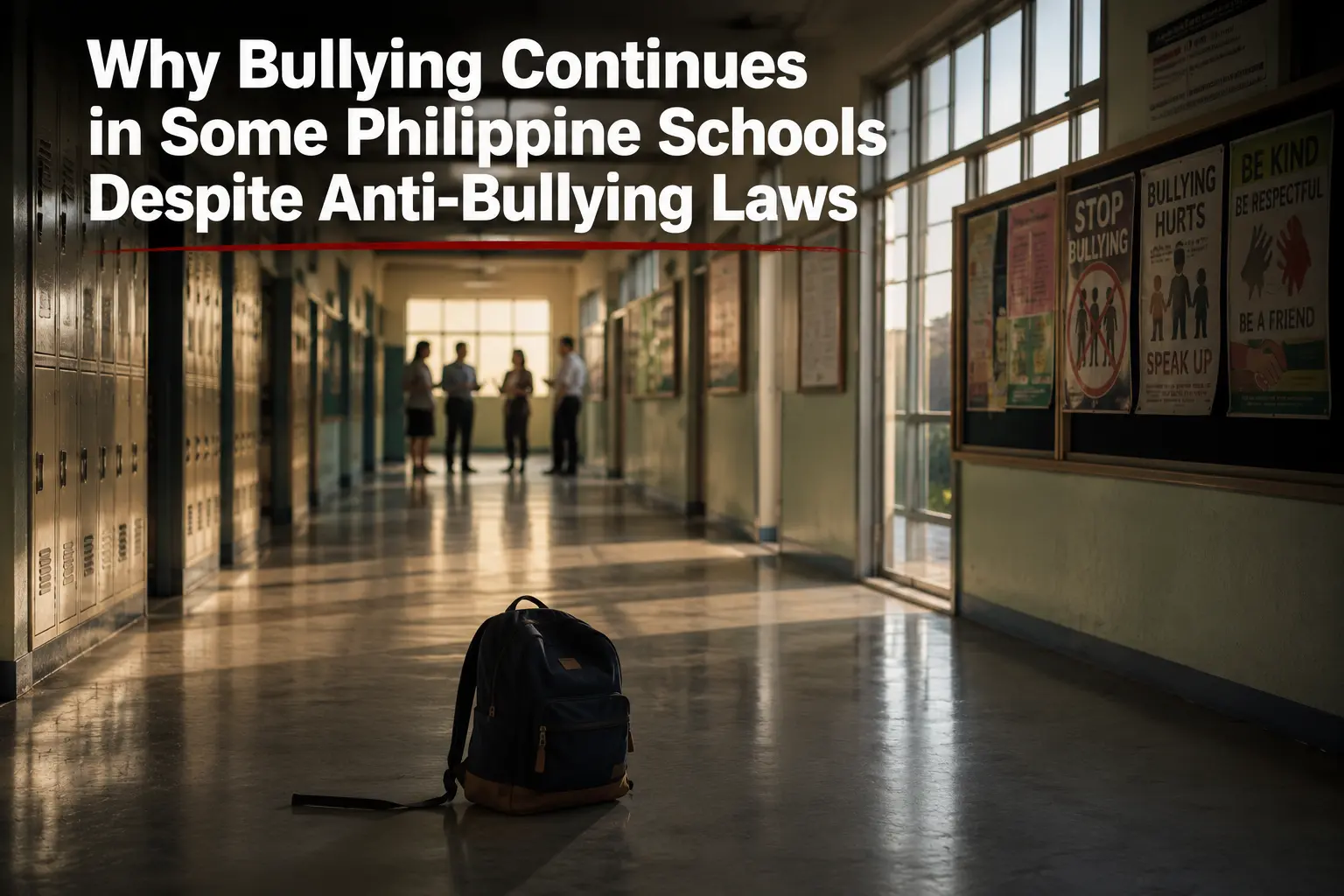
More than a decade later, however, bullying remains a persistent problem.
News reports continue to document physical assaults, verbal harassment, social exclusion, and cyberbullying in schools across the country. Many parents also share stories of delayed investigations, inconsistent disciplinary action, and incidents that leave children feeling unsupported.
This raises an important question:
If schools are legally required to stop bullying, why does it continue to happen?
The answer is more complex than many people realize.
The law gives schools a clear framework for preventing and responding to bullying, but its success depends on how consistently schools follow those policies. Factors such as limited resources, staffing shortages, inconsistent enforcement, school culture, and communication challenges can all influence how effectively bullying cases are handled.
Understanding why bullying continues is only the first step. If your child is currently experiencing bullying, knowing how to respond quickly and effectively is just as important. Our comprehensive guide, What Parents Should Do If Their Child Is Being Bullied at School: A Step-by-Step Guide, explains exactly what parents should do—from documenting incidents and working with teachers to understanding student rights and supporting a child’s emotional recovery.
Understanding these underlying issues is essential—not to excuse failures, but to identify what schools, families, and communities can do to better protect students.
What Does the Anti-Bullying Act Require Schools to Do?
The Anti-Bullying Act of 2013 (Republic Act No. 10627) was signed into law to ensure that schools provide students with a safe and supportive learning environment.
The law requires every elementary and secondary school to establish written anti-bullying policies that include:
- Procedures for reporting bullying incidents
- Prompt investigation of complaints
- Appropriate disciplinary measures
- Counseling and support for affected students
- Programs that educate students, teachers, and parents about bullying prevention
The law recognizes that bullying can take many forms, including:
- Physical bullying
- Verbal bullying
- Social or relational bullying
- Psychological bullying
- Cyberbullying
Schools are expected to respond promptly whenever bullying is reported and to take reasonable steps to prevent future incidents.
On paper, these requirements provide a strong legal foundation for protecting students.
Yet having a policy is not the same as implementing it effectively.
Many schools have anti-bullying policies because the law requires them, but leadership, resources, staff training, and school culture can affect how well these policies work in practice.
Bullying Remains a Serious Concern
Although the Philippines has comprehensive anti-bullying legislation, reports suggest that bullying continues to affect thousands of students each year.
According to UNESCO, school violence and bullying can negatively affect students’ academic achievement, mental health, school attendance, and long-term well-being. Children who experience bullying are also more likely to suffer from anxiety, depression, loneliness, and reduced academic performance.
In the Philippines, the issue has continued to draw national attention as schools work to address both traditional bullying and the growing challenge of cyberbullying.
For many families, the greatest frustration is not simply that bullying occurs—it is the perception that some cases are not handled quickly, consistently, or effectively.
When that happens, parents may lose confidence in the school’s ability to protect their children, even when anti-bullying policies already exist.
Repeated failures to respond appropriately can have lasting effects on families. Learn more in Why Parents Lose Trust in Schools After Bullying Is Ignored, where we explore how delayed action can permanently damage parent-school relationships.
Why Does Bullying Continue Despite the Law?
The Anti-Bullying Act provides schools with the legal tools needed to respond to bullying.
However, laws alone cannot change outcomes.
Successful implementation depends on people, leadership, resources, accountability, and a school culture that prioritizes student safety.
In the following sections, we’ll examine the most common reasons bullying continues in some Philippine schools despite the protections provided by law—and explore what can be done to close the gap between policy and practice.
Why Bullying Continues in Some Philippine Schools Despite Anti-Bullying Laws
1. Inconsistent Enforcement of Anti-Bullying Policies
One of the biggest challenges is not the absence of anti-bullying laws—it’s the inconsistent enforcement of those laws.
Every school in the Philippines is required to adopt anti-bullying policies under the Anti-Bullying Act of 2013. However, how those policies are implemented often varies from one school to another.
Some schools respond quickly by investigating complaints, documenting incidents, counseling students, and communicating with parents. Others may take longer to act or handle similar situations differently.
This inconsistency can leave parents uncertain about whether reported incidents will receive timely and appropriate attention.
In some cases, bullying may be dismissed as “normal childhood behavior,” “teasing,” or “kids being kids.” While conflicts between children are common, repeated acts of intimidation, harassment, or violence should never be minimized.
Delays in responding can allow bullying to continue, making it more difficult to rebuild a child’s sense of safety and confidence. Ultimately, anti-bullying policies are only as effective as their consistent implementation.
Our experience illustrates how delayed responses can affect both students and parents. You can read our firsthand account in Our Painful Experience in Public School in Cebu.
2. Many Schools Have Limited Access to Guidance Counselors
Guidance counselors play a critical role in preventing and addressing bullying.
They help investigate incidents, provide emotional support to students, mediate conflicts, identify recurring behavioral problems, and work with parents and teachers to develop appropriate interventions.
However, many Philippine schools face shortages of qualified guidance counselors, particularly in large public schools with thousands of students.
When counseling resources are limited, staff may struggle to provide timely follow-up for every reported incident.
As a result, some students may not receive the emotional support they need after experiencing bullying, while underlying problems between students may remain unresolved.
The shortage of counseling professionals also limits schools’ ability to conduct preventive programs that promote empathy, conflict resolution, and positive student behavior.
Strengthening counseling services is widely recognized as an important part of creating safer schools.
3. School Administrators Often Balance Multiple Responsibilities
School principals and administrators are responsible for far more than student discipline.
Their daily responsibilities often include:
- Managing school operations
- Supervising teachers and staff
- Preparing government reports
- Implementing education policies
- Overseeing budgets and facilities
- Coordinating community programs
- Responding to emergencies
- Handling student concerns
Because administrators manage numerous responsibilities simultaneously, responding to bullying complaints can sometimes become more challenging, particularly in schools with large student populations and limited personnel.
This does not reduce the importance of addressing bullying.
Rather, it highlights why schools need clear reporting procedures, sufficient staffing, and strong coordination among teachers, counselors, and administrators.
When responsibilities are clearly assigned and investigations begin promptly, schools are generally better positioned to respond consistently and fairly.
4. School Culture Can Influence How Bullying Is Handled
Policies alone cannot create a safe school environment.
The overall culture of a school plays an equally important role.
Schools that encourage open communication, mutual respect, and early intervention are generally better equipped to prevent bullying before it escalates. Students are often more willing to report incidents when they believe teachers and administrators will listen and take appropriate action.
On the other hand, problems can become more difficult to resolve when students fear retaliation, classmates remain silent, or bullying is viewed as a normal part of growing up.
Creating a positive school culture requires participation from everyone—including teachers, school leaders, parents, and students. Anti-bullying policies are most effective when they are supported by a community that consistently reinforces respect, empathy, and accountability.
5. Teachers May Need More Training on Bullying Prevention
Teachers often see bullying before any other adults do.
Their response can significantly influence how quickly a situation is resolved and whether students feel safe reporting future incidents.
While many teachers handle bullying effectively, not all educators receive the same level of professional development on identifying, documenting, investigating, and responding to bullying behavior.
Some forms of bullying—particularly social exclusion, emotional abuse, and cyberbullying—can be difficult to recognize because they often occur outside the classroom or leave no visible evidence.
Ongoing training helps teachers:
- Identify early warning signs
- Distinguish bullying from ordinary peer conflict
- Document incidents properly
- Apply school policies consistently
- Support both victims and students who engage in bullying
Investing in teacher development strengthens not only anti-bullying efforts but also the overall learning environment.
6. Cyberbullying Has Made the Problem More Complex
Bullying no longer ends when the school day is over.
Social media, messaging applications, online gaming, and digital communities allow harassment to continue long after students leave the classroom.
Unlike traditional bullying, cyberbullying can spread rapidly, reach a large audience, and remain accessible indefinitely through screenshots and shared content.
Students may experience:
Online harassment
Fake social media accounts
Public humiliation
Threatening messages
Rumors shared online
Exclusion from online groups
These incidents can have serious emotional consequences and may eventually affect classroom relationships and academic performance.
As technology evolves, schools, parents, and students must work together to promote responsible digital behavior and address online harassment before it escalates.
How Schools Can Better Protect Students
Reducing bullying requires more than compliance with legal requirements.
Schools that successfully prevent bullying often focus on creating systems that encourage early intervention, open communication, and continuous improvement.
Some practical steps include:
- Responding promptly to every reported incident.
- Providing regular anti-bullying training for teachers and staff.
- Expanding access to guidance counselors and student support services.
- Encouraging anonymous reporting mechanisms.
- Keeping parents informed throughout investigations.
- Promoting peer support and student-led awareness programs.
- Teaching empathy, digital citizenship, and conflict resolution throughout the school year.
Families and students are essential to creating safer schools.
Looking Ahead
The Anti-Bullying Act of 2013 established an important legal framework for protecting Filipino students.
However, legislation alone cannot eliminate bullying.
Effective prevention depends on consistent implementation, well-trained educators, adequate student support services, responsible leadership, and a school culture that places student safety at its core.
Philippine schools work hard to create safe learning environments. But more work in enforcement, counseling, teacher training, and parent-school communication can help strengthen these efforts.
Every child deserves to attend school without fear of intimidation or violence. This goal requires schools, families, communities, and government agencies to work together.
As a real-world example of the issues discussed throughout this article, Barrio Luz National High School: Why Parents Are Concerned examines one school’s response to bullying complaints and why it became a concern for parents.
Authority References
Readers who want to learn more about bullying prevention, student safety, and education policy can explore research and guidance published by these trusted organizations:
- Department of Education (DepEd)
- Republic Act No. 10627 (Anti-Bullying Act of 2013)
- UNESCO
- Philippine Institute for Development Studies (PIDS)
These organizations regularly publish research on bullying prevention, student well-being, school safety, mental health, and educational outcomes.
Frequently Asked Questions (FAQs)
Republic Act No. 10627 requires all elementary and secondary schools in the Philippines to establish policies that prevent bullying, investigate complaints, and respond appropriately to reported incidents.
Laws establish legal requirements, but effective implementation depends on school leadership, teacher training, adequate guidance counselors, proper investigations, and consistent enforcement.
Yes. Schools are expected to follow procedures outlined in their anti-bullying policies, investigate reported incidents, and take appropriate action consistent with Republic Act No. 10627 and its implementing rules.
Parents should document every incident, communicate concerns in writing, request meetings with school officials, and, if necessary, elevate unresolved complaints to the appropriate Department of Education office.
Yes. Cyberbullying may fall under the Anti-Bullying Act when it creates a hostile school environment or substantially disrupts a student’s education.
Guidance counselors help investigate cases, provide emotional support to affected students, mediate conflicts when appropriate, and coordinate intervention programs that reduce repeated incidents.
Teachers play an important role by recognizing warning signs, responding immediately to reports, documenting incidents, applying school policies fairly, and fostering respectful classroom environments.
Yes. Research has consistently shown that bullying can reduce academic achievement, increase absenteeism, lower classroom participation, and contribute to anxiety, depression, and school avoidance.
Parents can protect their children by encouraging open communication, watching for behavioral changes, documenting incidents, staying in touch with teachers, and working with schools.
No school can say bullying will never occur on their campus. However, schools with strong leadership, consistent enforcement, trained educators, supportive counseling services, and active parent involvement are generally better equipped to reduce bullying and respond effectively when incidents occur.