

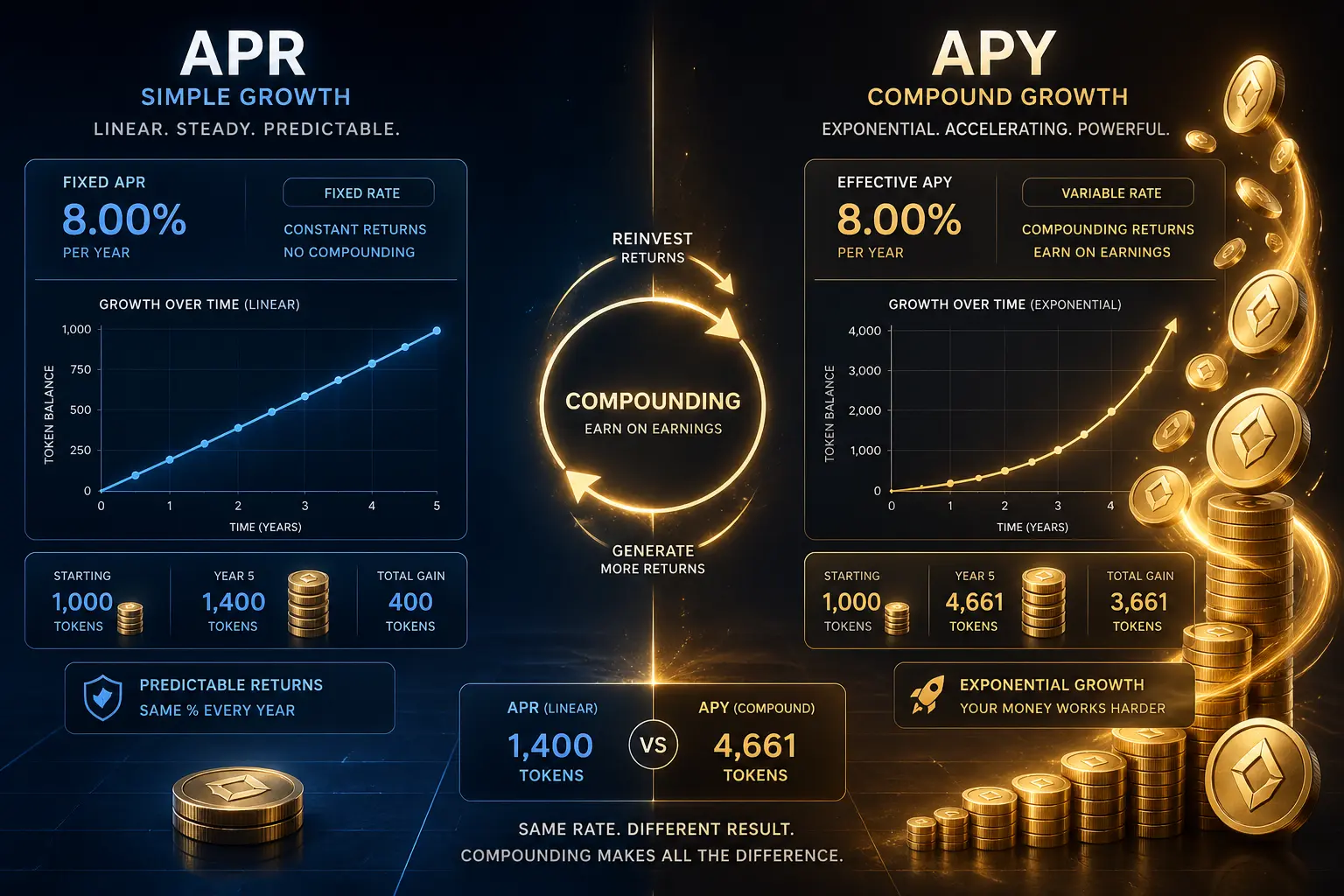
Staking platforms often advertise attractive returns—8%, 12%, even 20% or more.
But those numbers can mislead you if you overlook one critical difference:
Many beginners think they are the same, but they are different.
And misunderstanding this difference can lead to overestimating profits, choosing the wrong strategy, or misunderstanding real returns.
This guide shows how it works with straightforward examples.
APR vs APY (Quick Answer)
APR (Annual Percentage Rate) shows the simple yearly return without compounding, while APY (Annual Percentage Yield) includes compounding, meaning your earnings are reinvested and grow over time.
What Is APR in Crypto Staking?
Definition
APR shows the basic yearly return you earn without reinvesting any rewards.
Characteristics:
- No compounding
- Fixed rate assumption
- Easier to calculate
If you stake 1,000 tokens at 10% APR, you earn 100 tokens in one year.
What Is APY in Crypto Staking?
Definition
APY represents the effective return, where reinvested rewards generate additional gains over time.
Characteristics:
- Includes compounding
- Higher than APR (when compounding is active)
- Depends on the frequency of reinvestment
Consistent compounding increases total returns, pushing them above the base 10% rate over time.
APR vs APY (Side-by-Side)
| Feature | APR | APY |
|---|---|---|
| Includes Compounding | No | Yes |
| Return Type | Simple interest | Compound interest |
| Accuracy | Lower (base estimate) | Higher (real yield) |
| Complexity | Simple | More complex |
How Compounding Changes Your Returns

Where:
- A = final amount
- P = initial stake
- r = annual rate
- n = compounding frequency
- t = time (years)
The more frequently rewards are compounded, the higher your actual return.
Why Most Beginners Get It Wrong
1. They assume APR = real profit
APR ignores compounding, so it understates potential returns.
2. They assume APY is guaranteed
APY depends on:
- consistent compounding
- stable reward rates
In reality, both can change.
3. They ignore fees and validator cuts
Your actual returns are reduced by:
- validator commissions
- network fees
4. They do not include changes in token prices.
Even if your token count increases, the value may drop.
To understand how different crypto strategies compare in real-world use, see this Monero vs Zcash: Which Coin Truly Protects Your Privacy?
APR vs APY in Practice
| Scenario | Return After 1 Year |
|---|---|
| 10% APR (no compounding) | 1,100 tokens |
| 10% APY (with compounding) | ~1,105–1,110 tokens |
Where This Matters Most
APR vs APY becomes critical in:
- Long-term staking strategies
- Auto-compounding platforms
- Comparing validator yields
- Evaluating “high APY” offers
If you stake crypto, understanding compounding is important because it affects your total rewards.
Important Reality Check
A high APY does not always lead to higher profit.
Why?
- APY assumes consistent compounding
- Rewards can fluctuate
- Token prices may drop.
Always evaluate:
- sustainability
- token fundamentals
- Risk vs. reward
APR vs APY in Cosmos Staking
In Cosmos-based staking:
- Validators commonly display returns in APR (Annual Percentage Rate).
- APY depends on how often you claim and restake rewards
Tools like auto-compounding platforms can increase effective yield.
Simple Rule to Remember
- APR = base rate
- APY = real growth (if compounded)
If you want to learn more about crypto beyond staking rewards, you can read this: Is Zcash (ZEC) the Most Underrated Crypto? A Complete Guide to Private Cryptocurrency
Frequently Asked Questions (FAQs)
Is APY always better than APR?
Not always. APY is only higher when compounding is applied consistently.
Can APR turn into APY?
Yes, if you reinvest rewards regularly.
How often should I compound staking rewards?
Compounding more often can increase your earnings, but fees can reduce how much profit you actually keep.
Does higher APY mean less risk?
No. High APY often comes with higher volatility or sustainability risks.