
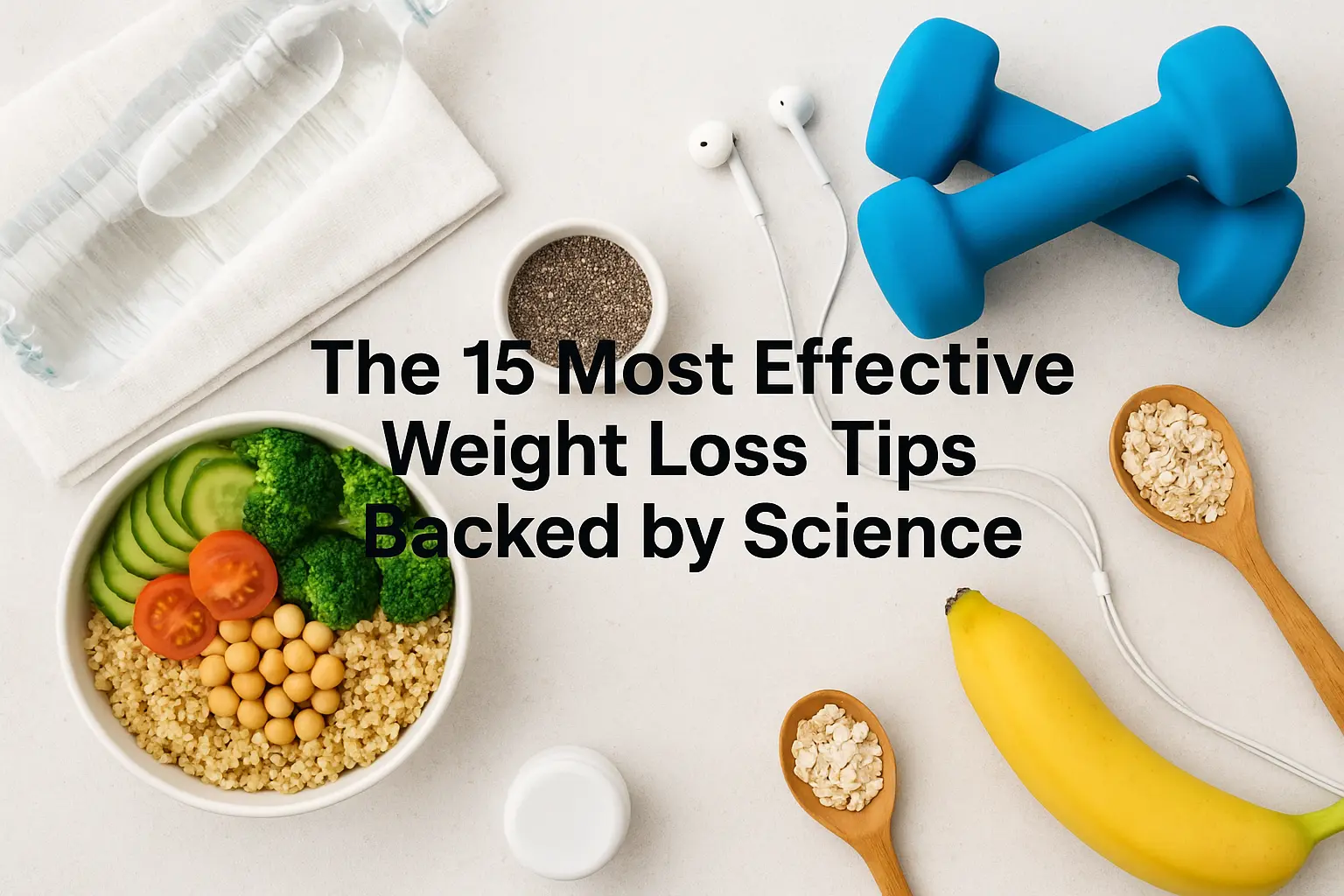
Losing weight does not require extreme diets or complicated routines.
The most effective strategies are simple, science-backed, and highly sustainable — and they work across all ages, lifestyles, and fitness levels.
Below are the 15 most powerful, research-supported weight loss tips you can start using today.
Top Evidence-Based Weight Loss Strategies
| Tip Number | Strategy | Scientific Benefit |
|---|---|---|
| 1 | Prioritize Protein | Reduces hunger and boosts metabolism |
| 2 | Reduce Added Sugars | Lowers calorie overload and stabilizes energy |
| 3 | Eat More Fiber | Improves digestion and fullness |
| 4 | Stay Hydrated | Helps control appetite and metabolism |
| 5 | Build Strength | Increases resting calorie burn |
| 6 | Get 7–9 Hours of Sleep | Reduces cravings and hormonal imbalance |
| 7 | Practice Portion Awareness | Reduces overeating |
| 8 | Limit Ultra-Processed Food | Improves appetite & metabolic control |
| 9 | Eat Slowly | Enhances satiety signals |
| 10 | Increase Daily Steps | Burns fat and improves metabolic health |
| 11 | Manage Stress | Prevents emotional eating |
| 12 | Use Smaller Plates | Proven cognitive portion-control tool |
| 13 | Cook More Meals at Home | Reduces hidden calories |
| 14 | Eat Balanced Meals | Stabilizes blood sugar |
| 15 | Track Progress | Increases consistency and self-awareness |
Prioritize Protein at Every Meal
Protein is the most satiating macronutrient.
It keeps you full longer, reduces cravings, and increases daily calorie burn through the thermic effect of food (TEF).
Sources: eggs, fish, chicken, beans, lentils, tofu, Greek yogurt.Reduce Added Sugars
Added sugars contribute to weight gain, energy crashes, and metabolic strain.
Small shifts, such as selecting water over sugary beverages, significantly improve long-term health.Eat More Fiber
Fiber slows digestion, improves gut health, and keeps you full naturally.
High-fiber foods include vegetables, fruits, oats, chia seeds, legumes, and whole grains.Stay Hydrated Throughout the Day
Water supports metabolism and reduces mistaken hunger cues.
Studies reveal that consuming water before eating can help reduce overall calorie intake.Build Strength 2–3 Times Weekly
Strength training increases muscle mass, which raises your resting metabolism.
It means you burn more calories — even while resting.
You can start with simple bodyweight exercises such as squats, push-ups, lunges, and planks.Get 7–9 Hours of Sleep
Poor sleep disrupts the balance of hunger hormones (ghrelin and leptin).
It increases cravings and makes weight control significantly harder.Practice Portion Awareness
You do not need to “diet.”
You only need to understand how much you are eating.
Use mindful portions, smaller bowls, or the hand-measure method.Limit Ultra-Processed Foods
These foods combine hyper-palatable flavors, low fiber, and easy-to-overeat textures.
Choosing whole-food alternatives drastically improves calorie control.Eat Slowly
Your brain needs time to register fullness.
Slower eating reduces caloric intake by allowing natural satiety signals to activate.Increase Your Daily Steps
Walking is one of the most effective ways to burn fat.
Walking 6,000–8,000 steps a day strengthens metabolism and supports long-term weight loss.Manage Stress Effectively
Chronic stress increases cortisol, which disrupts appetite and encourages belly fat storage.
Deep breathing, meditation, or even short walks help control stress levels.Use Smaller Plates
This simple trick reduces overeating by naturally shrinking portion sizes without causing deprivation.
It is a proven cognitive strategy supported by behavioral science.Cook Your Meals at Home
Restaurant meals often contain hidden oils, fats, and sugars.
Cooking even 3–4 meals a week at home leads to better calorie control and healthier eating patterns.Build Balanced Meals
Structure each meal using the “PFF Formula”:
Protein + Fiber + Healthy Fats
It helps keep blood sugar steady, preventing energy crashes and cravings.Track Progress Consistently
Monitoring habits helps you stay accountable.
You can track:
• steps
• workouts
• water intake
• sleep
• weekly weight changes
• measurements
Consistency, not perfection, drives results.
Sources
These organizations provide stable, global, credible health information:
- World Health Organization (WHO): https://www.who.int
- Harvard School of Public Health – Nutrition Source: https://nutritionsource.hsph.harvard.edu/
- Centers for Disease Control and Prevention (CDC) — Provides authoritative information on health, nutrition, and lifestyle guidance. https://www.cdc.gov
Frequently Asked Questions (FAQs)
What is the fastest healthy way to lose weight?
A combination of calorie awareness, higher protein intake, strength training, and limiting added sugars offers the most effective and sustainable approach.
Do I need to cut carbs to lose weight?
No. Weight loss results from overall calorie balance, not from cutting carbs. Whole grains, fruits, and vegetables support long-term fat loss.
Does drinking water help you lose weight?
Yes. Hydration improves appetite control and metabolic function.
Are home workouts effective for weight loss?
Absolutely. Body weight strength training and brisk walking can significantly improve fat loss.
How many steps do I need per day to lose weight?
Around 6,000–8,000 steps is ideal for most people, but any increase supports better health.
Do I require supplements to lose weight?
No. Entire foods and sustainable habits are more effective. Supplements are optional.
What is the most essential weight loss habit?
Consistency. Small, daily actions lead to long-term success.
- Top 10 Risk Factors for Cardiovascular Disease & How to Reduce Them
- How Pineapple Can Enhance Your Weight Loss Journey