
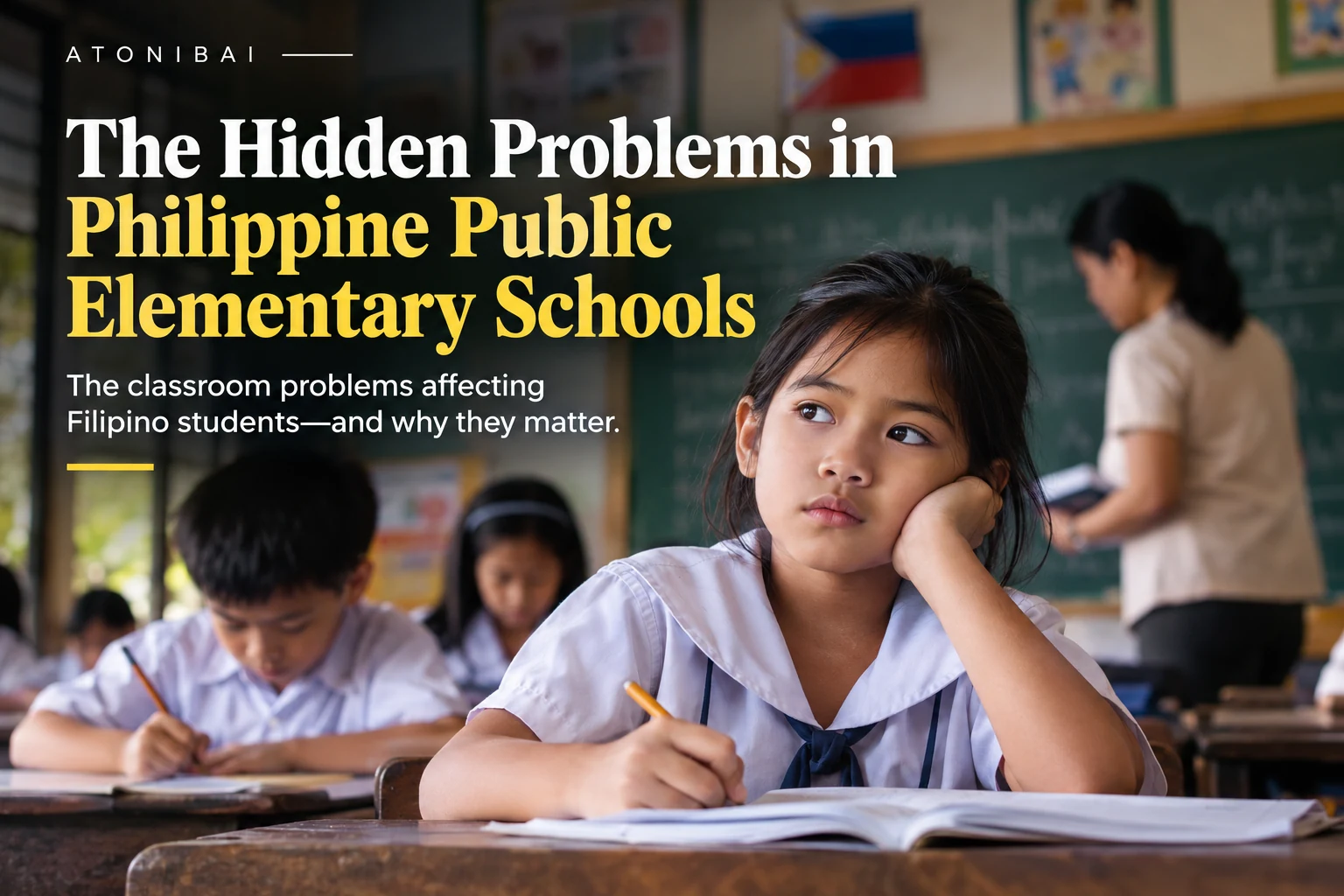
Public elementary schools are expected to give children the foundation they need to learn, behave responsibly, and develop essential life skills. But for many families, the experience raises difficult questions about the quality of classroom instruction, grading transparency, teacher workload, and school accountability.
Teachers may handle large classes, check assignments outside school hours, and complete administrative tasks alongside their teaching responsibilities. Students may have different learning experiences depending on their assigned teacher. Parents may also struggle to understand low grades or feel pressured to contribute money to the school.
These concerns point to a broader question: Are Philippine public elementary schools organized to support effective learning, or are students and teachers being asked to work around problems the system has not adequately solved?
The concern is not limited to how well each teacher performs in the classroom. The real question is whether schools have what they need to help children learn and hold people accountable when difficulties arise.
1. When Checking Assignments Takes Time Away From Teaching
Checking assignments is a necessary part of education. Teachers need to identify mistakes, assess understanding, and determine which students require additional support.
The issue starts when teachers have too much work.
A teacher handling several classes may have to check hundreds of exercises, record scores, prepare lessons, and complete other school responsibilities. A 2025 policy brief by the Second Congressional Commission on Education (EDCOM II), based on research involving thousands of teachers and schools, documented substantial workloads extending beyond classroom instruction.
The brief reported that teachers worked an average of 52 hours per week, including weekends. Classroom instruction accounted for 45% of their reported working time, while the remainder involved teaching-related and other school duties. Read the EDCOM II teacher workload findings.
This creates a practical concern. When teachers have limited time to prepare lessons and provide individual feedback, checking work can become more about recording completion and scores than correcting misunderstandings.
An assignment is useful only when it helps a student learn. Recording a mark without addressing repeated mistakes does not necessarily improve understanding.
The solution is not to eliminate assessment. Schools need manageable workloads, sufficient support staff, and enough time for teachers to explain mistakes and help students improve.
2. When Homework Becomes a Substitute for Classroom Instruction
Homework can reinforce learning. However, children learn less when they are given tasks they cannot understand.
Some parents find themselves explaining lessons, teaching procedures, and solving problems with their children to help them finish school assignments. Parents can help children learn at home, but this should not replace the teaching they receive in school.
This arrangement can also create inequality. Children whose parents have more time, educational experience, or money for tutoring may receive additional help. Others may struggle without equivalent support.
The important distinction is between practice and teaching.
| Effective homework | Problematic homework |
|---|---|
| Reinforces a lesson already taught | Requires substantial explanation of unfamiliar material |
| Has a clear learning purpose | Is assigned mainly to keep students occupied |
| Matches what the child is ready to learn | Repeatedly overwhelms students who are already struggling |
| Provides useful feedback | Is checked without addressing recurring mistakes |
Giving less or more homework matters less than making sure it helps children understand their lessons.
Schools should examine whether assignments improve understanding, whether students can complete them independently, and whether the workload is appropriate for their age.
3. Why Teaching Quality Can Differ Between Classrooms
Two children in the same grade may have entirely unique classroom experiences.
One teacher may explain concepts carefully, encourage participation, and provide guided practice. Another may rely heavily on copying notes, written exercises, and homework.
Different teaching styles are normal. The concern is whether every student receives adequate instruction and a fair opportunity to master the required competencies.
Schools need common standards for teaching lessons, grading fairly, managing classrooms, and helping students improve. A lack of coordination can lead to inconsistent exam preparation and differences in what students understand before moving to the next grade.
| Area | What schools should ensure |
|---|---|
| Lesson delivery | Concepts are explained clearly before students are expected to work independently |
| Curriculum coverage | Required learning competencies are addressed |
| Assessment | Tests reflect the material and skills students have been taught |
| Feedback | Students understand their mistakes and how to improve. |
| Parent communication | Schools keep parents informed about their children’s learning difficulties and progress. |
Consistency does not mean forcing every teacher to use identical methods. It means ensuring that differences in teaching style do not deprive students of essential learning opportunities.
School leaders and grade-level teams should work together to find gaps in instruction and help teachers improve.
4. When Parents Feel They Must Teach Everything at Home
Parents should support their children’s education, but the school remains responsible for providing effective instruction during school hours.
When children regularly struggle to explain what they learned in class, parents may begin providing additional lessons at home. Some can afford tutoring or spend hours reviewing schoolwork. Others cannot.
Over time, the amount of learning support available at home may influence how well children perform in school.
This is an important issue in public education because students should have a fair chance to learn, regardless of their family’s income, circumstances, or educational background.
Schools should identify learning gaps early and provide remedial instruction where necessary. Parents can reinforce lessons, but children should not routinely depend on their families to explain the basic material that classroom teaching was intended to cover.
The relevant question is not whether parents help. What matters is whether students develop the knowledge and skills they need to learn independently.
5. Why Parents Need Transparency in Grading
A low grade does not automatically mean that a student has been treated unfairly. Children may struggle with certain subjects, miss assessments, or fail to meet the required competencies.
However, parents should understand how a grade was calculated.
DepEd Order No. 8, s. 2015, explains how classroom assessment helps teachers monitor learning, improve their teaching, and inform students and parents about academic progress. Read the official DepEd assessment policy.
If parents receive a low final grade without a clear explanation of the recorded scores, assessment criteria, or areas needing improvement, they may struggle to understand the grading process.
Transparent assessment should include:
- Clear rules for assignments, exams, and performance tasks.
- Accurate records of student scores.
- An understandable explanation of how the final grade is calculated.
- Feedback on weaknesses and missed competencies.
- A reasonable process for requesting clarification.
Teachers should retain professional judgment over assessment, but professional judgment should be supported by evidence and established criteria.
Parents should also be able to raise reasonable questions without being treated as disrespectful merely for seeking an explanation.
For a more detailed discussion, read Are Students Being Judged Fairly in Philippine Schools?.
6. Why Parents Can Feel Powerless to Question School Decisions
Schools and families need to respect each other to work well together. Teachers need the authority to manage classrooms, while parents need appropriate ways to raise concerns about their children’s education.
Parents may feel helpless when they do not know whom to contact, cannot get clear answers, or worry that speaking up could affect their child.
Not every disagreement indicates misconduct. Teachers may have valid reasons for their decisions, and parents may not have the complete picture.
Nevertheless, schools should have clear procedures for discussing grades, classroom treatment, attendance, behavior, and unresolved complaints.
Schools should have a clear process for parents to seek explanations, review information, and report unresolved concerns to the appropriate people.
Accountability should not depend on how forcefully a parent argues or how much influence a family has within the school community.
A fair school system should make it possible to raise legitimate concerns without turning every disagreement into a personal conflict.
7. When Requests for School Contributions Create Pressure
Public schools may need extra support to provide school activities, improve facilities, and obtain learning materials. Parents may willingly support projects that benefit their children.
However, voluntary contributions must remain voluntary.
DepEd Memorandum No. 41, s. 2024, reminded schools to follow the no-collection policy, except in cases allowed by existing rules. Parents should not be pressured to make financial contributions or feel that their children may receive unfair treatment if they do not pay.
The difference between a voluntary donation and a required payment is important. Even if a contribution is called optional, parents may feel pressured to pay because they worry that refusing could affect their children.
Schools should explain the purpose of legitimate fundraising activities, follow DepEd policy, and respect families who cannot or do not wish to contribute.
Public schools should not shift their financial responsibilities onto parents through repeated requests for contributions without clear explanations.
8. Why Education Should Build Good Character and Behavior
Academic performance is essential, but it is not the only measure of a child’s development.
Elementary school is also where children learn to cooperate, respect boundaries, manage frustration, resolve disagreements, and take responsibility for their actions.
Schools in other countries offer useful examples of how to develop these skills. For instance, Why Japanese Schools Teach More Than Academic Subjects explores how everyday school activities can help students practice responsibility, teamwork, and respect for others.
These skills should not be treated as secondary to grades.
A student who performs well academically but repeatedly intimidates classmates still needs appropriate guidance. A student who struggles academically may need additional support without being defined by low marks.
Schools should establish clear behavioral expectations and address misconduct consistently. Children should learn how their actions affect others, how to solve disagreements, and when to ask adults for help.
This is especially important for preventing bullying. Although the Philippines has an anti-bullying framework, its effectiveness depends on how consistently schools enforce it.
Read Why Bullying Continues in Some Philippine Schools Despite Anti-Bullying Laws to explore the gap between having rules and ensuring that students are protected in practice.
9. Why Blaming Teachers Alone Will Not Address the Problem
Can Parents Question Grading Decisions Made by Teachers? Schools should not ignore ongoing problems with teaching quality.
But poor working conditions can also influence how well teachers teach.
EDCOM II research identifies large classes, different learning needs, insufficient support staff, and limited teaching resources as factors that complicate teacher workloads. Teachers also spend time on paperwork, meetings, and other school responsibilities.
These conditions do not excuse every classroom failure. Improving education also means giving teachers the support they need to do their jobs well.
Improving public elementary education requires action at several levels.
| Challenge | Necessary response |
|---|---|
| Excessive workload | Reduce unnecessary duties and provide administrative support |
| Uneven instruction | Strengthen mentoring, curriculum coordination, and classroom support |
| Unclear grading | Improve assessment records, feedback, and communication |
| Students falling behind | Identify learning gaps early and provide targeted remediation |
| Parent-school conflict | Establish clear communication and complaint procedures |
| Financial pressure | Enforce collection rules and clarify legitimate exceptions |
| Behavioral problems | Strengthen early guidance, consistent discipline, and bullying prevention |
Teachers require adequate support. Students require effective instruction. Parents require transparency.
These responsibilities should reinforce one another rather than compete.
10. What Must Change in Philippine Public Elementary Schools?
Reform should focus on whether students are actually learning, not simply whether schools have completed assignments, examinations, meetings, and administrative reports.
Numerous priorities deserve sustained attention.
Protect teaching time. Teachers require sufficient time to prepare lessons, explain difficult concepts, and provide feedback.
Strengthen foundational learning. Students who struggle with reading, numeracy, or other essential skills should receive help before learning gaps widen.
Make grading transparent. Students and parents should understand assessment criteria, recorded scores, and areas requiring improvement.
Improve consistency across classrooms. Schools should monitor curriculum coverage and provide support when teaching practices leave students unprepared.
Teach behavior and responsibility. Character development, respect, cooperation, and conflict resolution should be part of everyday school life.
Support teachers and enforce standards. Professional development and reasonable workloads should be paired with meaningful evaluation and accountability.
Listen to parents. Schools should provide practical ways to raise concerns and receive clear, professional responses.
These changes require more than new policies. They encourage school leaders, teachers, and education officials to review classroom teaching and check whether reforms help students learn better.
Frequently Asked Questions (FAQs)
Concerns about public elementary education include heavy teacher workloads, crowded classrooms, differences in classroom instruction, too much homework, learning difficulties, unclear grading, and poor communication with parents. These issues do not affect every school equally.
Parents may provide additional explanations, practice, or tutoring when children struggle with classroom lessons. This can help, but schools should identify what children struggle with and provide support instead of relying entirely on families to help them catch up.
Parents can request clarification about assessment criteria, recorded scores, and how a final grade was calculated. Schools should handle concerns professionally and follow their established procedures.
EDCOM II research shows that teachers have heavy workloads, including tasks beyond classroom teaching. The burden varies by school, but excessive non-teaching responsibilities can reduce time available for preparation and student support.
DepEd generally prohibits schools from collecting money from students and parents, except in certain cases allowed by its rules. Parents should consult the applicable DepEd rules if a contribution appears compulsory or its purpose is unclear.
Schools can protect instructional time, strengthen foundational skills, improve assessment transparency, provide targeted support to struggling students, coordinate teaching expectations, and address behavioral problems consistently.
Research documents serious challenges involving learning outcomes, teacher workload, and educational resources. Schools need lasting improvements, although not every school faces the same challenges. A balanced assessment should consider both existing problems and examples of effective teaching.
Authority References
- EDCOM II—Understanding Teacher Workload as a Systemic Issue
- DepEd Order No. 8, s. 2015—Policy Guidelines on Classroom Assessment
- DepEd Memorandum No. 41, s. 2024—No-Collection Policy
The Standard Public Schools Should Meet
Philippine public elementary schools serve children with different abilities, backgrounds, and needs. Teachers work under different conditions, and many make substantial efforts to help their students succeed.
But good intentions cannot replace effective instruction, transparent assessment, adequate resources, and accountability.
Schools should make grading clear to parents and ensure teachers have enough time for classroom instruction. Students should receive help when they fall behind and guidance when their behavior harms others.
Public elementary education should do more than keep children occupied and produce report cards. It should help them learn, develop, and build the foundations they demand for the future.