
A school can teach children to solve mathematics problems, write essays, and pass examinations. Can schools also help children learn responsibility, respect others, and contribute to their community?
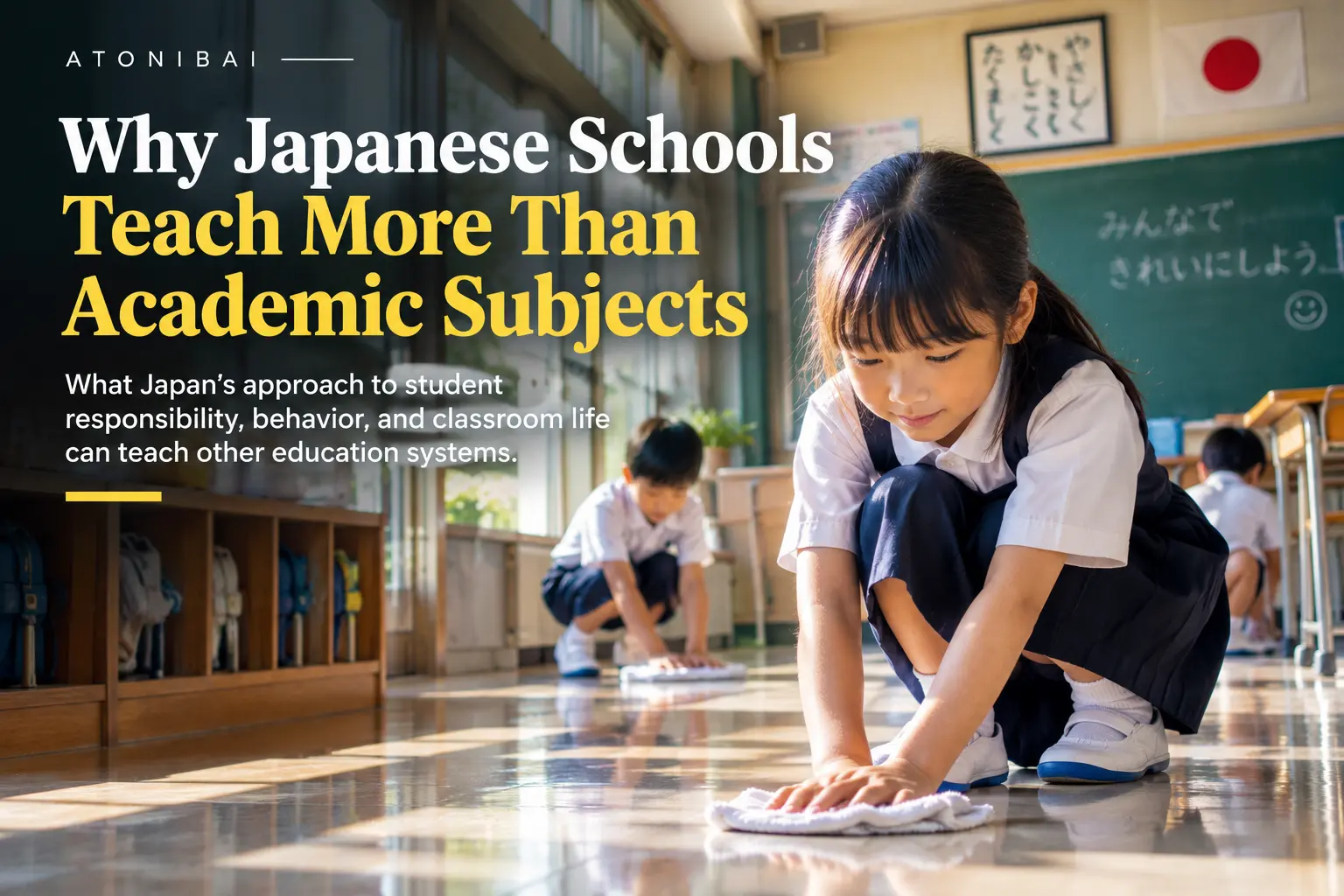
Students learn responsibility not only through lessons but also through daily activities, as seen in Japan.
In many Japanese schools, learning extends beyond textbooks and classroom instruction. Students may help serve school lunches, clean classrooms, share daily responsibilities, and take part in group activities.
These practices are not just about keeping the school environment tidy. They can also help students practice responsibility, teamwork, and consideration for others.
Although Japan offers useful lessons, its education system is not perfect, and other countries must adapt its practices to their needs. However, it offers an important lesson: education can develop both academic ability and the habits needed to live responsibly with others.
Japanese Schools Focus on More Than Academic Success
Japanese education continues to focus on academic learning alongside other essential skills. Students study mathematics, science, language, social studies, and other subjects.
Education in Japan also helps children build good character, work with others, and take responsibility.
Japan’s Basic Act on Education aims to develop creativity, teach fairness, promote teamwork, and encourage respect for life and nature. These goals extend beyond examination results. Japan’s Ministry of Education: Basic Act on Education.
This distinction matters because academic performance and responsible behavior are not the same thing.
A student may earn high marks but struggle to cooperate with classmates. Another may perform less impressively on examinations while demonstrating reliability, empathy, and a willingness to help others.
A well-rounded education should recognize that children need opportunities to develop both sets of abilities.
Life Skills Are Practiced Through Everyday School Routines
One unique feature of Japanese schools is that students share responsibilities for keeping the school clean and organized.
Students may have rotating classroom duties, participate in committees, serve lunch, and help clean shared spaces.
Japan’s official government publication Highlighting Japan describes these activities as part of a broader approach to developing autonomy, cooperation, and a sense of contribution to the community.
Repeating these activities is part of what makes them valuable. Students are not simply told to be responsible; they are given chances to show it. They have opportunities to practice it.
Three examples illustrate the approach.
1. Students Help Clean Their Schools
One common feature of Japanese school life is that students help keep their schools clean.
In many Japanese schools, students help clean classrooms, hallways, and other shared areas. This teaches students that everyone shares the responsibility of keeping the school clean, not just the cleaning staff.
According to Japan’s official educational travel organization, school cleaning helps students understand the value of work, teamwork, and caring for their shared environment. Japan Educational Travel: Cleaning Time at Japanese Schools.
Children learn responsibility not only through classroom lessons but also by putting it into practice.
However, cleaning routines alone do not guarantee good behavior. Schools should explain the purpose of these activities and make sure the tasks are appropriate for each age group.
2. Students Take Responsibility for School Lunches
In many Japanese schools, students help serve and distribute school lunches.
These duties require students to follow rules, cooperate with classmates, and consider other people’s needs.
Such activities also create opportunities to discuss food, health, hygiene, and shared responsibility.
The important point is not that every school must adopt the same lunch system. Ordinary school activities can also teach valuable lessons when students take an active part in them.
A routine that might otherwise be treated as a logistical task can also help children practise organization, cooperation, and accountability.
3. Students Participate in Classroom and School Duties
Japanese schools may assign rotating duties, such as checking attendance, leading parts of classroom activities, erasing the blackboard, or helping organize school events.
These responsibilities allow students to take initiative and contribute to their group’s daily activities.
Japan’s government describes these student-led activities as a way to develop autonomy, cooperation, and public-mindedness. Highlighting Japan: Social Skills Nurtured Through a Culture of Autonomy and Collaboration.
Fairly shared responsibilities teach students that a community works well when everyone contributes.
They can also discover that leadership is not always about giving instructions. Occasionally it means completing an ordinary task reliably and helping others succeed.
How Everyday School Activities Build Life Skills
Children do not develop social responsibility simply because adults tell them to behave well.
They need opportunities to practice making decisions, cooperating, resolving disagreements, and following through on commitments.
School routines can provide these opportunities.
| School practice | Potential learning benefit |
|---|---|
| Cleaning shared spaces | Responsibility for the environment |
| Serving school lunches | Cooperation and organization |
| Rotating classroom duties | Reliability and initiative |
| Group activities | Communication and teamwork |
| School events | Planning and collective problem-solving |
These are potential benefits, not guaranteed outcomes. These tasks become less meaningful when schools focus only on getting them done instead of helping children learn.
The quality of the experience depends on whether students understand its purpose, participate fairly, and receive appropriate guidance from teachers.
Schools can use these daily activities to teach life skills without making an already full curriculum even more crowded.
What Filipino Schools Can Learn From Japan
This comparison is relevant because many discussions about Philippine education focus more on academic results than on other aspects of learning.
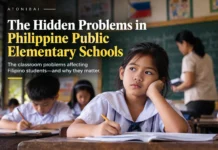
For a closer look at these issues, read The Hidden Problems in Philippine Public Elementary Schools, which examines the challenges affecting classroom instruction, grading transparency, teacher workload, and school accountability.
These priorities matter. Children require strong foundational skills to progress through school and prepare for future opportunities.
However, academic instruction is only one part of education.
Beyond academics, schools should teach children how to respect others, fulfill their responsibilities, work with others, and solve problems.
Philippine schools can learn from Japan without copying every practice. It is whether they can create more consistent opportunities for students to practice responsible behavior.
For example, schools could strengthen:
- Shared responsibility: Give students age-appropriate duties that help maintain classrooms and common spaces.
- Cooperation: Use group activities that require students to contribute fairly rather than allowing one or two students to do most of the work.
- Behavior guidance: Teach respect, conflict resolution, and accountability alongside academic lessons.
- Student participation: Let children help organize classroom activities and school projects in ways that suit their age.
- Fair and consistent expectations: Explain behavioral rules clearly and apply them consistently, while protecting students from humiliation or unfair treatment.
These changes do not necessarily require expensive technology or major infrastructure projects. They require planning, teacher support, consistent expectations, and a school culture that treats student development as part of education.
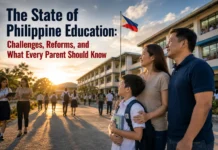
For a broader examination of the challenges facing Filipino families and schools, see The State of Philippine Education: Challenges, Reforms, and What Every Parent Should Know.
Understanding the Limitations of Japan
Japan offers useful examples, but it should not be presented as a country where every school works perfectly.
Japanese students face academic expectations, and schools also encounter challenges involving student well-being, bullying, and teacher workloads.
A strong education system must do more than teach discipline. Schools also have a duty to protect students, respond to bullying, support struggling learners, and ensure teachers have adequate resources.
Cleaning and teamwork can teach useful lessons, but they cannot solve every problem. Students with serious difficulties may still need better teaching, proper assessment, or professional support.
Students should learn to take responsibility for their actions while still being allowed to ask questions.
Schools can encourage students to respect others and support people in their communities. They should also be able to ask questions, express concerns, and challenge unfair treatment through appropriate channels.
The goal should be responsible independence, not simply compliance.
The Role of Teachers Remains Essential
School routines do not teach themselves.
Teachers help children understand why responsibilities matter, how to work through disagreements, and what to do when someone fails to contribute fairly.
They also need to recognize when a child requires additional support rather than assuming every behavioral problem reflects a lack of discipline.
This requires time, training, and manageable workloads.
Expecting teachers to develop academic ability, emotional skills, social responsibility, and good behavior without adequate support would create another unrealistic burden.
For this reason, improving education involves more than introducing new activities. Teachers can guide students better when schools provide adequate support and resources.
Education Should Prepare Children for Life, Not Only Examinations
Japan’s approach highlights an important distinction between learning about responsibility and practicing it.
A lesson can explain why cooperation matters. Working together on daily tasks helps students develop teamwork skills.
Students learn to value shared spaces not only through classroom lessons but also by helping to care for them.
Neither method is sufficient on its own. Children need academic knowledge, clear guidance, meaningful practice, and opportunities to reflect on their experiences.
The broader lesson is that daily school activities can help children develop just as classroom lessons do.
Education should teach students more than how to answer questions correctly. It is also to help them become capable, considerate, and responsible people.
Authority References
- Japan’s Ministry of Education—Basic Act on Education
- Highlighting Japan—Social Skills Nurtured Through Autonomy and Collaboration
- Japan Educational Travel—Cleaning Time at Japanese Schools
Frequently Asked Questions (FAQs)
Many Japanese schools use classroom cleaning to help students understand the value of work, take responsibility, and help one another.
No. Academic learning remains central to Japanese education. The distinction is that the educational framework also emphasizes moral development, cooperation, independence, and social responsibility.
In many schools, students help serve and distribute meals. These activities give students practical ways to learn organization, cooperation, and responsibility.
Yes, selected practices may be adapted to local conditions. Education systems should adapt foreign practices to local needs, available resources, teacher workloads, and cultural differences rather than copy them without careful review.
No. The value of these activities depends on how well schools organize them and explain their purpose. How students take part and the guidance they receive matter more than the task itself.
Yes. Japan, like other countries, faces bullying and student well-being challenges. Although these practices can be helpful, they do not guarantee responsible behavior from every student or solve every problem in Japan’s education system.
Students should have more opportunities to work together, take responsibility, and respect others while studying. These skills grow through consistent guidance and meaningful involvement, rather than punishment alone.