

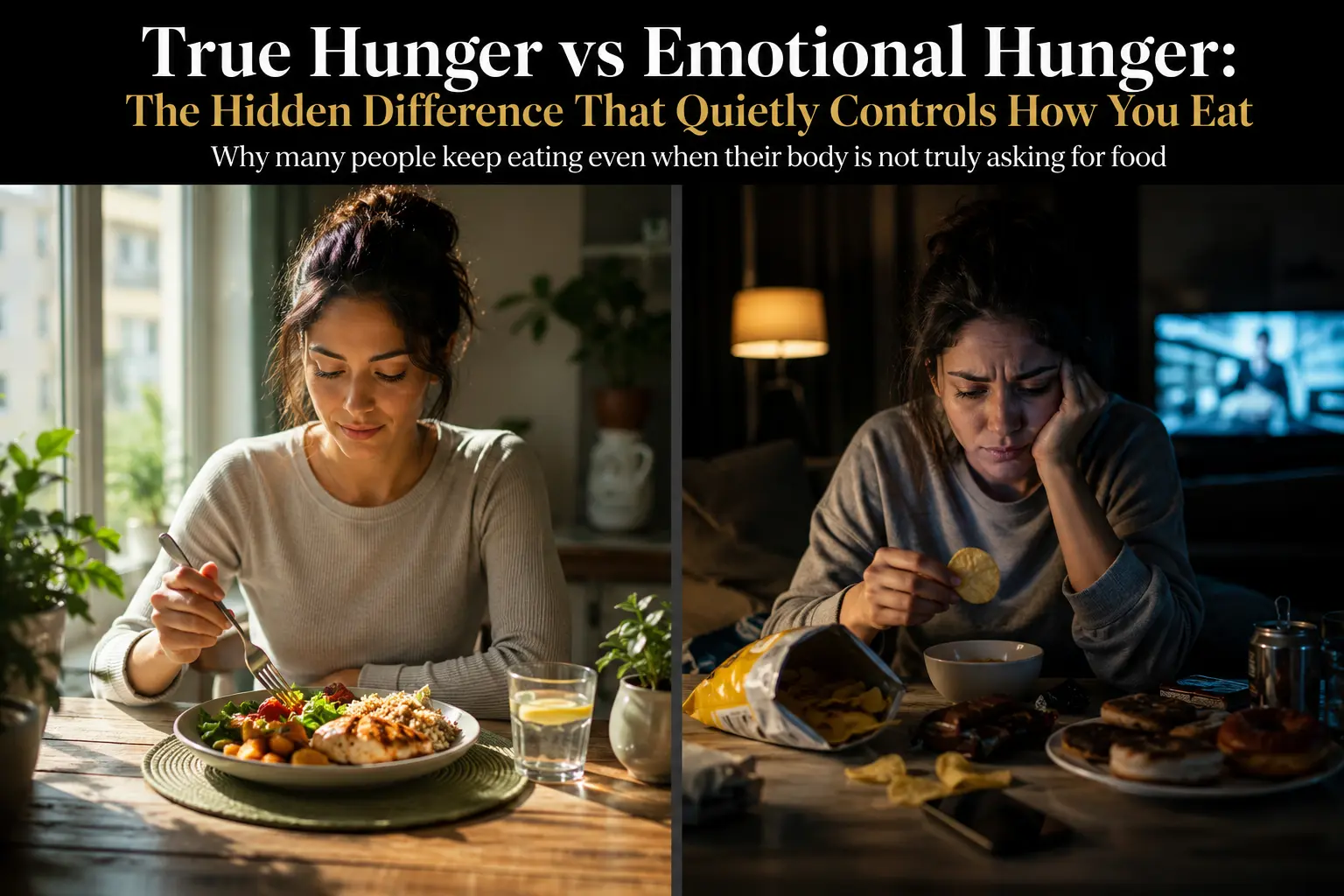
Have you ever opened the fridge—not because you were truly hungry, but because something just felt off emotionally?
Maybe you were:
- stressed
- bored
- emotionally drained
- overwhelmed
- lonely
And somehow, food felt like the answer.
It is where many people get confused.
Because not every craving is true hunger.
Sometimes your body wants energy.
Other times, your mind wants relief.
And learning the difference can completely change the way you eat.
Quick Truth
What True Hunger Actually Feels Like
Physical hunger usually builds slowly.
Your body starts sending signals like:
- stomach growling
- low energy
- mild weakness
- reduced focus
And importantly:
You don’t need “the perfect craving.”
Almost any normal meal sounds acceptable.
Emotional Hunger Feels Very Different
Emotional hunger tends to appear suddenly.
And it usually wants:
- sugar
- junk food
- snacks
- fast food
- comfort foods
Not because your body urgently needs calories.
But it happens because your brain is seeking emotional relief.
It often happens during:
- stress
- boredom
- anxiety
- sadness
- exhaustion
The Hidden Pattern Most People Never Notice
True hunger says:
Emotional hunger says:
That difference sounds small.
But it changes everything.
True Hunger vs Emotional Hunger
| True Hunger | Emotional Hunger |
|---|---|
| Builds gradually | Appears suddenly |
| Most foods sound acceptable | Specific cravings appear |
| Stops after fullness | Can continue after eating |
| Physical need | Emotional reaction |
Why Emotional Eating Happens
Your brain naturally connects food with reward and comfort.
Over time, repeated patterns become automatic:
- Stress → snacks
- Boredom → eating
- TV watching → cravings
- Sadness → comfort food
Eventually, the brain starts using food as emotional regulation.
Not physical fuel.
How This Connects to Your Other Eating Habits
This pattern connects to several behaviors people often overlook.
Why Eating Habits Matter More Than Diets for Health and Weight Management
explains why long-term eating patterns matter more than strict food rules.
Why Skipping Meals Makes You Hungrier Later
shows how delayed eating can intensify hunger and cravings later in the day.
How Often Should You Eat for Better Metabolism? (Simple Guide)
breaks down common myths about meal timing and metabolism.
Together, these articles reveal an important truth:
Signs You May Be Eating Emotionally
You may be experiencing emotional hunger if:
- Cravings appear suddenly
- You want highly specific foods
- Eating feels automatic
- You continue eating after fullness
- Food feels emotionally comforting
The Simple Pause That Changes Everything
Before eating, ask yourself:
That one question creates awareness.
And awareness is where behavior change begins.
Why This Matters for Weight Control
Many people think their struggle is:
- lack of discipline
- weak motivation
- failed diets
But often the deeper issue is:
- stress eating
- emotional triggers
- unconscious habits
- comfort-based eating patterns
It is why strict dieting alone rarely solves the real problem.
Insight
It’s a learned response pattern your brain repeats over time.
Frequently Asked Questions (FAQs)
What is the difference between true hunger and emotional hunger?
True hunger is physical and gradual. Emotional hunger is sudden and emotionally triggered.
Why do I crave junk food when stressed?
Stress activates reward pathways in the brain, increasing cravings for comfort foods.
Can emotional eating cause weight gain?
Yes. Emotional eating often leads to extra calorie intake without true physical hunger.
How do I know if I’m actually hungry?
Physical hunger usually develops slowly and can be satisfied with normal meals, not only cravings.
Is emotional eating normal?
Yes. Many people emotionally eat when stressed, bored, or experiencing emotional discomfort.
Why do I eat when I’m bored?
Boredom can trigger stimulation-seeking behavior, and food becomes an easy source of reward.