

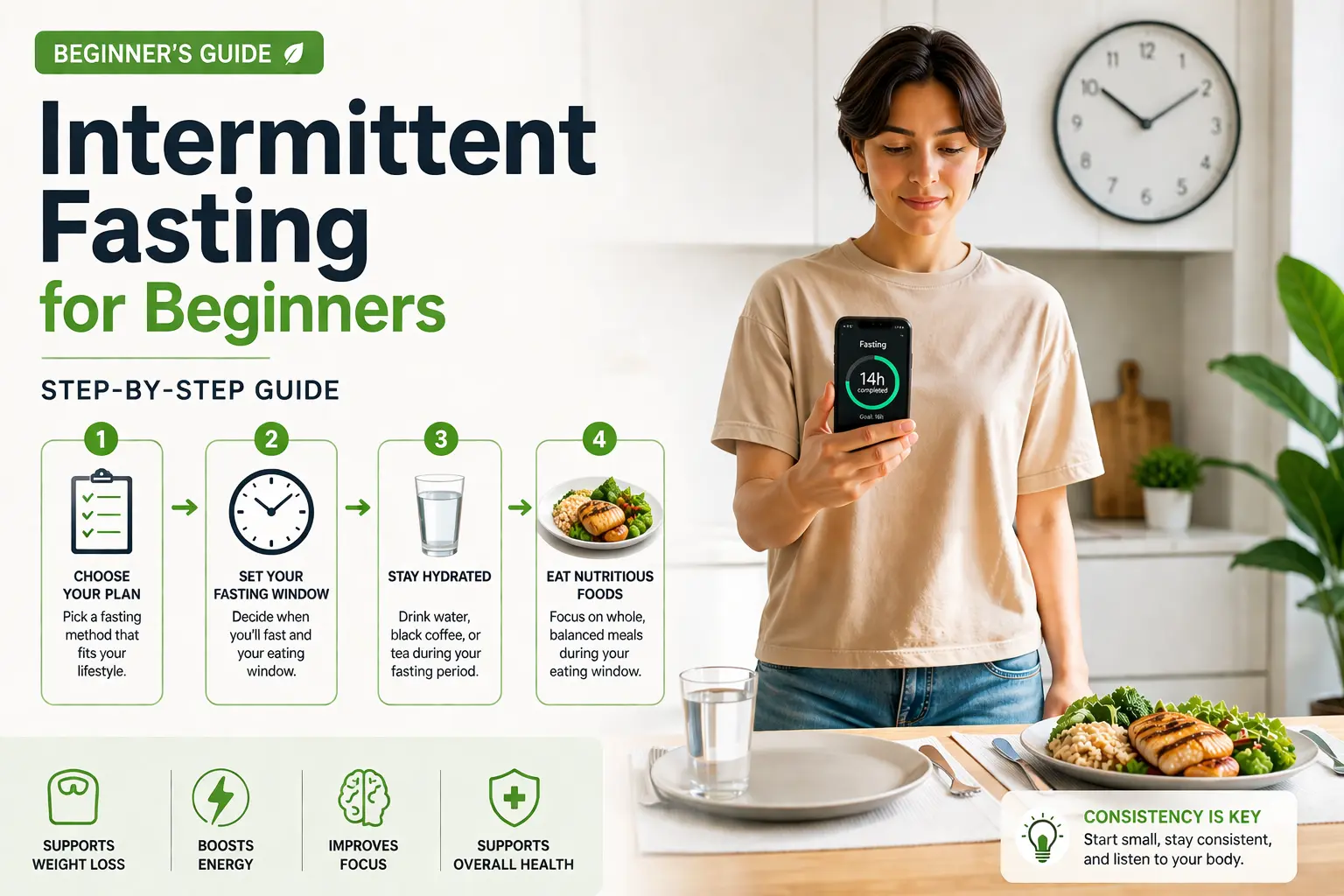
Intermittent Fasting sounds simple: don’t eat for a period of time, then eat normally.
But for beginners, it can feel confusing:
- How long should you fast?
- Is it safe?
- Will you lose energy?
The truth is, intermittent Fasting works best when done correctly and gradually.
Quick Answer (Fast Overview)
Intermittent Fasting is a way of eating where you fast for certain hours and eat only during a specific time window. Beginners should start with 12–14 hours and focus on consistent, balanced meals.
What Is Intermittent Fasting?
Intermittent Fasting is not a diet. It’s an eating schedule.
Instead of focusing on what to eat, it focuses on when you eat.
You cycle between:
- Fasting period → no calories
- Eating window → normal meals
If you want to understand how meal timing affects your metabolism and how often you should actually eat, read:
How Often Should You Eat for Better Metabolism?
Step 1: Choose the Right Fasting Method
Start simple. Don’t jump into extreme Fasting.
| Method | Fasting Time | Best For |
|---|---|---|
| 12:12 | 12 hours fast / 12 hours eat | Complete beginners |
| 14:10 | 14 hours fast / 10 hours eat | Easy transition |
| 16:8 | 16 hours fast / 8 hours eat | Most popular and effective |
Start with 12:12 or 14:10, then adjust.
Step 2: Build a Simple Eating Window
Example (16:8 method):
📅 Simple Daily Example
- 8:00 PM → Stop eating
- 8:00 PM – 12:00 PM → Fast
- 12:00 PM → First meal
- 7:30 PM → Last meal
During Fasting:
- Water ✔
- Black coffee ✔
- Tea (no sugar) ✔
Avoid:
- Sugary drinks
- Snacks
- “Just a small bite”
Step 3: Focus on Food Quality
Fasting is not a free pass to eat anything.
Your meals should include:
- Protein (meat, eggs, fish)
- Healthy fats
- Whole carbohydrates
- Vegetables
Bad food + fasting = poor results
Step 4: Expect an Adjustment Period
Your body needs time to adapt.
Common early effects:
- Hunger at usual meal times
- Slight fatigue
- Cravings
These usually improve after a few days.
Step 5: Stay Consistent (Not Perfect)
Consistency matters more than strict daily rules.
Consistency matters more than perfection:
- Follow your schedule most days
- Don’t stress about occasional breaks.
What Happens in Your Body During Fasting?
During Fasting:
- Insulin levels drop
- Fat burning increases
- The body activates repair processes.
For a deeper breakdown of what happens inside your body during Fasting, read:
What Happens to Your Body When You Fast?
✅ Do’s and Don’ts
Do:
- Drink water during Fasting
- Eat balanced meals
- Start gradually
Don’t:
- Overeating after fasting
- Start too aggressively
- Ignore hunger signals
Insight
Is Intermittent Fasting Better Than 3 Meals a Day?
It depends on the person.
Some people:
- Eat less naturally
- Feel more in control.
Others:
- Prefer regular meals
For a full comparison of Fasting and traditional eating patterns, see:
Fasting vs 3 Meals a Day: The Hidden Truth Behind Modern Eating Habits
Who Should Avoid Fasting?
Fasting is not ideal for:
- Children and teenagers
- Pregnant or breastfeeding women
- People with medical conditions
- Those who have struggled with unhealthy eating patterns
Frequently Asked Questions (FAQs)
How long should a beginner fast?
Start with 12–14 hours, then increase gradually.
Can I drink coffee while fasting?
Yes, you can drink coffee if it’s plain and unsweetened.
Will I feel hungry all the time?
No. Hunger comes in waves and gets easier over time.
How many meals should I eat?
Usually, 2–3 meals during your eating window.
Can I exercise while fasting?
Yes. Light to moderate exercise is fine.
How long before I see results?
Some notice changes in 1–2 weeks with consistency.
What breaks a fast?
Any calories—snacks, sugary drinks, or cream.
Is intermittent Fasting safe long-term?
Yes, for most healthy adults when done properly.