

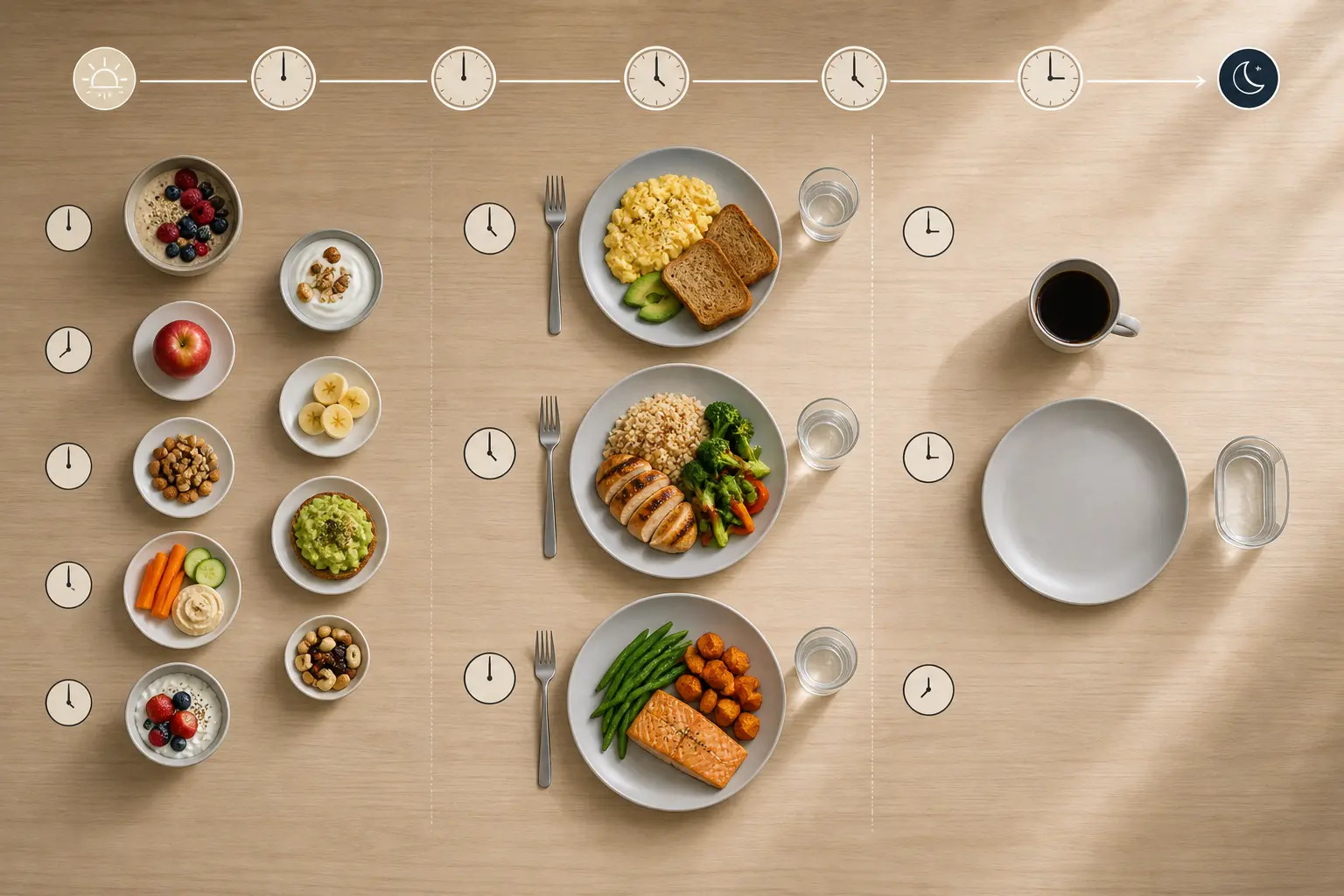
How often should you eat to keep your metabolism working at its best?
Some people say you should eat every few hours to boost your metabolism. Others claim fewer meals—or even fasting—is better for fat loss and energy.
So what is the real truth here?
The reality is simpler than most advice online.
Your metabolism is influenced less by how often you eat than most people believe. What matters more is your total food intake, food quality, and consistency over time.
In this guide, you will learn how meal frequency affects metabolism, what science says about it, and how to choose the eating pattern that works best for you.
Quick Answer
Eating more often does not significantly boost metabolism. Your total daily calories, food quality, and lifestyle have a much bigger impact.
What Is Metabolism?
Metabolism is how your body uses energy to stay alive and function.
It includes:
- Breathing
- Digestion
- Movement
- Cell repair
Your daily calorie burn comes from three main parts:
| Component | Role | Impact |
|---|---|---|
| Basal Metabolic Rate (BMR) | Energy used at rest | Largest portion |
| Physical Activity | Exercise and movement | Varies per person |
| Thermic Effect of Food | Energy used to digest food | Small but real |
Does Eating More Often Boost Metabolism?
No, not in a meaningful way.
Your body burns calories when digesting food, but:
So:
- 3 meals = similar calorie burn
- 5–6 meals = similar calorie burn
Meal frequency alone does not speed up metabolism.
How Often Should You Eat?
The ideal number of meals varies from person to person.
Here are common options:
🥗 3 Meals a Day
- Simple and structured
- Works well for most people
🍽️ 4–6 Smaller Meals
- May help control hunger
- Easier for some to manage energy
⏳ Fewer Meals (Fasting)
- May reduce calorie intake
- Helps some people avoid snacking
For a deeper comparison of these approaches, see:
Fasting vs 3 Meals a Day: The Surprising Reality of Modern Eating Habits
Meal Frequency Comparison
| Pattern | Best For | Watch Out For |
|---|---|---|
| Frequent Meals | Managing hunger | Overeating |
| 3 Meals | Balanced routine | Rigid schedule |
| Fasting | Reducing snacking | Adjustment period |
What Actually Improves Metabolism
If your goal is better metabolism, focus on these:
✅ 1. Total calorie balance
Too much or too little food has the biggest impact.
✅ 2. Protein intake
Protein burns more calories during digestion.
✅ 3. Physical activity
Movement increases calorie burn.
✅ 4. Muscle mass
More muscle = higher metabolism.
Insight
Meal Frequency and Weight Loss
Meal timing alone does not cause weight loss.
Weight loss happens when:
- You regularly eat fewer calories than your body uses.
Some people find fasting helpful because it reduces the time spent eating.
If you want to try it, follow our friendly guide:
Intermittent Fasting for Beginners (Step-by-Step Guide)
What Happens During Fasting?
When you eat less often, your body shifts energy use:
- Lower insulin levels
- Increased fat burning
- Improved energy regulation over time
For a deeper explanation, read:
What Happens to Your Body When You Fast?
Common Myths
Eating every 3 hours boosts metabolism.
False. It does not significantly increase calorie burn.
Skipping meals is bad for metabolism.
Not in the short term for healthy people.
More meals = faster fat loss
It applies only under controlled calorie consumption.
When Meal Frequency Matters More
Meal timing may matter more if you:
- Train regularly
- Have blood sugar issues
- Prefer structured routines
Otherwise, flexibility works fine.
Frequently Asked Questions (FAQs)
How many meals should I eat per day?
There is no fixed number. Choose what fits your lifestyle.
Is eating more often better for metabolism?
No. Total calorie intake matters more.
Can I eat 2 meals a day?
Yes, as long as your nutrition is balanced.
Does fasting slow metabolism?
Short-term fasting does not significantly slow metabolism.
What is the best eating schedule?
The most effective schedule is the one you can maintain consistently.