
Teacher quality is one of the strongest in-school factors influencing student outcomes.
But experience matters — especially in high-pressure environments such as overcrowded public school classrooms.
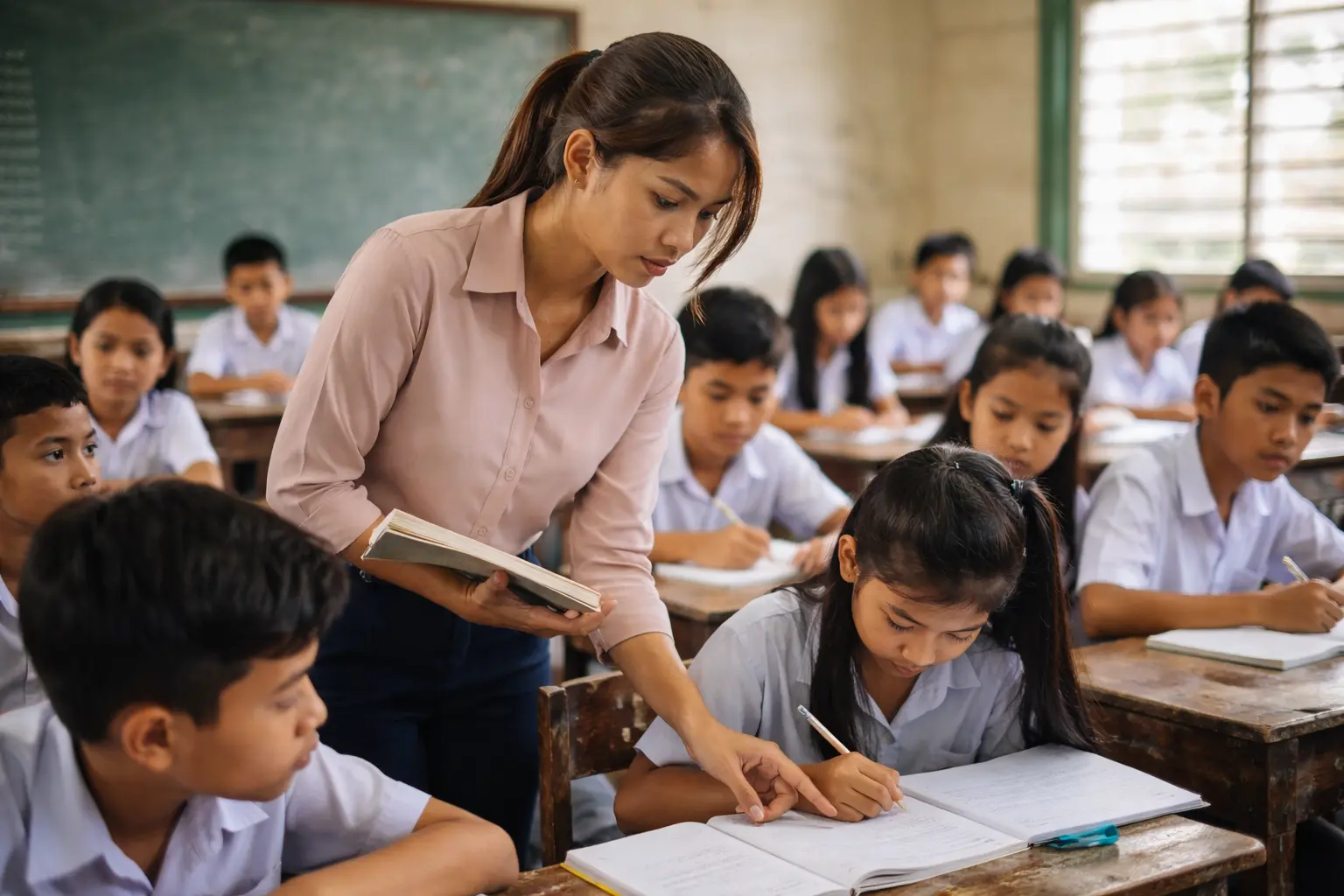
Many early-career teachers in Philippine public schools manage classes of 40 or more students. Even when teachers are dedicated and capable, limited experience and structural pressures can weaken instruction, classroom control, and grading standards.
It is not about blaming individuals.
The focus is on examining how teacher inexperience, without sufficient institutional support, can influence student learning.
Why Experience Matters in Teaching
Teaching is not purely theoretical.
It requires:
- Classroom management skills
- Assessment design competence
- Differentiated instruction strategies
- Time management under pressure
- Emotional intelligence in diverse classrooms
These skills often develop over time through practice, mentoring, and professional development.
In systems such as Singapore and Finland, early-career teachers participate in structured mentorship programs before taking on full classroom loads independently.
The key question is whether Philippine public schools consistently provide similar support systems.
The Overcrowding Factor
Class size amplifies inexperience.
Managing 15 students is fundamentally different from managing 45.
With 40+ learners:
- Individual feedback time decreases.
- Behavioral disruptions multiply
- Lesson pacing becomes difficult.
- Assessment grading becomes time-intensive
An inexperienced teacher may struggle to:
- Maintain consistent discipline
- Adapt instruction for struggling learners.
- Identify subtle comprehension gaps.
Over time, these gaps can compound.
Research by the PACE on Class Size and Student Outcomes indicates that larger class sizes can reduce individualized instruction and negatively impact student learning, particularly among teachers in the early stages of their careers.
Instructional Strategy Gaps
Early-career teachers may rely heavily on:
- Textbook-based instruction
- Lecture-style delivery
- Standardized tests
- Rigid grading systems
Without diversified strategies such as:
- Formative assessment
- Interactive learning
- Differentiated instruction
- Performance-based evaluation
Students with weaker foundations may fall further behind.
How Inexperience Can Affect Student Grades
Grading fairness requires:
- Clear rubrics
- Consistent standards
- Balanced assessment design
- Feedback calibration
When teachers lack grading experience, risks include:
- Overly strict marking
- Over-reliance on written exams
- Inconsistent scoring
- Limited qualitative feedback
In high-volume classrooms, grading fatigue can also lower precision.
It does not imply intentional unfairness.
It highlights how workload and inexperience interact.
The Mentorship Gap
Strong education systems emphasize:
- Senior teacher coaching
- Peer review
- Continuous professional development
- Structured evaluation cycles
A lack of active mentorship forces young teachers to learn through trial and error.
Students effectively become part of the learning curve.
The Psychological Impact on Students
Inconsistent instruction or unclear grading standards may lead to:
- Reduced academic confidence
- Perceived unfairness
- Decreased engagement
- Lower classroom participation
Students who repeatedly receive low grades without constructive feedback may disengage entirely.
It compounds long-term learning loss.
Is Experience Always the Deciding Factor?
Not necessarily.
Some young teachers are innovative, highly motivated, and adaptable.
Conversely, some veteran educators may resist updated teaching methodologies.
The issue is not age — it is structured professional development.
Countries like Vietnam have demonstrated that teacher support systems can significantly influence student performance outcomes.
The key variable is system design.
Structural Questions Worth Asking
- Are new teachers receiving adequate mentoring?
- Can early-career teachers successfully teach and manage classrooms with 40 or more students?
- Is grading audited or standardized?
- Is ongoing training mandatory and evaluated?
These questions focus on governance — not individuals.
The Long-Term Consequences
If early-career teachers operate without sufficient guidance:
- Learning gaps widen
- Student frustration increases
- Academic confidence declines
- National education performance stagnates.
Teacher development pipelines influence long-term economic competitiveness.
Education systems improve when teacher training, classroom size management, and accountability mechanisms evolve together.
Frequently Asked Questions (FAQs)
Does teacher experience affect student performance?
Research suggests experience improves classroom management, instructional depth, and assessment consistency — especially during the first five years of teaching.
Are young teachers less effective than experienced ones?
Not necessarily. Effectiveness depends on training, mentoring, and support systems, not on age alone.
How can inexperience affect grading fairness?
In the absence of standardized rubrics and calibration, early-career teachers may exhibit inconsistent grading or overreliance on rigid assessments.
Do overcrowded classrooms worsen the impact of inexperience?
Yes. Large class sizes increase workload, making it harder for teachers to refine instruction and provide individualized feedback.
What can schools do to reduce risks linked to inexperience?
Structured mentoring, peer evaluation, ongoing training, and manageable class sizes are essential reforms.
- Lessons From Global Education Reforms That Actually Worked
- How Philippine Education Compares to Other Southeast Asian Countries
- Are Public School Grades Reliable in the Philippines — or Systemically Flawed?
- Is K–12 Delivering Results in the Philippines—or Just Adding Costs?