
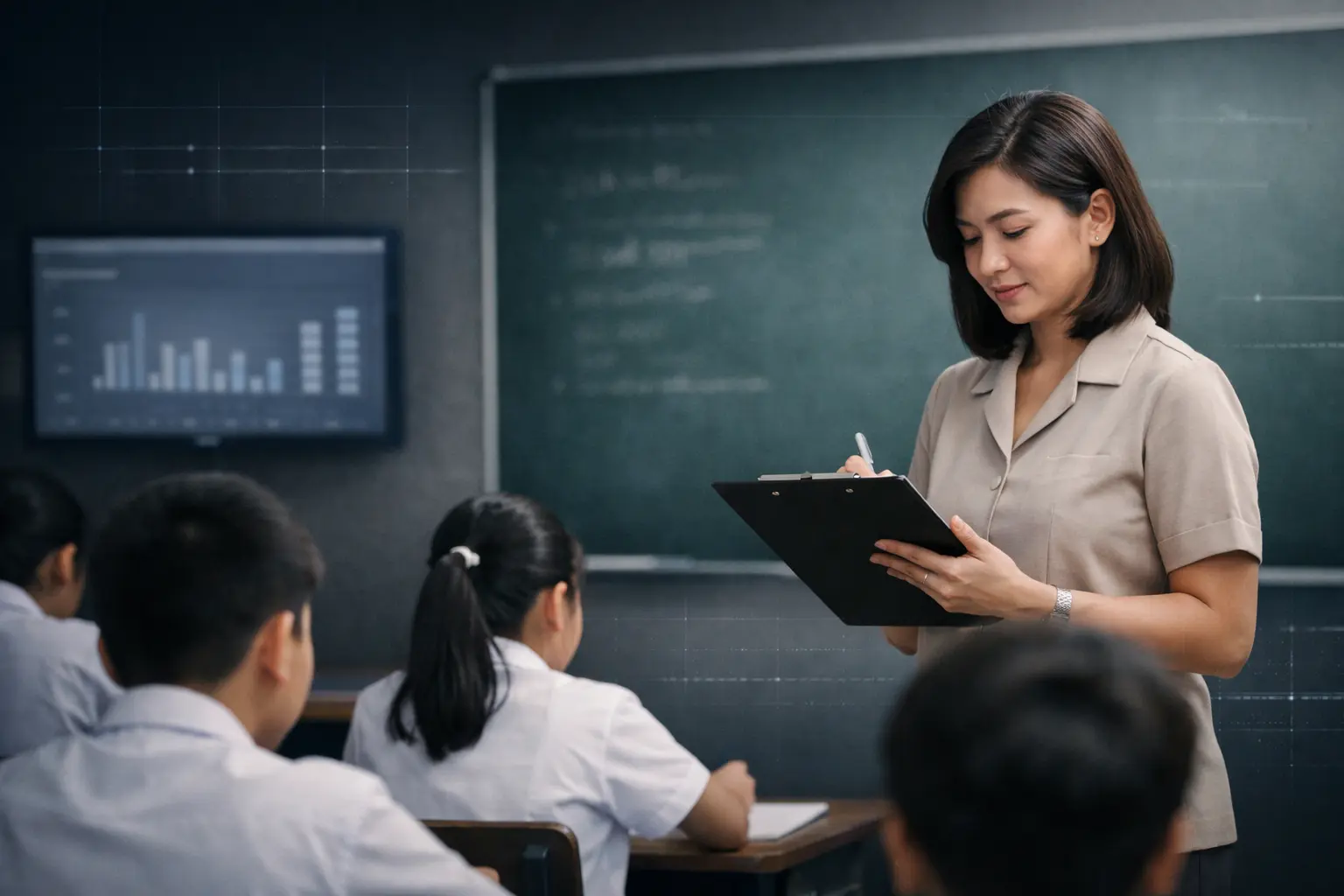
Teachers in public schools play a vital role in directing student learning and influencing their long-term success.
Yet, research from the Department of Education (DepEd) and international studies suggests that gaps in subject mastery, classroom management, and teaching methods can lead to uneven student outcomes.
Teachers rarely face regular evaluations, leaving systemic problems to persist while students shoulder the consequences.
Why Evaluating Teachers Matters
Accountability
Regular evaluation ensures teachers meet professional standards and maintain instructional quality.Professional Development
Assessments show where improvement is needed, and help plan focused training and mentoring.Better Student Outcomes
Evidence from OECD countries demonstrates a direct link between teacher effectiveness and student achievement in literacy, numeracy, and critical thinking.Transparency and Community Trust
Publishing evaluation outcomes strengthens parental confidence and helps communities stay informed about school performance.
How Teacher Evaluation Could Work
- Multiple Metrics: Combine classroom observations, peer reviews, student outcomes, and self-assessments.
- Regular Intervals: Conduct evaluations on an annual or semi-annual basis, rather than relying on one-off inspections.
- Support Over Punishment: Implement professional development and mentoring programs as a first step before enforcing disciplinary action.
- Context Awareness: Consider class sizes, resources, and local challenges to ensure fairness.
Potential Concerns
- Morale: Poorly designed evaluations may demotivate teachers.
- Fairness: Teachers in under-resourced schools might score lower through no fault of their own.
- Implementation Challenges: Requires fair metrics, oversight, and training to prevent bias.
The Bottom Line
Evaluating public school teachers is not about punishment.
It’s about accountability, professional growth, and improving student learning outcomes.
Without it, students often carry the burden while systemic weaknesses remain unaddressed.
Implementing Effective Teacher Evaluation
| Component | Description | Benefits |
|---|---|---|
| Multiple Metrics | Classroom observations, peer reviews, student outcomes, self-assessments | Holistic understanding of teacher performance |
| Regular Intervals | Annual or semi-annual evaluations | Consistent feedback and improvement |
| Supportive Framework | Mentoring and professional development precede disciplinary action. | Encourages growth and motivation |
| Context-Aware Assessments | Consider class sizes, resources, and local challenges. | Ensures fairness and equity |
Quick Takeaways
- Accountability: Ensures teachers meet professional standards.
- Professional Growth: Identifies skill gaps and informs mentoring.
- Student Outcomes: Effective teaching improves literacy, numeracy, and critical thinking.
- Transparency: Builds trust with parents and communities.
Frequently Asked Questions (FAQs)
What is the purpose of teacher evaluation?
Systematic evaluation ensures accountability, supports professional growth, and enhances student outcomes.
How often should teachers be evaluated?
Ideally, every six or twelve months, using classroom observations, student outcomes, and peer reviews.
What metrics can be used to evaluate teachers?
Metrics can include classroom performance, student progress, lesson planning, peer and supervisor feedback, and self-assessment.
Will teacher evaluations demotivate educators?
If poorly designed, yes. But fair and supportive evaluation systems focus on professional growth rather than punishment.
Do teacher evaluations improve student performance?
Yes. When teaching is effective, students develop stronger literacy, numeracy, and critical thinking skills.
How can evaluations be fair for teachers in under-resourced schools?
Consider class size, resources, and local challenges to ensure evaluations are equitable.
What happens after a teacher scores poorly in an evaluation?
Low scores should prompt targeted training, mentoring, or professional development before initiating any disciplinary actions.
Related Reading
For more on challenges in Philippine schools and student experiences, see our previous article: The Struggle Against Bullying in Philippine Schools.