
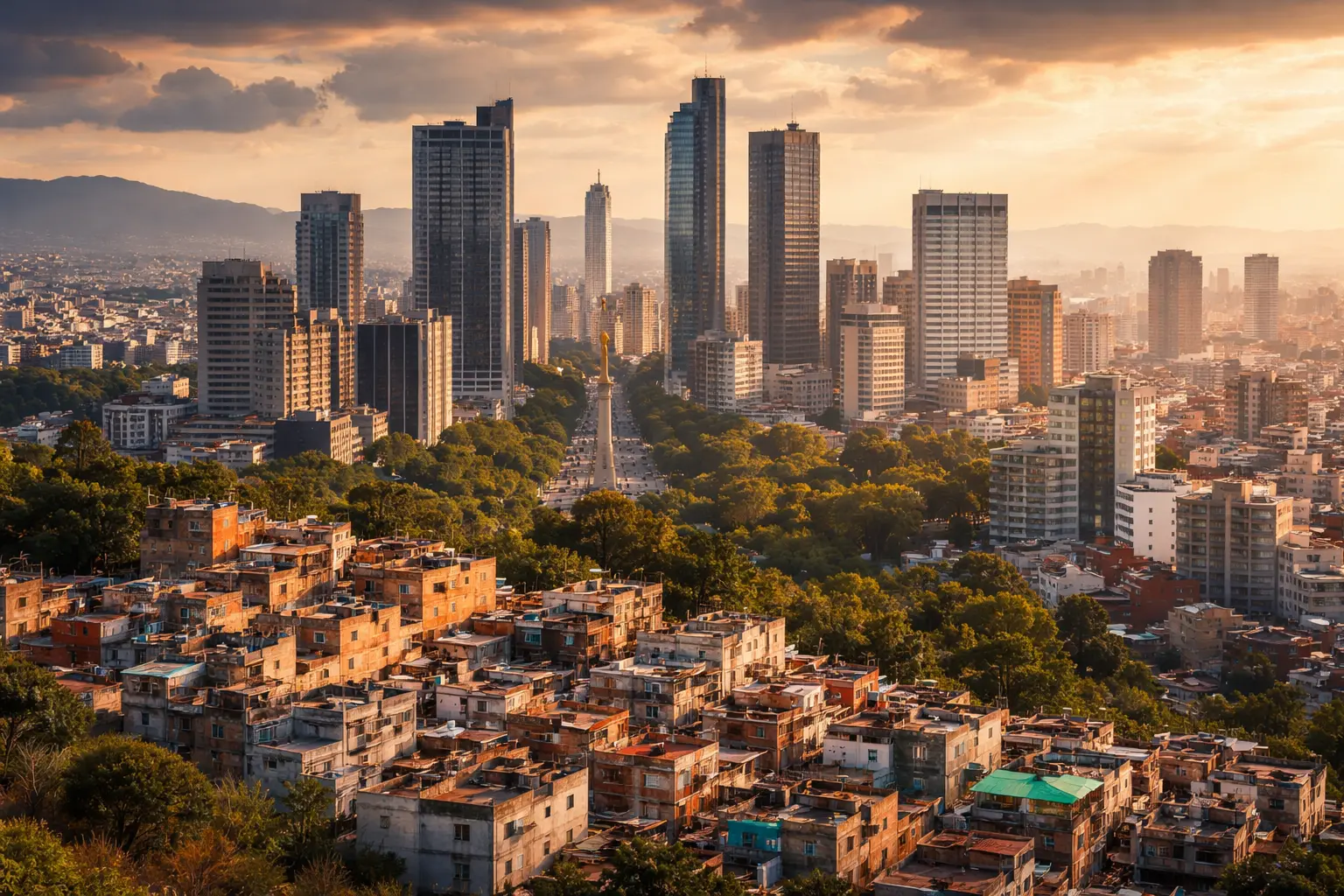
Mexico is one of the largest economies in Latin America and a major global manufacturing hub. Its strategic geographic position, large workforce, and deep integration into the North American trade system confer significant economic advantages on the country.
However, alongside these strengths, Mexico faces a range of persistent structural challenges that influence security, governance, and social development.
Issues such as organized crime, corruption, inequality, and environmental pressures continue to shape economic opportunity and institutional stability across the country.
The long-term development of Mexico is shaped by these challenges, defining both opportunities and constraints.
Why Mexico Still Faces Deep Structural Challenges
Organized Crime and Drug Cartels
Organized crime remains one of the most serious challenges facing Mexico. Criminal organizations involved in drug trafficking, extortion, and human smuggling operate across several regions.
Competition among these groups often leads to violent conflicts over territory and transport routes. These confrontations contribute significantly to high homicide rates in certain states.
In some cases, criminal networks also infiltrate local institutions, complicating law-enforcement efforts and undermining governance.Corruption
Corruption continues to affect many levels of government and public administration.
It can appear in procurement systems, policing, licensing procedures, and political structures. Systemic corruption can misallocate resources and weaken institutional trust.
For businesses and investors, corruption can increase uncertainty and reduce economic efficiency.High Levels of Violent Crime
Beyond organized crime conflicts, violent crime remains a major public safety concern in many parts of the country.
Communities in some regions face risks including kidnappings, extortion, and armed confrontations between criminal groups.
Security concerns also affect economic activity, tourism, and investment in certain areas.Economic Inequality
Despite its large economy, Mexico continues to experience highly uneven wealth distribution.
Major metropolitan regions benefit from industrial investment and international trade, while many rural areas experience slower economic development.
Inequality can influence access to healthcare, education, housing, and employment opportunities.Weak Rule of Law and Low Conviction Rates
The justice system faces significant challenges in investigation capacity and legal enforcement.
Many crimes remain unresolved, and conviction rates for certain serious offenses remain relatively low. The resulting perception of impunity can erode the deterrent effect of laws and policies.
Bolstering judicial institutions and investigative capacity remains central to policy agendas.Large Informal Economy
A substantial portion of Mexico’s workforce operates in the informal sector.
Many of these jobs lack employment protections, steady income, and essential social benefits such as pensions and health coverage.
While informal work provides livelihoods for millions of people, it can also reduce tax revenue and limit productivity growth.Persistent Poverty
Millions of people across Mexico still live in poverty, particularly in rural regions and southern states.
Limited infrastructure, lower educational attainment, and fewer employment opportunities contribute to long-term economic vulnerability.
Poverty reduction remains a core component of national development strategies.Migration Pressures
Mexico is both a country of origin for migrants and a major transit route for people traveling toward North America.
Flows of migration respond to conditions in the economy, security, and labor markets abroad.
Managing migration while addressing humanitarian considerations and international political pressures remains a complex policy challenge.Environmental Stress and Water Scarcity
Environmental pressures are increasing across several regions of Mexico.
Rapid urbanization, industrial growth, and climate variability have intensified water scarcity in some major cities and agricultural areas.
Deforestation, pollution, and environmental degradation also present long-term sustainability concerns.Education Inequality
Access to quality education varies widely across the country.
Urban schools generally benefit from stronger infrastructure and resources, while many rural and remote communities face shortages of teachers, facilities, and educational materials.
These disparities affect workforce development and long-term economic competitiveness.
| Indicator | Estimated Value | Why It Matters |
|---|---|---|
| Population | ≈129 million | Large workforce and major regional influence |
| GDP (Nominal) | ≈$1.7 trillion | Second-largest economy in Latin America |
| Poverty Rate | ≈36–40% | Persistent inequality and development challenges |
| Homicide Rate | Among the highest in OECD countries | Reflects major public security challenges |
| Rank | Problem | Category | Severity |
|---|---|---|---|
| 1 | Organized Crime and Drug Cartels | Security | Very High |
| 2 | Corruption | Governance | Very High |
| 3 | High Levels of Violent Crime | Security | High |
| 4 | Economic Inequality | Socioeconomic | High |
| 5 | Weak Rule of Law and Low Conviction Rates | Governance | High |
| 6 | Large Informal Economy | Economic | Moderate–High |
| 7 | Persistent Poverty | Socioeconomic | Moderate–High |
| 8 | Migration Pressures | Demographic | Moderate |
| 9 | Environmental Stress and Water Scarcity | Environmental | Moderate |
| 10 | Education Inequality | Social | Moderate |
Frequently Asked Questions (FAQs)
Why does Mexico struggle with organized crime?
Drug trafficking routes, high profits from illegal markets, and weak law enforcement have historically allowed criminal organizations to expand and operate with limited deterrence.
How widespread is corruption in Mexico?
Corruption permeates government—from law enforcement to public procurement and political offices—eroding institutional trust and misallocating resources.
Which areas in Mexico face the highest violence?
Violence is concentrated in states with strong cartel activity, such as Guerrero, Michoacán, and Tamaulipas, though some urban areas also experience high crime rates.
How does economic inequality affect daily life?
Inequality in education, healthcare, and jobs drives long-term urban-rural disparities.
What is the impact of the large informal economy in Mexico?
While informal work provides livelihoods, it reduces tax revenue, limits social protections, and creates long-term economic vulnerabilities for workers.
Why is migration a major issue in Mexico?
Mexico is both a country of origin and a transit route for migrants. Economic disparity, violence, and labor opportunities abroad drive migration pressures and humanitarian challenges.
How severe is environmental stress in Mexico?
Rapid urbanization, industrialization, water scarcity, pollution, and deforestation endanger ecosystems, public health, and economic sustainability.
- The 10 Biggest Problems in Romania
- 10 Countries Most Vulnerable to Climate Change
- 10 Major Problems Holding Belarus Back