

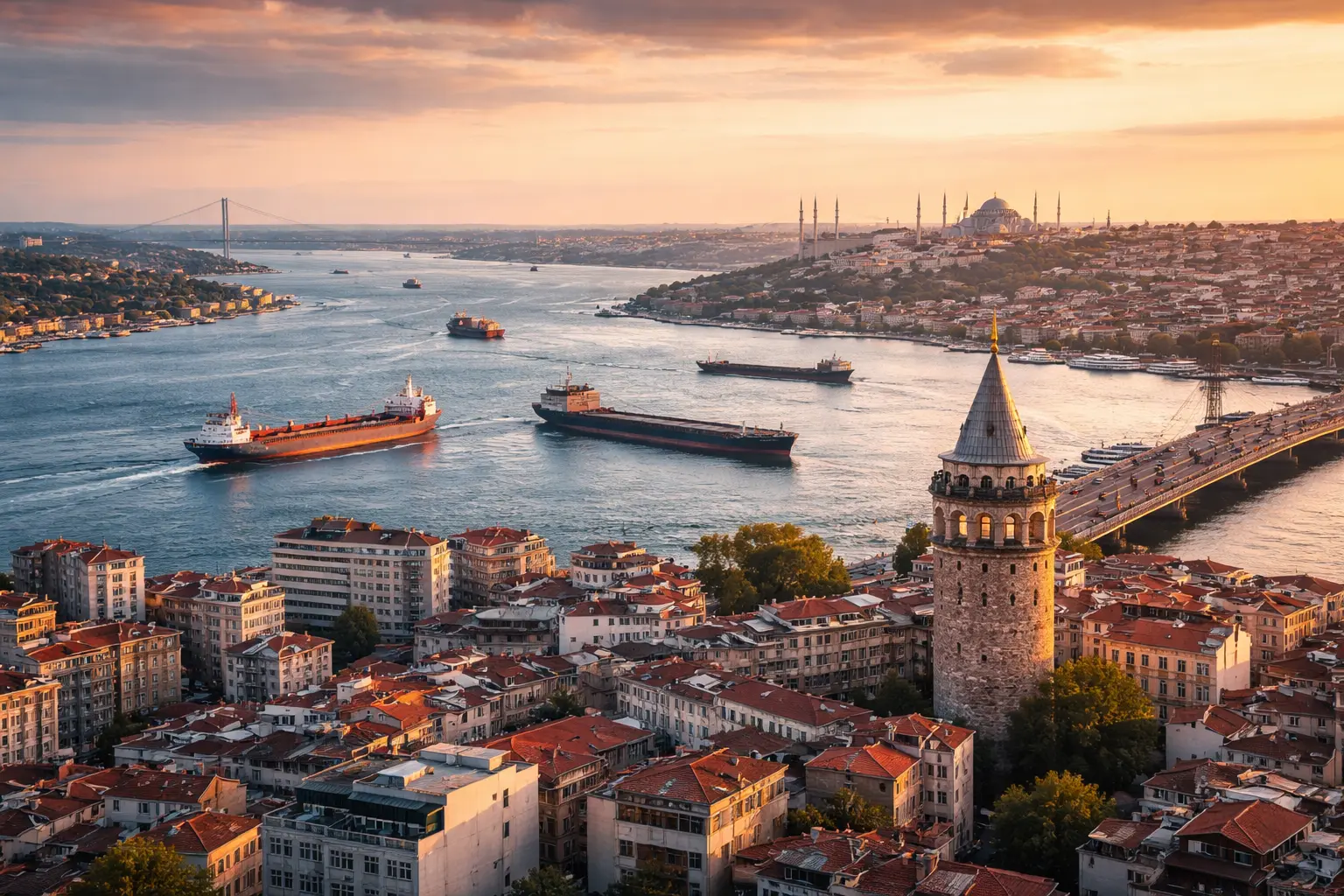
Turkey sits at a critical crossroads of the world, giving it significant geopolitical influence (World Bank).
It bridges Europe and Asia (CIA World Factbook).
It controls access to the Black Sea (UN Geospatial Data).
It anchors NATO’s southeastern flank (NATO).
It is a manufacturing hub, a regional military actor, and a demographic heavyweight (Turkish Statistical Institute).
Yet beneath this strategic weight lies a dense web of structural pressures.
Turkey’s challenges are not episodic. They are systemic.
| Domain | Primary Challenge | Long-Term Risk |
|---|---|---|
| Macroeconomic Stability | Inflation & Currency Volatility | Erosion of investor confidence |
| Fiscal Health | Debt & Reconstruction Costs | Reduced policy flexibility |
| Energy Security | Import Dependency | Trade imbalances |
| Governance | Institutional Centralization | Credibility constraints |
| Social Stability | Polarization & Migration Pressure | Internal fragmentation |
Persistent Challenges Facing Turkey Today
1. Chronic Inflation Vulnerability
Turkey has experienced repeated inflation cycles.
Price instability affects:
- Household purchasing power
- Long-term savings
- Business forecasting
- Wage stability
Persistent inflation damages macroeconomic credibility — even when short-term stabilization occurs.
Once inflation becomes ingrained in expectations, it is difficult to reverse.
2. Currency Fragility
The Turkish lira has undergone extended depreciation cycles.
Currency weakness increases:
- Import costs
- Energy bills
- Corporate foreign debt servicing
- External vulnerability
Currency stability requires consistent monetary credibility — not temporary interventions.
3. External Debt Exposure
Turkey’s private sector has substantial foreign-currency obligations.
It creates structural risk:
Weak currency → Higher debt burden → Financial stress
Emerging-market economies with high external liabilities remain sensitive to tightening cycles in global financial markets.
4. Energy Import Dependency
Despite regional ambitions, Turkey remains heavily reliant on imported energy.
It affects:
- Trade balances
- Inflation
- Strategic autonomy
Energy security is not only about supply — it is about pricing power and vulnerability.
5. Earthquake Risk and Urban Resilience
Turkey sits on major fault lines.
Large-scale seismic events impose:
- Reconstruction burdens
- Fiscal expansion
- Urban redesign requirements
Disaster risk is not temporary — it is structural.
Urban resilience remains a national priority.
6. Democratic Backsliding Debate
Since President Recep Tayyip Erdoğan took office, executive power in Turkey has become increasingly centralized.
Critics point to:
- Judicial restructuring
- Media constraints
- Concentration of authority
Supporters argue that strong executive control preserved stability.
Institutional credibility affects:
- Foreign investment
- Capital flows
- International partnerships
Governance structure shapes economic outcomes.
7. Geopolitical Balancing Between Blocs
Turkey is a member of NATO.
Yet it maintains pragmatic ties with Russia and Middle Eastern actors.
This multi-vector diplomacy creates leverage.
It also creates friction.
Strategic ambiguity can both strengthen and complicate foreign relations.
8. Migration and Refugee Pressure
Turkey shelters one of the largest refugee populations globally.
Long-term integration presents:
- Fiscal costs
- Labor market effects
- Social cohesion challenges
Migration policy remains politically sensitive.
9. Youth Unemployment and Brain Drain
Turkey has a large, educated youth population.
But structural labor market mismatches persist.
Skilled migration abroad reduces:
- Innovation capacity
- Long-term productivity
- Demographic dividend potential
Retaining human capital is essential for future growth.
10. Deep Political Polarization
Turkey faces deep internal divisions across:
- Secular vs religious identity
- Urban vs rural interests
- Generational divides
Polarization complicates:
- Economic reform consensus
- Institutional reform
- Long-term planning
High political intensity reduces structural flexibility.
Systemic Interconnection
Turkey’s structural pressures are interlinked:
Inflation → Currency Depreciation → Debt Burden
Energy Imports → Trade Deficits → Currency Pressure
Polarization → Policy Uncertainty → Investor Hesitation
It is not a single-issue environment.
It is a feedback loop system.
Why Turkey Remains Strategically Indispensable
Despite internal pressures, Turkey remains:
- A Black Sea gatekeeper
- A Middle East power broker
- A European manufacturing node
- A NATO strategic anchor
Its trajectory affects Europe, Eurasia, and the Middle East simultaneously.
Turkey’s stability is not only a domestic matter.
It is geopolitical.
Frequently Asked Questions (FAQs)
Is Turkey considered an emerging market?
Yes. Turkey is an emerging market economy with a strong industrial base, yet it grapples with persistent inflation and currency volatility while maintaining significant economic resilience.
Why is the Turkish lira unstable?
Persistent inflation has weighed on the lira, weakening monetary policy credibility and exposing the economy to pressures from foreign-denominated debt.
What are the biggest economic problems in Turkey?
The main economic challenges include inflation, currency volatility, external debt exposure, and energy import dependency.
Is Turkey at risk of an economic crisis?
Turkey faces deep structural vulnerabilities, with the threat of a crisis rising or falling based on policy credibility, foreign reserves, and shifts in global financial conditions.
Why does energy dependency matter for Turkey?
Turkey’s reliance on energy imports strains trade balances, drives inflation, and leaves the economy exposed to volatile global prices.
Is Turkey politically stable?
Turkey has electoral continuity, but political polarization and institutional centralization remain significant structural factors.
Why is youth unemployment a concern in Turkey?
Youth unemployment contributes to brain drain, reduces long-term productivity, and limits the country’s demographic advantage.
How does geopolitics affect Turkey’s economy?
Turkey’s position between Europe, the Middle East, and Russia increases strategic leverage but also creates diplomatic and investment uncertainty.