

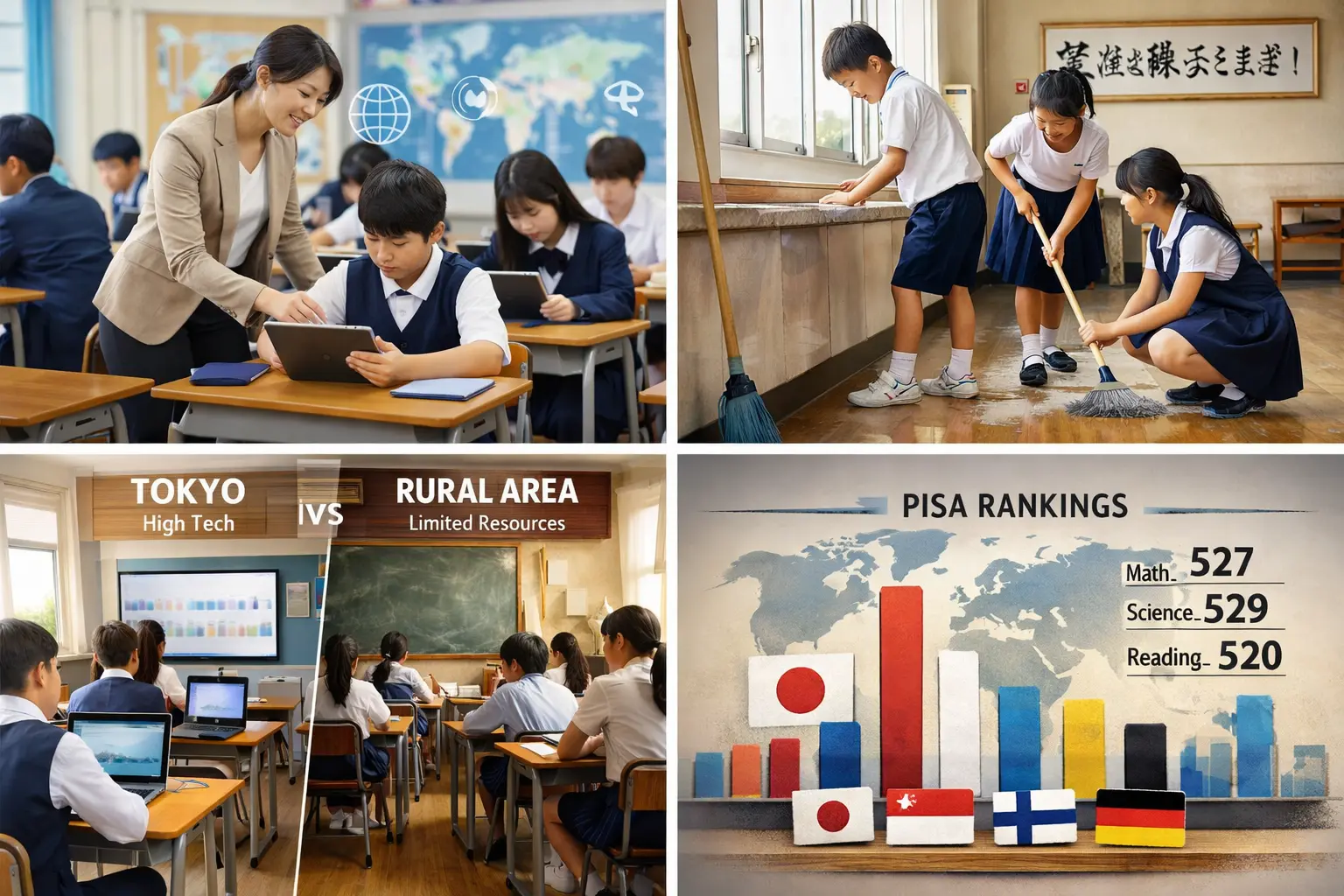
The Japanese Education System is recognized worldwide for its academic excellence, discipline, and cultural emphasis on learning. Consistently high achievement in mathematics, science, and literacy makes the system a model for the world.
Yet, in a rapidly changing world, can Japan maintain its edge? Reviewing the top ten drivers of its continued success highlights the structural strengths that make it one of the leading.
Here are ten reasons the Japanese education system remains among the best.
1. Strong Academic Foundations
Early development of literacy and numeracy equips Japanese students with a solid foundation for later education.
| Subject | Score | Global Average |
|---|---|---|
| Mathematics | 527 | 489 |
| Science | 529 | 489 |
| Reading | 520 | 487 |
2. Consistently High International Rankings
Japan regularly ranks near the top in the Programme for International Student Assessment by the OECD, confirming its global competitiveness in academics.
3. Highly Trained Teachers
Rigorous initial training and continuous professional development equip teachers to maintain high-quality instruction nationwide. Collaboration among teachers strengthens lesson planning and teaching methods.
4. Discipline and Respect in the Classroom
Japanese classrooms are structured and orderly, with emphasis on:
- Responsibility
- Teamwork
- Respect for peers and teachers
This cultural approach fosters focused learning environments with minimal disruptions.
5. Balanced Academic and Character Education
Schools emphasize holistic development, encouraging students to participate in cleaning, community projects, and cooperative activities. It cultivates discipline, responsibility, and social awareness.
6. Standardized National Curriculum
A nationally coordinated curriculum ensures consistency across regions, providing equal learning opportunities regardless of location while allowing minor local adaptations.
7. Strong Parental and Community Support
Education is a societal priority. Families often invest time and resources in after-school programs, tutoring, and enrichment activities, reinforcing classroom learning and boosting student performance.
8. Safe and Organized School Environments
Known for safety and structure, Japanese schools also prioritize fostering student independence. Students travel to school independently, manage classroom responsibilities, and cultivate a sense of accountability.
9. Emphasis on Effort and Persistence
Japanese success stems primarily from persistent effort rather than innate ability. Teaching the importance of effort helps students build resilience, perseverance, and enduring learning habits.
10. Continuous Improvement and Reform
Even a top-performing system evolves. Japan focuses on:
- Integrating digital technology into classrooms
- Encouraging creativity and critical thinking
- Improving student mental health and wellbeing
- Adapting policies for declining student populations
Frequently Asked Questions (FAQs)
Why is the Japanese education system considered one of the best?
It combines academic rigor, discipline, highly trained teachers, and cultural support for learning.
How do Japanese students perform internationally?
They consistently rank near the top in PISA and other global assessments.
Are Japanese classrooms strict?
They are structured and respectful, fostering focused learning environments.
Do Japanese schools only focus on academics?
No. Education emphasizes character development, teamwork, and accountability.
Does Japan use a national curriculum?
Yes. A standardized curriculum guarantees consistent educational quality nationwide.
Are Japanese students overworked?
Exam pressure is significant, but reforms and extracurricular activities aim to reduce stress.
How is technology integrated in Japanese schools?
Digital adoption is growing, including tablets, e-learning platforms, and online resources.
Can Japan maintain global leadership in education?
With continued reforms, digital integration, and focus on creativity, it remains well-positioned to compete globally.
- The Hidden Crisis in Global Education Systems
- Is the German Education System Quietly Falling Behind?
- 10 Countries Where Education and Opportunity Are Most Unequal