
A single company does not set electricity pricing in the Philippines. It is structured and regulated through multiple institutions:
- Energy Regulatory Commission (ERC) – approves electricity rates
- Department of Energy (DOE) – energy policy oversight
- National Grid Corporation of the Philippines (NGCP) – transmission operator
- Electric cooperatives & distribution utilities – local billing
→ This means your bill is the result of a multi-layer regulated cost system, not arbitrary pricing.
📌 Source basis: DOE & ERC regulatory framework for the Philippine electric power industry
What makes electricity bills high in the Philippines?
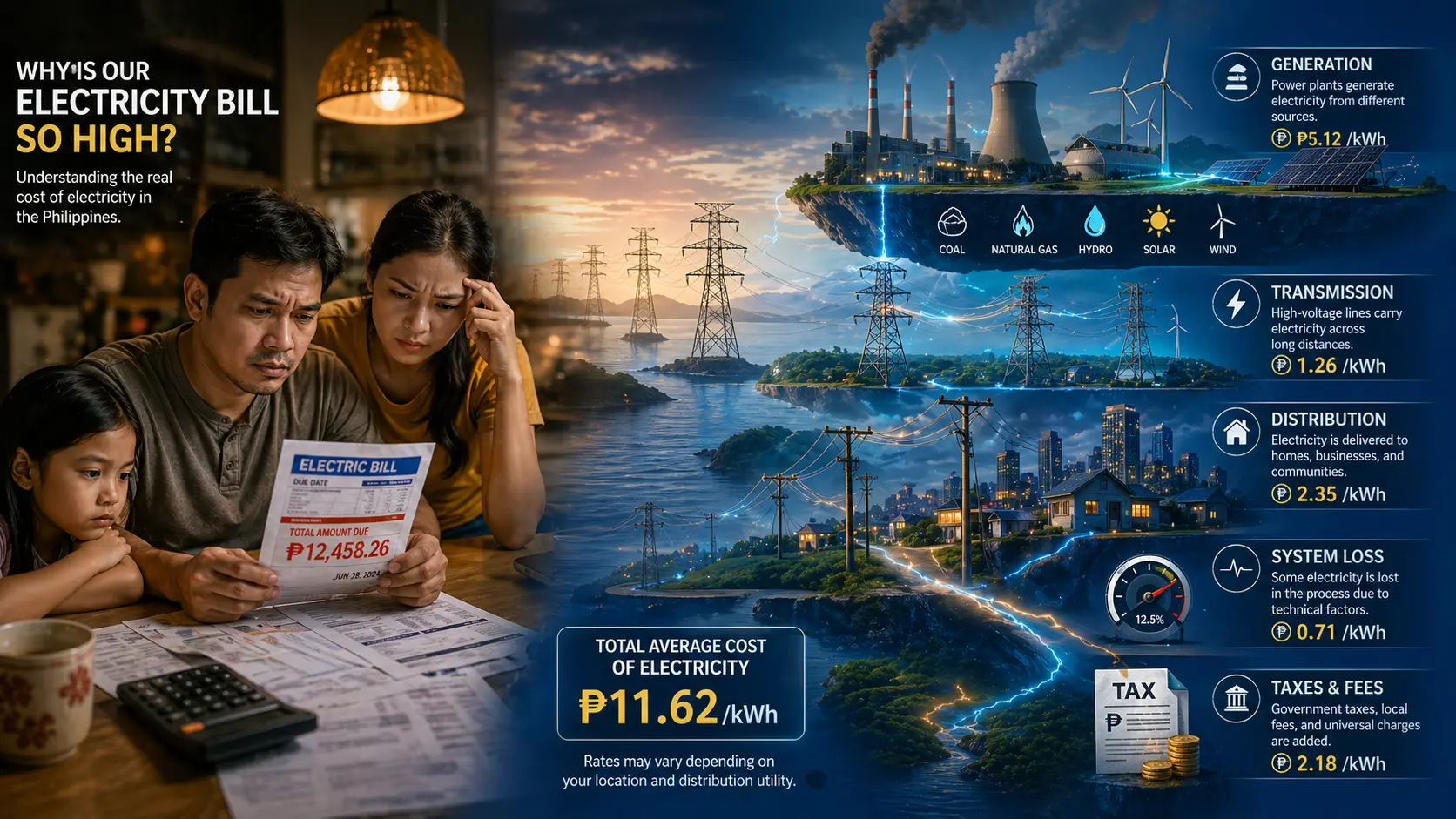
Electricity bills are high due to a combination of generation costs (fuel imports), transmission fees, distribution charges, system loss recovery, taxes, and government-mandated universal charges regulated by the Energy Regulatory Commission (ERC).
But the high cost of electricity is only part of the problem. Consumers also face brownouts, system losses, aging infrastructure, and concerns about service reliability and accountability. For a deeper look at why electricity can remain expensive despite these persistent problems, see our analysis: Why Is Electricity So Expensive in the Philippines Despite Poor Service?
Why Your Electricity Bill Keeps Rising Even Without Increased Usage
1. Generation Charge (Market-Based Electricity Cost)
It reflects the actual cost of producing electricity from power plants.
It is heavily influenced by:
- Fuel imports (coal, LNG)
- Power purchase agreements (PPAs)
- Wholesale Electricity Spot Market (WESM)
📌 The WESM mechanism allows electricity to be traded based on real-time supply and demand.
→ This is why bills fluctuate monthly even if usage is unchanged.
2. Transmission Charge (National Grid Delivery)
The grid operator collects this charge:
National Grid Corporation of the Philippines
It covers:
- High-voltage transmission infrastructure
- Grid stability and maintenance
- Nationwide interconnection of islands
📌 Regulated by ERC under approved transmission wheeling rates
3. Distribution Charge (Local Utility Operations)
Charged by local utilities such as cooperatives or Meralco-type distributors.
Covers:
- Meter reading and billing
- Local line maintenance
- Customer service operations
📌 Rates are region-specific and ERC-approved, not arbitrarily set.
4. System Loss Charge (Technical + Non-Technical Losses)
System loss includes:
- Technical losses (resistance in wires, heat dissipation)
- Non-technical losses (theft, meter issues)
📌 ERC allows utilities to recover a capped system loss rate, preventing unlimited charging.
→ This is why consumers share part of the grid inefficiencies.
5. Universal Charges (National Energy Development Costs)
Collected under national policy mandates:
Covered programs include:
- Missionary electrification (remote islands)
- Environmental protection funds
- Stranded contract costs
📌 Implemented under the Electric Power Industry Reform Act (EPIRA)
6. Taxes (Government Revenue Layer)
Electricity bills include:
- 12% Value Added Tax (VAT)
- Franchise tax (for utilities)
- Local government taxes (where applicable)
📌 Mandated under the Philippine Tax Code (BIR regulations)
7. FIT-All (Renewable Energy Support Fee)
A small surcharge supporting renewable energy producers.
📌 Managed by the Energy Regulatory Commission
Why do electricity bills change every month in the Philippines?
Bills fluctuate due to changes in fuel prices, power supply conditions in the Wholesale Electricity Spot Market (WESM), and seasonal demand variations.
| Charge | Regulatory Source | Key Authority | Nature |
|---|---|---|---|
| Generation | WESM / ERC-approved contracts | PEMC / ERC | Market-based |
| Transmission | ERC Transmission Rates | NGCP / ERC | Infrastructure |
| Distribution | ERC-approved tariffs | Local utilities / ERC | Local operations |
| System Loss | ERC capped recovery rules | ERC | Loss recovery |
| Universal Charge | EPIRA Law | DOE / ERC | Policy funding |
| Taxes | Tax Code | BIR | Government tax |
| FIT-All | Renewable Energy Act | ERC | Renewable subsidy |
Frequently Asked Questions (FAQs)
Why are electricity bills so high in the Philippines?
Electricity bills are high due to the combined costs of generation (fuel imports), transmission, distribution, system loss recovery, taxes, and government-mandated universal charges regulated by the ERC.
What is the biggest part of the electricity bill in the Philippines?
The generation charge is usually the largest component, driven by fuel costs, power supply conditions, and prices in the Wholesale Electricity Spot Market (WESM).
Why does my electricity bill increase even if my usage is the same?
Even if your usage stays the same, your bill can rise due to fuel price changes, WESM market shifts, or updated power and delivery charges.
What is system loss in electricity bills?
System loss refers to electricity lost during transmission and distribution due to technical inefficiencies and illegal connections. Consumers share part of this cost under ERC-regulated caps.
Who regulates electricity prices in the Philippines?
The Energy Regulatory Commission (ERC) sets electricity rates, while the Department of Energy (DOE) handles overall policy.
Why is Philippine electricity more expensive than in some countries?
The Philippines relies heavily on imported fuel, has a fragmented island-based grid, and includes multiple regulated charges that add layers to the final bill.
What is the transmission charge in electricity bills?
The transmission charge covers the cost of moving electricity through high-voltage lines operated by the National Grid Corporation of the Philippines (NGCP).
Can electricity bills be reduced in the Philippines?
Yes. Bills can be reduced by using energy-efficient appliances, limiting electricity use during peak hours, and cutting back on high-wattage devices such as air conditioners and heaters.
Sources & References
- National Grid Corporation of the Philippines (NGCP)
- Philippine Electricity Market Corporation (PEMC / WESM)
- Bureau of Internal Revenue (BIR Philippines)
- Energy Regulatory Commission (ERC)
- Department of Energy (DOE Philippines)
- The 10 Biggest Problems in the Philippines
- Incompetent Public Teachers: A Hidden Crisis in the Philippines