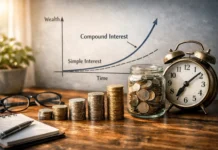


Compounding is powerful — but only if it’s allowed to work. Small errors in your early investing years can drastically reduce long-term wealth.
Many investors unknowingly sabotage their own growth potential. This article covers the biggest mistakes that can stall your long-term financial growth.
The Silent Habits That Cost You Years of Growth
1. Delaying the Start
The Time Advantage Matters Most
Starting late, even by 5–10 years, can cut final wealth in half.
Example:
- Investor A starts at 25, contributes $200/month at 8% for 40 years → ~$622,000
- Investor B starts at 35, same contributions → ~$298,000
Tip: Start as early as possible, even with small amounts. Time is your greatest ally.
2. Withdrawing Early
Why Accessing Funds Too Soon Kills Growth
- Compounding requires reinvestment. Early withdrawals reduce principal and future interest.
- Early withdrawals reduce principal and future interest.
- Even a single large withdrawal can delay wealth accumulation by years.
Tip: Keep your emergency fund separate; don’t treat investment accounts as a short-term savings tool.
3. Ignoring Fees
High Fees Erode Compounding Power
- Investment fees, fund management costs, and trading commissions reduce effective returns.
- Example: A 1% annual fee on $100,000 invested at 8% for 30 years can lower the ending portfolio value by roughly $100,000 due to compounding costs.
Tip: Choose low-fee index funds or ETFs to maximize compounding.
4. Chasing Short-Term Gains
The Pitfall of Speculation
- Frequent trading increases costs and reduces long-term growth.
- Emotional decisions during market swings often result in losses. Studies by DALBAR show investors often underperform indices due to emotional trading.
Tip: Stay invested for the long run instead of trying to predict market highs and lows.
5. Not Reinvesting Dividends
Dividends Are Compounding Fuel
- Taking dividends as cash instead of reinvesting slows exponential growth.
- Reinvested dividends significantly increase wealth over the long term.
Tip: Opt for dividend reinvestment plans (DRIPs) whenever possible.
6. Lack of Diversification
Don’t Put All Eggs in One Basket
- Concentrated investments expose you to unnecessary risk.
- Market downturns can wipe out years of compounding in a single crash.
Tip: Diversify across sectors, asset classes, and geographies to protect your compounding trajectory.
7. Failing to Adjust for Inflation
Nominal Returns Aren’t Enough
- Compounding grows money, but inflation erodes purchasing power.
- Example: $500,000 at 8% over 30 years is less valuable if inflation averages 3% per year.
Tip: Consider inflation-adjusted returns when planning long-term growth.
8. Procrastinating on Regular Contributions
Consistency Beats Size
- Irregular investing disrupts the compounding rhythm.
- Even small, consistent monthly contributions outperform large irregular deposits.
Tip: Automate contributions to ensure regularity and reduce behavioral risk.
Visual Summary of Mistakes
| Mistake | Effect on Compounding | Quick Fix |
|---|---|---|
| Delaying Start | Halves wealth | Start immediately |
| Withdrawing Early | Reduces principal & interest | Separate emergency fund |
| High Fees | Reduces effective return | Low-fee ETFs/index funds |
| Short-Term Trading | Increases costs, emotional losses | Long-term focus |
| Not Reinvesting Dividends | Slower growth | Enroll in DRIPs |
| Lack of Diversification | Risk of large losses | Diversify assets |
| Ignoring Inflation | Real wealth erosion | Target inflation-adjusted returns |
| Irregular Contributions | Disrupts rhythm | Automate monthly contributions |
Frequently Asked Questions (FAQs)
What is the biggest mistake early investors make?
Delaying their start. Time is the most powerful factor in compounding.
Can fees really destroy long-term growth?
Yes, even 1–2% annual fees compound into huge losses over decades.
Should I sell investments during a market dip?
No, staying invested maximizes compounding; selling locks in losses.
Is diversification really necessary for small portfolios?
Absolutely. Even small portfolios benefit from spreading risk across assets.
Can I start late and still catch up?
Yes, but you’ll need higher contributions or slightly higher-risk investments.