

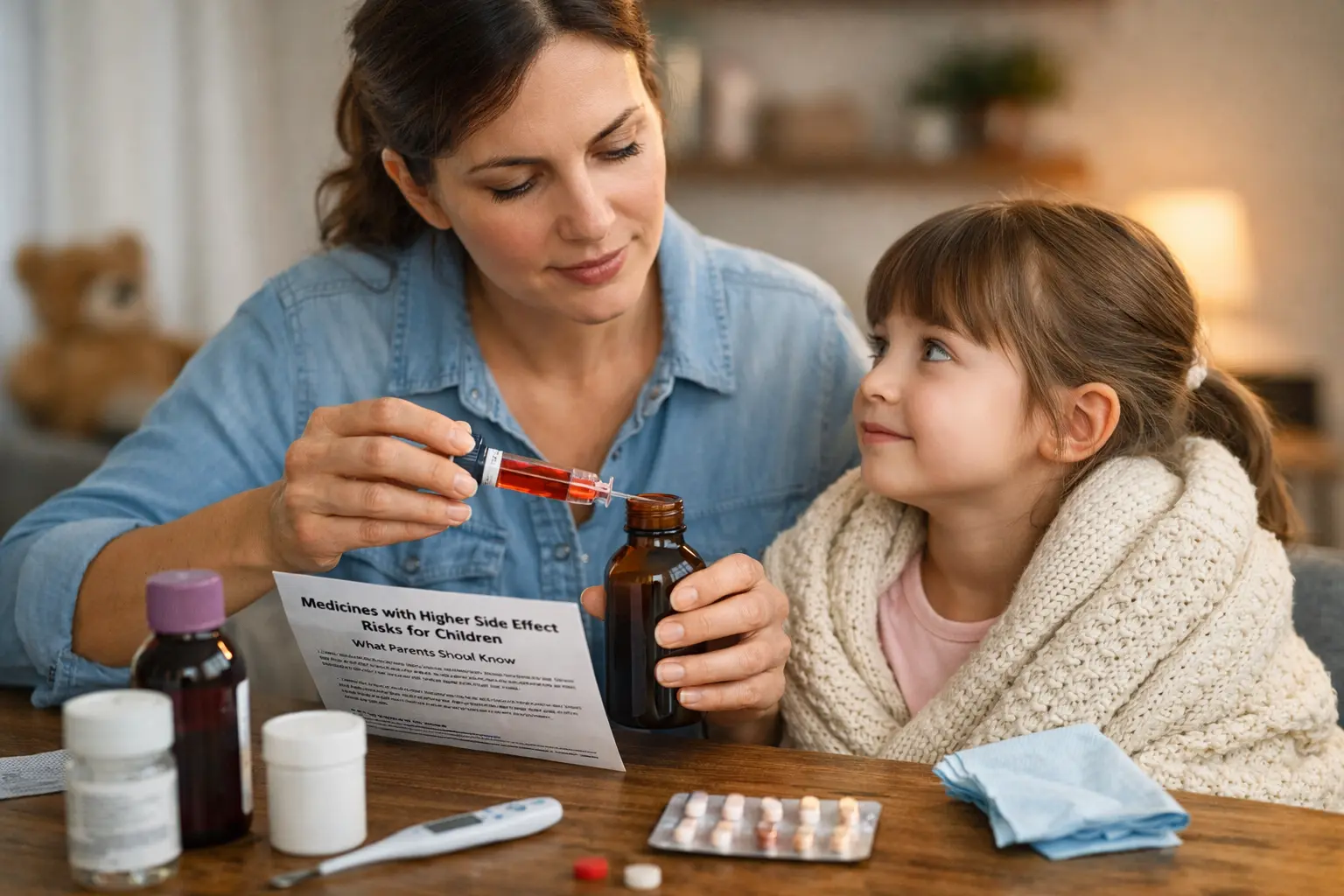
Children are not small adults.
Their organs are still developing.
Their metabolism processes drugs differently.
Their nervous systems are more sensitive to chemical effects.
Because of this, some medications carry higher side effect risks in children — particularly when misused, overdosed, or prescribed without a clear clinical indication.
The American Academy of Pediatrics and the U.S. Food and Drug Administration warn that certain medications can pose serious respiratory, neurological, and developmental risks in children, making careful use essential.
This guide identifies those medications — not to create alarm — but to support informed, evidence-based decisions that prioritize child safety.
Why Children Are More Vulnerable to Side Effects
- Immature liver and kidneys → slower drug metabolism
- Lower body weight → higher risk of dosing errors
- Developing brain → increased sensitivity to sedatives and psychoactive drugs
- Stronger immune reactions → higher allergy risk
Even common over-the-counter medications can cause harm if improperly used.
10 Medicines With Higher Side Effect Risks in Children
Below is a structured overview of medicines that require heightened caution.
1. Codeine
The U.S. Food and Drug Administration issued a strong warning restricting codeine use in children under 12 due to the risk of severe respiratory depression.
Some children metabolize codeine unpredictably, converting it rapidly into morphine.
Risk:
- Can suppress breathing
- Unpredictable metabolism in children
- Risk of fatal respiratory depression
Important: Many health authorities advise against codeine use in children.
2. Aspirin
Linked to Reye’s syndrome, a rare but life-threatening condition causing liver failure and brain swelling.
The Centers for Disease Control and Prevention advises avoiding aspirin in children recovering from viral illnesses.
Risk:
- It may increase the risk of Reye’s syndrome, a rare but dangerous illness that harms the liver and brain.
- Especially dangerous during viral illnesses
Safer alternative: Acetaminophen or ibuprofen (age-appropriate dosing).
3. Promethazine
It can cause severe breathing suppression in children under 2. Carries a boxed warning.
Risk:
- Severe respiratory depression in young children
- Excessive sedation
- Paradoxical agitation
Not recommended in very young children.
4. Diphenhydramine
A common antihistamine, but overdose may cause hallucinations, seizures, or cardiac rhythm disturbances.
The American Academy of Pediatrics does not recommend using it as a sleep aid.
Risk:
- Drowsiness
- Confusion
- Hyperactivity in some children
- Overdose risk due to wide availability
Often unnecessary for simple colds.
5. Tramadol
Similar opioid-related respiratory suppression risks. FDA contraindicates use in young children.
Risk:
- Breathing suppression
- Seizure risk
- Variable metabolism in children
Generally avoided in pediatric pain management.
6. Montelukast
The U.S. Food and Drug Administration added a boxed warning for serious neuropsychiatric events associated with Montelukast, including mood changes and suicidal thoughts.
Risk (Uncommon but Important):
- Mood changes
- Nightmares
- Anxiety
- Behavioral changes
Often safe when properly prescribed for asthma or allergic airway disease — but requires monitoring.
7. Fluoroquinolone Antibiotics
Generally avoided unless necessary due to potential joint and tendon effects in growing children.
8. Tetracycline Antibiotics
In children younger than eight, it can permanently stain developing teeth and interfere with bone growth.
Risk:
- Permanent tooth discoloration
- Effects on bone growth
Avoid in young children unless specifically indicated.
9. Fluoroquinolone Antibiotics
Generally avoided unless necessary due to potential joint and tendon effects in growing children.
Risk:
- Tendon inflammation
- Joint issues
- Neurological effects
Used only when no safer alternative exists.
10. Loperamide
High doses can cause dangerous cardiac rhythm abnormalities.
The U.S. Food and Drug Administration warns against misuse and overdose.
Important Clarification
“Higher risk” does not mean “never use.”
It means:
- Use only when medically necessary.
- Dose accurately by weight
- Monitor for side effects.
- Avoid casual or unnecessary use.
Giving medication without a clear purpose or medical supervision increases the risk of harm.
Red Flag Symptoms That Require Immediate Medical Attention
- Difficulty breathing
- Severe drowsiness or confusion
- Persistent vomiting
- Swelling of the face or throat
- Rash with fever
- Sudden behavioral or mood changes
Seek urgent care for breathing problems or severe allergic reactions.
Safer First-Line Approaches for Mild Illness
For simple colds and mild cough:
- Honey (age ≥1 year)
- Warm fluids
- Humid air
- Rest
- Weight-based acetaminophen or ibuprofen for fever
Supportive care is often sufficient for viral illnesses.
Practical Tips for Parents
- Always dose by weight, not age alone.
- Use a proper measuring syringe, not kitchen spoons.
- Avoid giving multiple products with overlapping ingredients.
- Do not pressure doctors for antibiotics if the illness is viral.
- Ask: “Is this medicine necessary, or optional?”
Frequently Asked Questions (FAQs)
How safe are over-the-counter cough syrups for children?
Many of these medications are unsuitable for young children, and supportive care is usually sufficient for most viral coughs.
Why is aspirin dangerous during viral infections?
It is associated with Reye’s syndrome, a rare but serious condition affecting the liver and brain.
Can antihistamines make children hyper instead of sleepy?
Yes. Some children experience paradoxical agitation rather than sedation.
Are antibiotics harmful if given unnecessarily?
Yes. It may result in diarrhea, provoke allergic reactions, and drive antibiotic resistance.
How do I know if a dose is correct?
Always dose by weight, not age alone. Use a proper measuring syringe.
Should I stop a medicine immediately if I notice behavior changes?
Contact your pediatrician promptly. In certain cases, doctors may recommend discontinuing use.
Is montelukast dangerous for children?
It is generally safe when properly prescribed, but rare mood-related side effects require monitoring.
What is the safest approach when unsure?
Ask your pediatrician: ‘Is medicine necessary, or is supportive care enough?
- 10 Kid-Friendly Superfoods Every Parent Should Know
- The Growing Global Threat of Antibiotic Resistance
- How to Encourage Healthy Eating Habits in Children