

Sustainability is often discussed through national climate targets, international agreements, and large government projects.
However, some of the most interesting changes are happening much closer to home.
Across the world, communities are changing how they live by using cleaner energy, producing less waste, protecting natural resources, and growing more food locally.
Their approaches are not identical. An island may invest in wind power, while a small Japanese town may focus on recycling and reuse. Elsewhere, residents are restoring forests, redesigning neighborhoods, or developing better ways to manage water.
These examples demonstrate that sustainability involves far more than installing solar panels or planting trees.
It requires changes in how communities use resources, manage waste, produce food, and organize everyday life.
It involves decisions about housing, transportation, food, energy, public services, and how people work together.
For a broader look at how countries are addressing major problems through practical initiatives, see [10 Countries Finding New Solutions to Major Global Challenges]. This article takes a closer look at the community level, where many of those changes become part of everyday life.
Here are 10 communities around the world finding new ways to live more sustainably, each offering a different lesson about how local action can contribute to a more responsible future.
1. Samsø, Denmark: An Island Powered by Community Energy
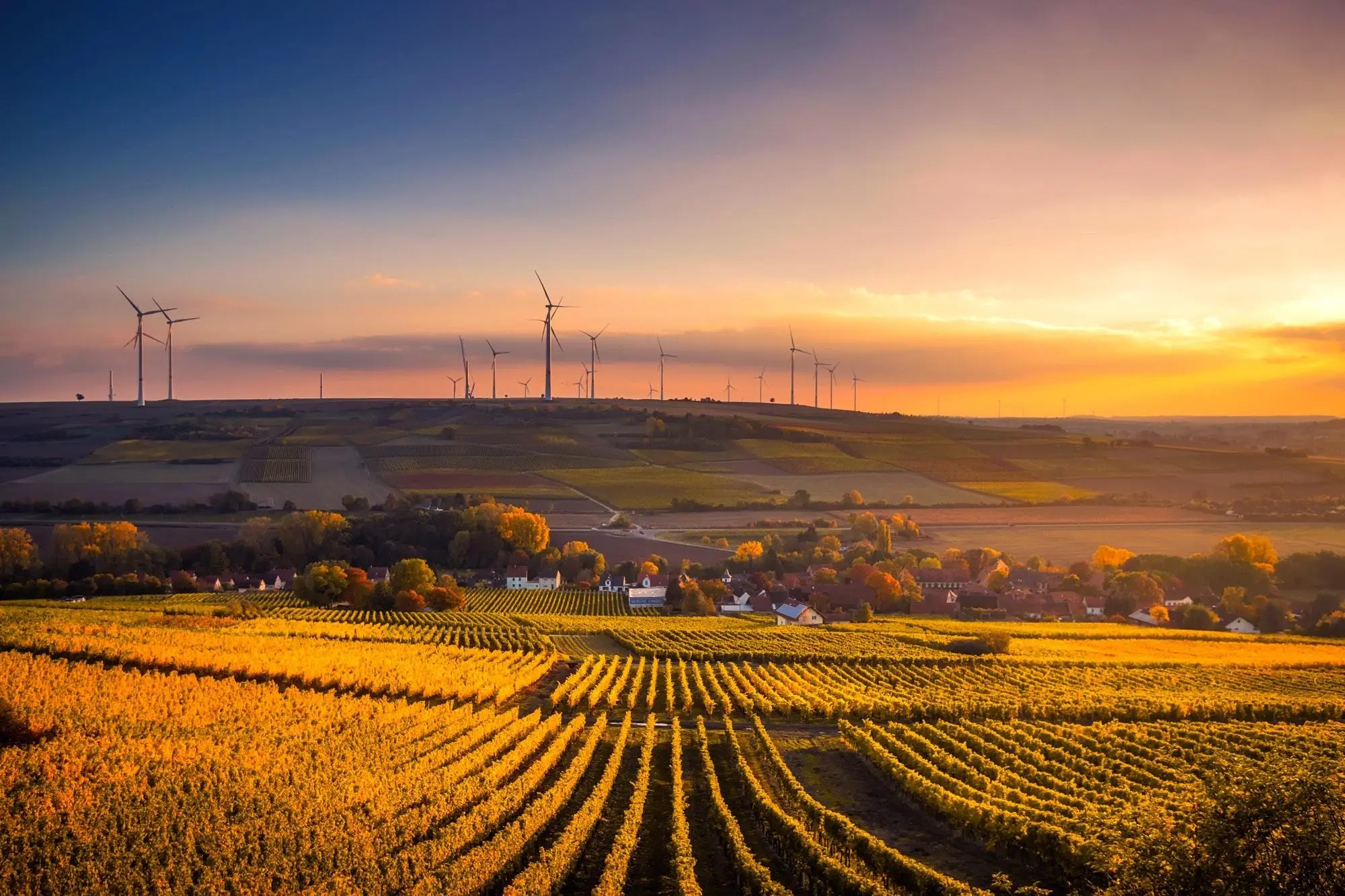
Samsø, a Danish island in the Kattegat Sea, has become one of the best-known examples of a community-led renewable energy transition.
The shift began in the 1990s, when Samsø started working toward a future powered increasingly by renewable energy rather than fossil fuels. Wind turbines, solar heating, and biomass systems became important parts of that transition.
One of the most notable aspects of Samsø’s transition is the active role residents played in shaping it. Instead of relying on an externally imposed energy plan, Samsø encouraged residents to take part in investment decisions and discussions about the island’s energy future.
Local ownership became an important part of the model. Residents invested in wind turbines and other renewable-energy projects, allowing them to take part in both the economic and environmental benefits of the transition.
According to the Samsø Energy Academy, the island achieved renewable-energy self-sufficiency in approximately a decade. However, this achievement should not be confused with eliminating every fossil fuel use. The island still needs to reduce emissions from transport and other activities as it continues its transition toward cleaner energy.
Building on its renewable-energy achievements, Samsø has set 2030 as its target for ending dependence on fossil fuels.
What makes it different: Samsø demonstrates how community participation and local investment can help turn renewable energy into a shared development project rather than simply a technical installation.
2. Wildpoldsried, Germany: A Village Producing More Renewable Electricity Than It Uses
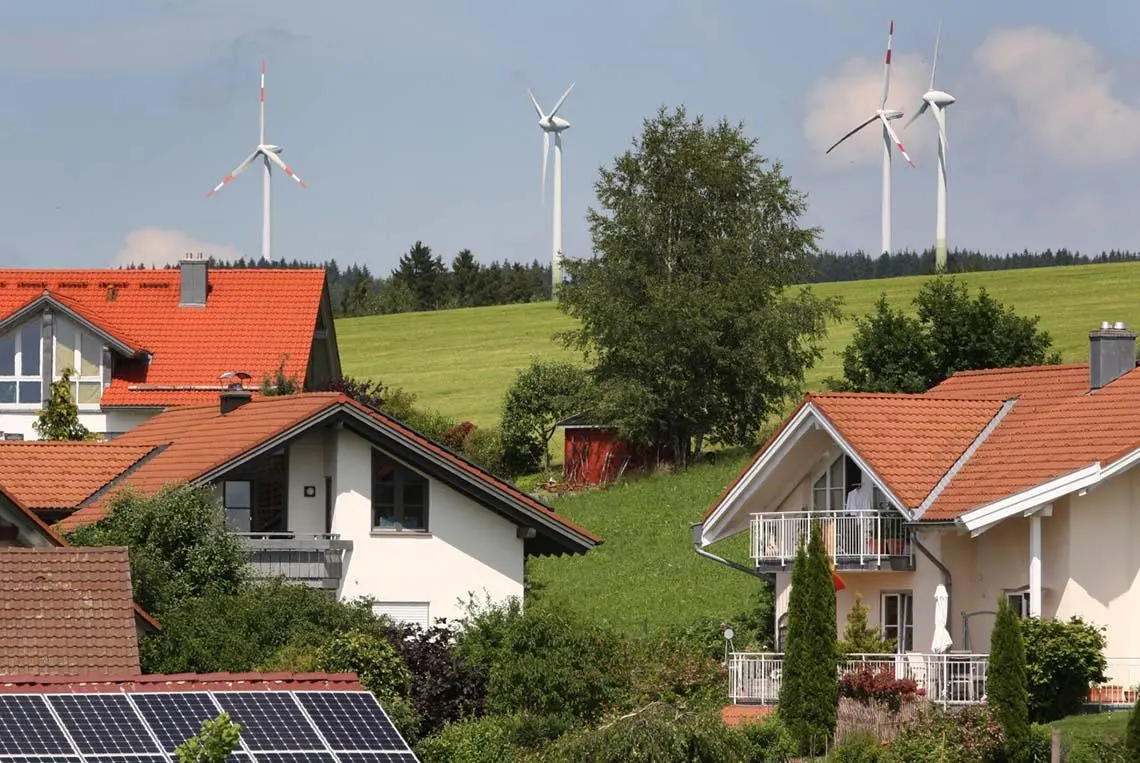
Wildpoldsried is a small Bavarian village that has developed an impressive renewable energy system through local participation.
Its energy mix includes wind turbines, solar installations, biomass facilities, and small hydropower systems. Local farmers, homeowners, businesses, and other community members have all contributed to developing and expanding these renewable-energy resources.
The village is particularly known for generating considerably more electricity from renewable sources than its residents consume.
A 2020 study published through Germany’s International Climate Initiative described Wildpoldsried as an energy-plus community. Its reported electricity production was several times higher than local electricity consumption.
Surplus electricity can be exported to the wider grid, extending the reach of the village’s renewable-energy production.
This approach also creates local economic opportunities. Renewable energy projects can generate income for landowners, businesses, and community participants while reducing dependence on conventional electricity generation.
However, producing surplus electricity does not automatically make an entire community energy-independent. Electricity generation, heating, transportation, and energy storage are separate challenges that require continued planning.
What makes it different: Wildpoldsried shows how a relatively small village can become an important renewable electricity producer through a combination of local investment and different energy technologies.
3. Kamikatsu, Japan: A Town Rethinking What Counts as Waste
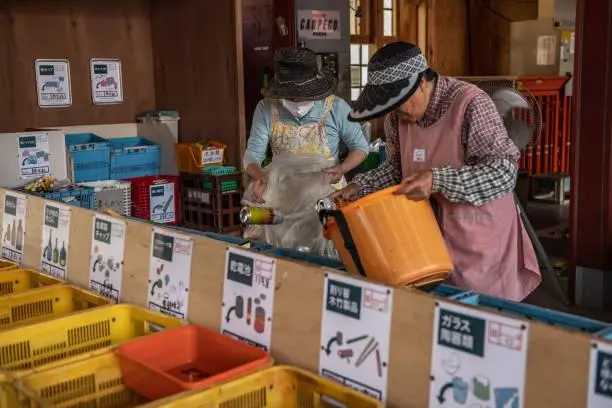
Kamikatsu, a small mountain town in Tokushima Prefecture, has developed one of Japan’s most recognized zero-waste initiatives.
Waste sorting is part of everyday life in Kamikatsu, where residents bring household materials to a central facility and separate them according to type.
The system requires considerable participation. The town’s waste station receives sorted materials for recycling, reuse, and other forms of treatment.
Kamikatsu first declared its zero-waste goal in 2003. Over the following years, the town expanded its sorting system and developed additional initiatives to reduce the amount of waste sent for incineration or landfill.
The town also operates a reuse shop where residents can leave usable belongings for others to take. This helps extend the life of products that might otherwise be discarded.
The approach is not simply about recycling more materials. Kamikatsu also encourages residents and businesses to reduce unnecessary packaging, reuse household items, and consider waste before purchasing new products.
Its own zero-waste program reported a recycling rate above 80% after the town’s initial years of development. The current program continues to emphasize reducing waste at its source rather than treating recycling as the only solution.
The system does require time and effort from residents, and not every material can be recycled easily or economically. Nevertheless, it demonstrates how local policies and everyday behavior can work together.
What makes it different: Kamikatsu treats waste reduction as a shared community responsibility, connecting household habits, local businesses, and municipal planning.
4. Auroville, India: Restoring Land and Managing Water
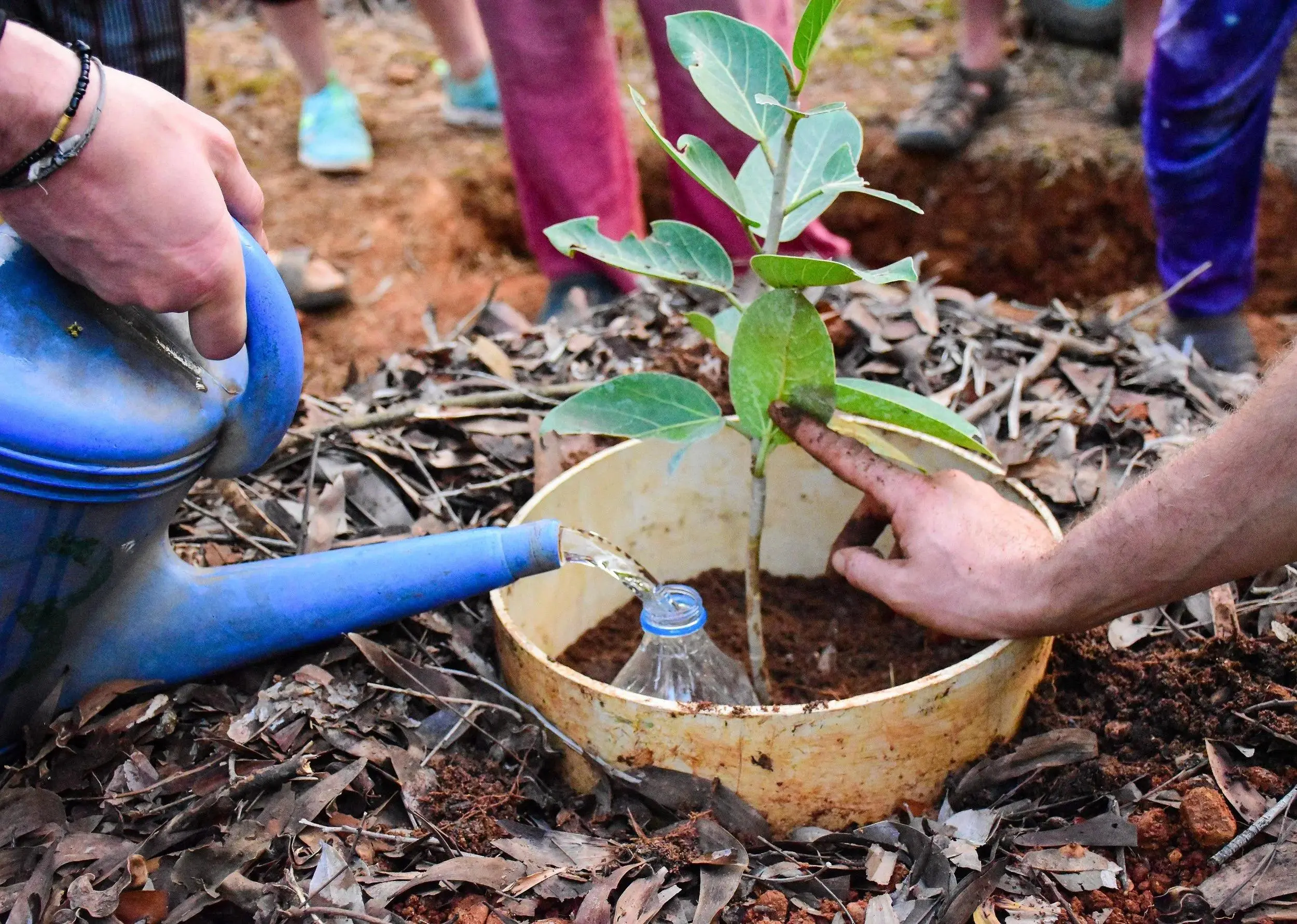
Near Puducherry in southern India, Auroville is an experimental township internationally recognized for its ecological restoration and sustainable development efforts.
When the township was established, the surrounding landscape faced serious environmental challenges, including soil erosion, degraded vegetation, and pressure on water resources.
Over time, residents and organizations working in Auroville developed projects involving afforestation, water conservation, renewable energy, and organic agriculture.
Water management has become an important part of these efforts. The community has introduced check dams, rainwater harvesting systems, and restored irrigation tanks to reduce soil erosion and improve groundwater recharge.
Individual communities have also developed wastewater treatment facilities to improve water management and encourage the responsible reuse of treated water.
Auroville has additionally invested in renewable energy, including solar installations and wind power. Its published energy data show that renewable sources supplied part of the township’s electricity needs, although the community has not yet achieved complete renewable electricity independence.
Despite its ambitious sustainability goals, Auroville must contend with several obstacles that complicate its environmental work. Water availability, land management, energy demand, and long-term maintenance continue to require attention.
Nevertheless, Auroville demonstrates how environmental restoration can be integrated into broader community development rather than treated as an isolated conservation effort.
What makes it different: Auroville connects reforestation, water conservation, renewable energy, and agriculture within a broader effort to develop a more environmentally responsible settlement.
5. Hammarby Sjöstad, Sweden: Turning an Urban District Into a Resource System
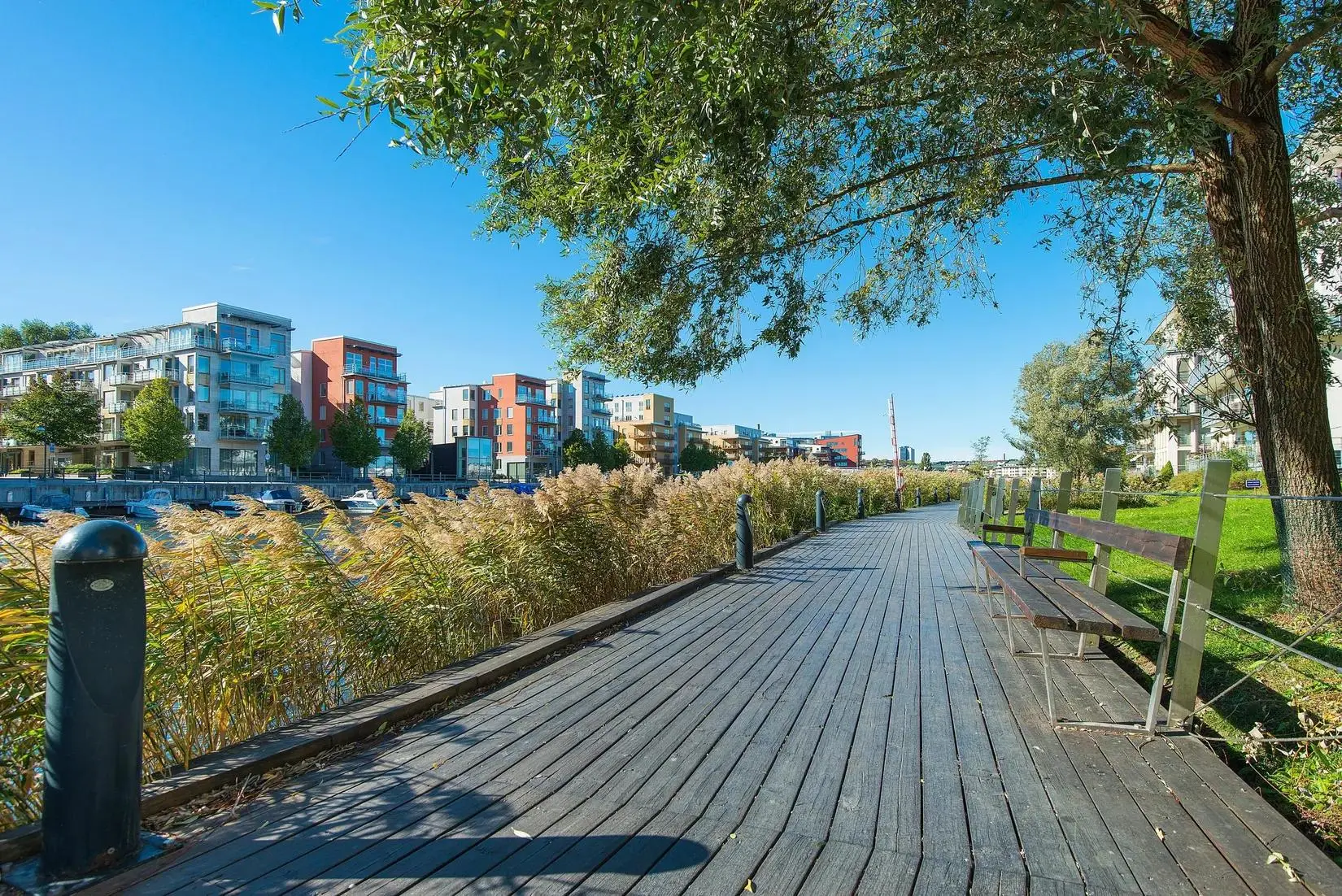
Hammarby Sjöstad, a district in Stockholm, Sweden, demonstrates how urban development can incorporate environmental systems into everyday infrastructure.
The district was designed with an integrated approach to energy, water, waste, and transportation. The city adopts an integrated approach to urban planning, connecting systems that would traditionally operate independently to strengthen efficiency and resource coordination.
Energy recovery provides another example of this integrated approach. Wastewater treatment can generate recoverable heat for district heating networks, while organic waste and sewage sludge serve as feedstocks for biogas production.
By supplying fuel for city buses, recovered biogas connects urban waste management with the development of lower-emission transportation systems. The remaining digestate can also be used as fertilizer.
Solar panels and other energy technologies contribute to the district’s energy system.
This approach illustrates the potential of a circular urban system, where materials and energy that might otherwise go to waste are recovered and put to productive use.
These interconnected systems also demonstrate how technology helps modern cities operate efficiently. Electricity grids, wastewater treatment facilities, transportation networks, and district energy systems help cities deliver the services that residents depend on every day. Read 10 Technologies That Keep Modern Cities Running to learn more about the systems that maintain essential city services.
However, Hammarby Sjöstad is not completely self-sufficient. It remains connected to Stockholm’s wider infrastructure and energy networks.
Its experience also highlights the importance of designing environmental systems before a neighborhood is fully developed. Retrofitting the same infrastructure into an established urban area can be more difficult and expensive.
What makes it different: Hammarby Sjöstad connects waste treatment, energy production, wastewater management, and urban services instead of addressing them as unrelated problems.
6. Curitiba, Brazil: Making Public Transportation and Green Planning Work Together
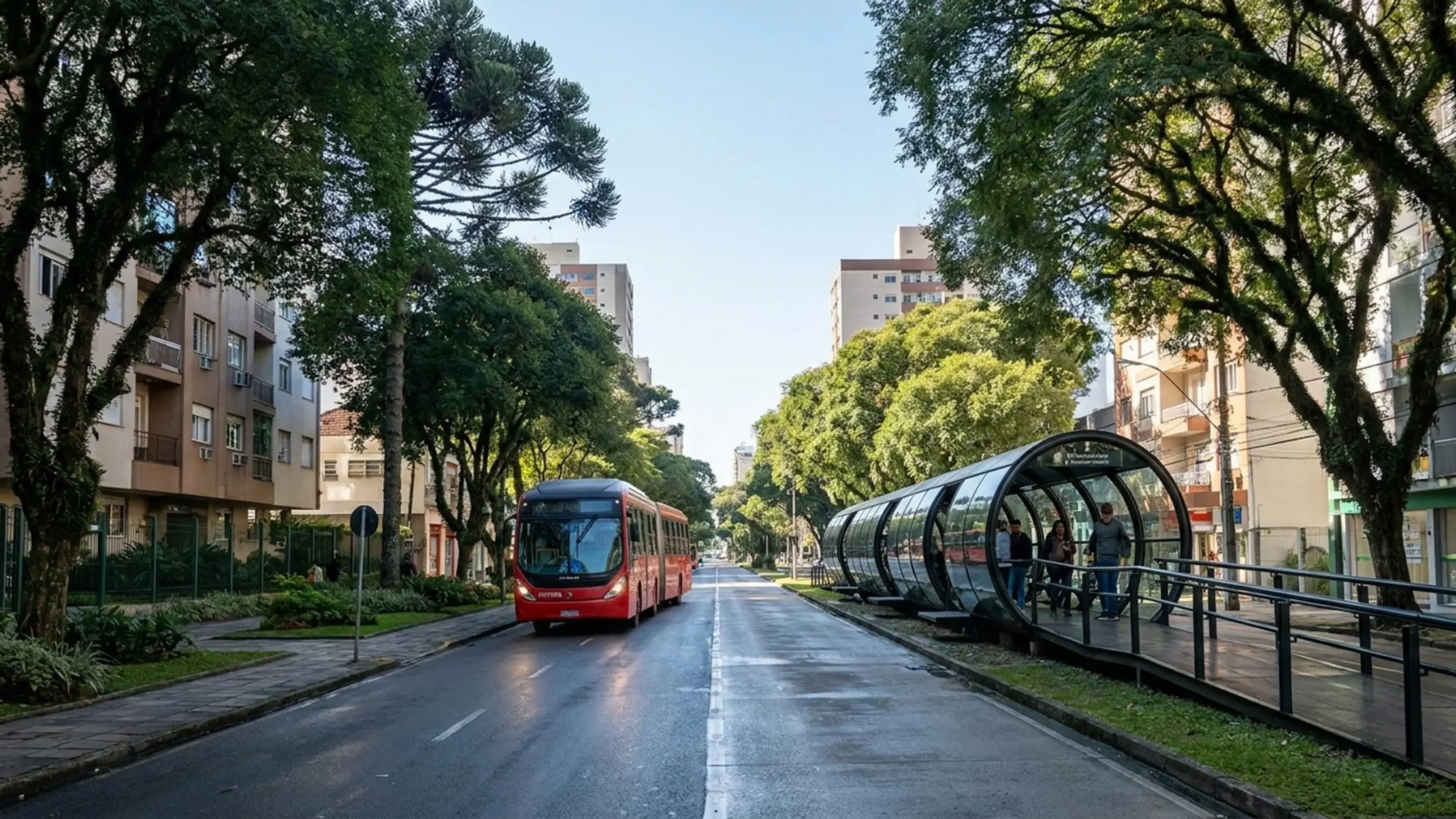
Curitiba has gained international recognition for showing how thoughtful urban planning can support more sustainable and better-connected cities.
The city’s growth created interconnected planning challenges, including traffic congestion, urban expansion, and increasing pressure on public services. Planners aimed to meet these demands through a broader approach that did not rely solely on large-scale infrastructure investment.
One of its best-known initiatives was developing a bus-based rapid transit system. Dedicated bus corridors helped connect residential and commercial areas while supporting higher-density development along major transportation routes.
Its investment in urban green infrastructure has delivered multiple benefits, combining recreational opportunities with natural systems for stormwater retention and flood management.
Another notable initiative is the Green Exchange Program. Through this program, residents in participating lower-income communities can exchange recyclable materials for food and other benefits.
It shows how caring for the environment can also support people’s everyday needs. The program encourages households to take an active role in waste management while providing practical support to make proper disposal easier.
A World Bank case study reported that Curitiba’s Green Exchange Program diverted substantial quantities of recyclable waste from landfills between 1991 and 2022.
Curitiba’s experience is not a perfect solution to every urban challenge. Despite its planning achievements, the city must address growing pressures from population expansion, socioeconomic inequality, traffic congestion, and infrastructure demands.
Even so, its combination of public transport planning, green spaces, and community recycling offers useful lessons for growing cities.
What makes it different: Curitiba demonstrates that sustainable urban development involves more than environmental technology. Transportation, public space, waste management, and social programs can reinforce one another.
7. Todmorden, United Kingdom: Growing Food in Shared Public Spaces
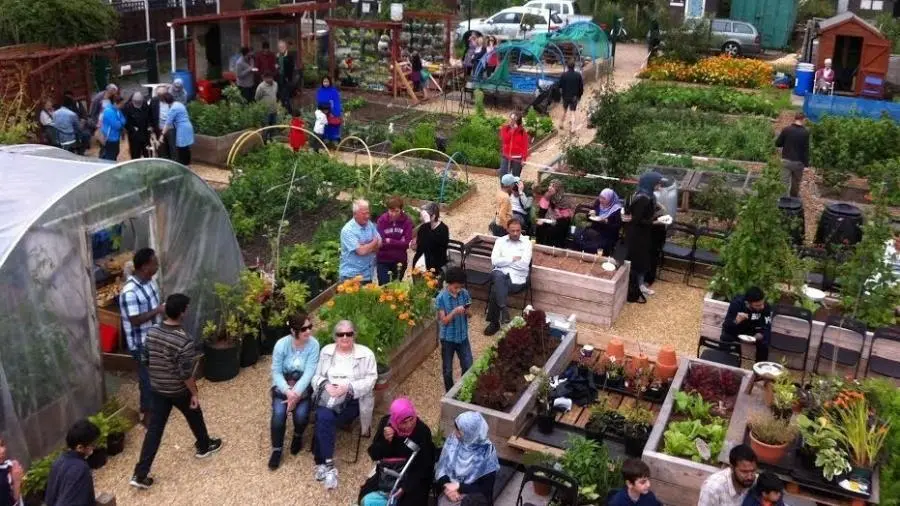
Todmorden, a town in West Yorkshire, England, gained international recognition through its community-led Incredible Edible initiative.
The idea began in 2008 when residents started growing vegetables, herbs, and fruit in public spaces and inviting people to share the harvest.
The initiative broadened urban food production by converting publicly accessible spaces, including areas near civic buildings and community facilities, into sites for growing food.
The project also encouraged connections between growers, schools, local businesses, and community organizations.
Its purpose goes beyond producing a small amount of food. Shared growing spaces can introduce residents to gardening, encourage discussions about food sources, and make public areas more useful.
The original idea in Todmorden has since inspired similar community groups elsewhere. The wider Incredible Edible movement supports local projects that adapt the approach to their own circumstances.
Community food growing cannot replace large-scale agriculture or provide every household with a complete food supply. Its contribution is more practical and local: building skills, increasing awareness, improving access to fresh produce, and strengthening relationships between residents.
What makes it different: Todmorden shows how relatively small public spaces can support local food growing and bring people together around a shared environmental activity.
8. Vauban, Germany: Designing a Neighborhood Around Walking, Cycling, and Efficient Homes
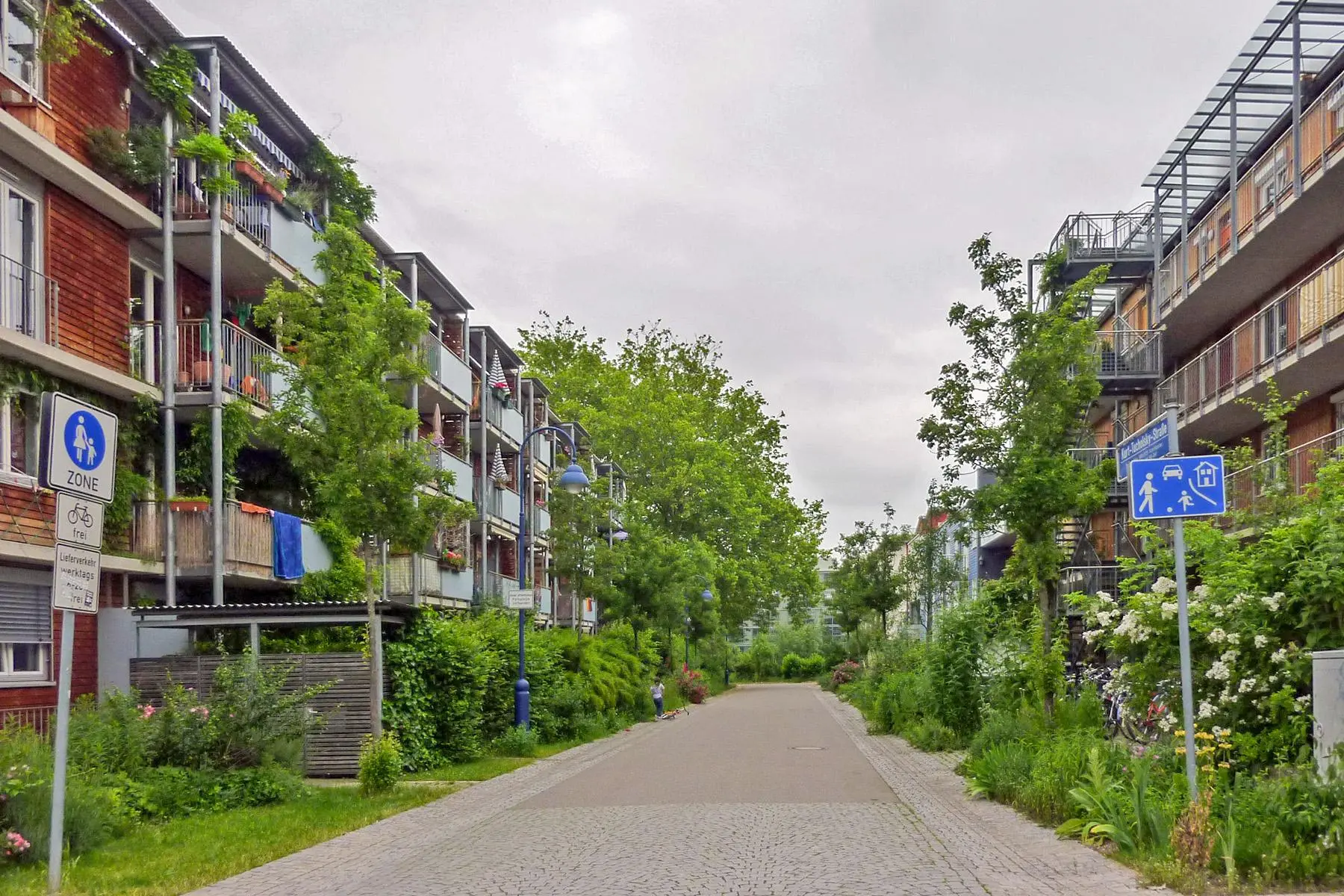
Vauban, a purpose-planned district in Freiburg, southwestern Germany, combines low-car urban design with residential buildings designed to minimize energy consumption.
The neighborhood combines housing, public transportation, walking routes, cycling infrastructure, and shared public spaces.
One of the district’s defining characteristics is its approach to limiting private car use. Many residents rely on walking, cycling, and public transportation for everyday journeys, while parking is concentrated in designated areas rather than placed directly beside every home.
The district also includes energy-efficient buildings and homes designed to reduce heating requirements.
Some buildings combine solar panels with designs that reduce energy needs, helping residential areas support local energy production and conservation.
The neighborhood’s layout supports a different relationship between homes, streets, and public spaces. Neighborhoods are designed to make walking easier and shared spaces more accessible, rather than organizing residential areas primarily around cars.
Vauban is not entirely car-free, and its experience cannot automatically be transferred to every city. Reducing car dependence requires more than restricting vehicle use. It also depends on reliable public transportation, suitable urban density, and residents willing to change their travel habits.
What makes it different: Vauban demonstrates how neighborhood design can make sustainable transportation and energy-efficient housing easier to incorporate into everyday routines.
9. Gaviotas, Colombia: Restoring a Difficult Landscape Through Local Innovation
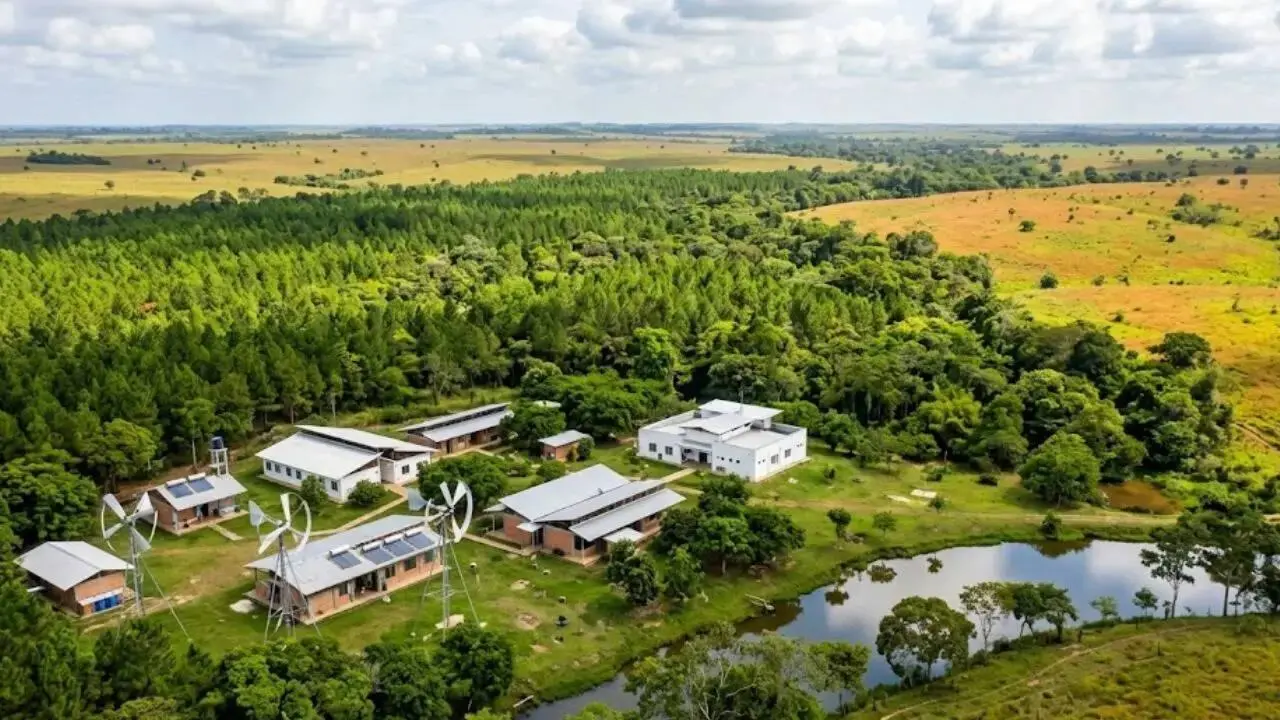
In the eastern Colombian plains known as Los Llanos, the community of Gaviotas developed an unusual approach to living in a challenging environment.
Founded in the early 1970s, the settlement became known for combining local experimentation, environmental restoration, and practical engineering.
The community developed locally appropriate technologies, such as solar water-heating systems and groundwater pumps, to address its energy and water requirements.
The community also launched a large-scale reforestation effort after struggling to sustain agriculture on degraded land.
Over time, the expanding forests encouraged greater vegetation growth and helped create conditions that could support agricultural activities. The restoration efforts helped transform severely degraded areas into a more varied landscape.
Gaviotas also drew on traditional knowledge from Indigenous communities in the region, including approaches to building, materials, and living with local environmental conditions.
Its history is not a simple story of an environmental project solving every problem. The community has faced economic, social, and organizational challenges, and its experience raises questions about how experimental settlements can remain viable across generations.
Gaviotas highlights the importance of context-specific innovation, especially in regions where limited infrastructure makes conventional development approaches less practical.
What makes it different: Gaviotas combines environmental restoration with practical inventions developed around the needs and conditions of a remote community.
10. Community Forests, Bhutan: Giving Local Residents a Role in Forest Management
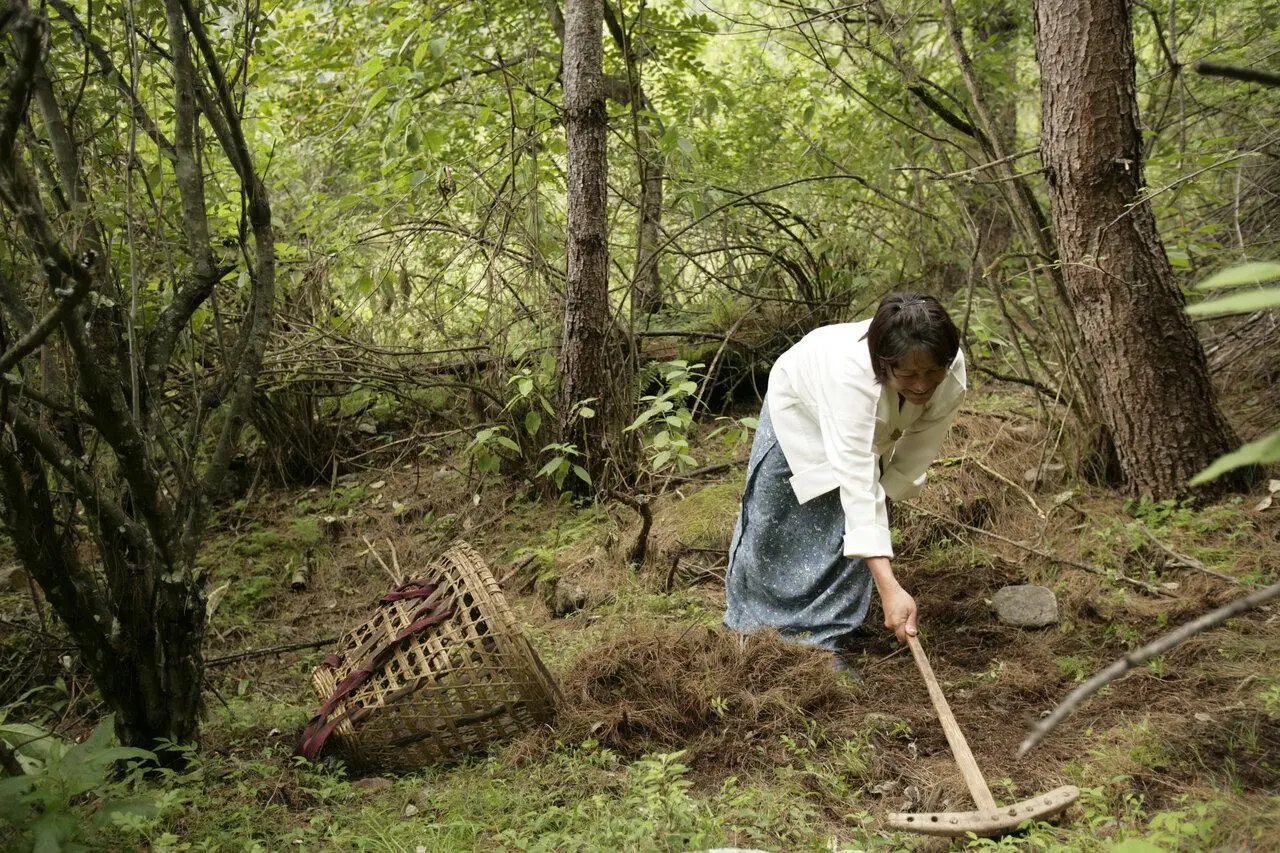
Bhutan is widely associated with forest conservation, but its environmental approach also includes community participation in managing natural resources.
Community forestry gives local groups a role in protecting and sustainably managing designated forest areas.
Rather than treating forests only as resources controlled from a distance, the approach gives organized community groups responsibilities for managing them under approved plans and regulations.
These forests can provide important local benefits, including access to forest products, protection of natural resources, and opportunities for community income.
The system also encourages residents to take an active role in preventing forest fires, reducing illegal timber harvesting, and maintaining forest health.
Bhutan gradually developed its community forestry framework over several decades. Government documents describe community forestry as part of the country’s wider effort to promote sustainable forest management and provide social and economic benefits.
However, community management does not mean unrestricted access to forest resources. Activities remain subject to management plans, government rules, and environmental requirements.
The model demonstrates how meaningful community participation can strengthen long-term conservation, particularly when local livelihoods depend on the resources being protected.
What makes it different: Bhutan’s community forestry approach connects conservation with local responsibility, giving residents an active role in managing the forests around them.
Comparing the 10 Communities
| Community | Country | Main sustainability approach |
|---|---|---|
| Samsø | Denmark | Community-owned renewable energy |
| Wildpoldsried | Germany | Renewable electricity production |
| Kamikatsu | Japan | Waste reduction and reuse |
| Auroville | India | Water conservation and land restoration |
| Hammarby Sjöstad | Sweden | Integrated urban resource management |
| Curitiba | Brazil | Public transportation and green planning |
| Todmorden | United Kingdom | Community food growing |
| Vauban | Germany | Low-car neighborhood design |
| Gaviotas | Colombia | Reforestation and local innovation |
| Community forests | Bhutan | Participatory forest management |
What These Communities Can Teach the Rest of the World
These examples demonstrate that there is no single formula for sustainable living.
Some communities begin with energy. Some initiatives take a more focused approach, targeting areas such as waste reduction, water management, food systems, transportation, and forest conservation.
Their experiences also reveal several important lessons.
Sustainability works better when residents participate
Samsø and Kamikatsu show that local involvement can make environmental initiatives part of everyday community life. Residents are more than passive users of infrastructure; they can help finance, organize, and maintain it.
Local conditions should shape local solutions
Renewable-energy solutions must reflect their surroundings, as technologies suited to wind-rich islands may be less effective in landlocked communities. Water conservation methods in a dry region may differ greatly from those used in a place with heavy rainfall.
Effective solutions begin with a clear understanding of local geography, available resources, and community needs.
Environmental improvements can support economic and social goals
Curitiba’s recycling initiatives connect waste management with social assistance. Todmorden’s shared gardens encourage food awareness and community participation. Samsø demonstrates how local investment can create economic opportunities alongside energy development.
Sustainability should deliver practical benefits for communities while improving environmental conditions.
Progress requires long-term maintenance
Building renewable energy infrastructure or planting trees is only the beginning. Systems need funding, skilled workers, maintenance, monitoring, and community support.
A project that works during its first few years may face different challenges as populations, technologies, and economic conditions change.
Can Every Community Become More Sustainable?
Not every community has the same financial resources, geography, infrastructure, or political support. A small island with strong wind resources faces different opportunities from a densely populated city or a remote agricultural settlement.
Some initiatives also involve trade-offs. Recycling systems require time and organization. Renewable energy needs reliable storage and grid connections. Low-car neighborhoods depend on accessible public transportation. Reforestation projects must consider biodiversity, land rights, and long-term ecological effects.
These examples are not intended to suggest that every community should adopt the same approach.
Instead, they show that communities can identify the problems most relevant to their circumstances and develop practical responses.
For communities facing climate-related pressures, these efforts can also complement wider adaptation measures. See 10 Places Around the World Where People Have Adapted to Extreme Weather for examples of how residents respond to challenging environmental conditions.
Other communities must account for geological hazards as well as climate and resource pressures. 10 Places Around the World Where People Live Near Active Volcanoes examines how residents manage the risks of living near active volcanic systems.
The broader lesson is that sustainable living depends on more than a single technology or government policy. It develops through decisions made by households, local organizations, businesses, planners, and public institutions over many years.
Frequently Asked Questions (FAQs)
A sustainable community brings residents, businesses, and local institutions together to meet present needs while managing resources responsibly and minimizing long-term environmental impacts. This can involve renewable energy, efficient transportation, waste reduction, water conservation, local food systems, and responsible land management.
Samsø, an island in Denmark, is known for its successful shift toward renewable energy. The island developed a community-led renewable energy system using wind, solar, and biomass. Wildpoldsried in Germany provides another example, generating more renewable electricity than the community consumes.
The Japanese town of Kamikatsu is widely recognized for its extensive waste-management system, which emphasizes careful sorting, recycling, and resource reuse. Residents separate household materials into numerous categories and bring them to a central collection facility.
Small communities can reduce waste, restore forests, protect water sources, grow food locally, improve energy efficiency, and encourage sustainable transportation. Their influence may be local, but successful approaches can inspire other places.
No. Sustainable communities often combine traditional knowledge with modern technology. Solar panels, wastewater treatment, efficient buildings, renewable energy systems, and digital monitoring can all support more responsible resource use.
No community can realistically eliminate every environmental impact. However, better planning, resource efficiency, renewable energy, and conservation can reduce environmental pressures and improve long-term resilience.
Sources
- Samsø Energy Academy – Samsø’s Green Transition
- United Nations Framework Convention on Climate Change – Samsø: An Island Community Pointing to the Future
- International Climate Initiative – Energy-Plus Building and Energy-Plus Community
- Kamikatsu Zero Waste Town – Official Portal
- Auroville – Water Management
- Hammarby Sjöstad – Energy Systems
- World Bank – Behavior Change in Solid Waste Management
- Incredible Edible – The Idea
- Royal Town Planning Institute – Freiburg Case Study
- BBC Future – Gaviotas: The 1960s Green Utopia
- Bhutan – Forest and Nature Conservation Act 2023