
Romania has experienced rapid growth since joining the European Union in 2007. Urban centers such as Bucharest are expanding, investment is increasing, and the tech sector continues to grow.
Official indicators suggest progress is strong. GDP is up, employment is stable, and international reports often highlight the country’s growth.
But structural problems rarely appear overnight. Infrastructure gaps persist. Demographics are shifting. Governance and trust issues remain. Rural areas lag behind urban centers.
These challenges rarely spark immediate crises. Over time, however, they can slow growth, deepen inequality, and strain public institutions.
Metrics for Romania
| Indicator | Current Status | Source |
|---|---|---|
| GDP Growth | 4.5% (2025 est.) | World Bank |
| Unemployment | 5.1% | Eurostat |
| Population | 19.2 million | Eurostat |
| Corruption Perception Index | 44/100 | Transparency International |
| Education Disparity | High urban-rural gap | OECD |
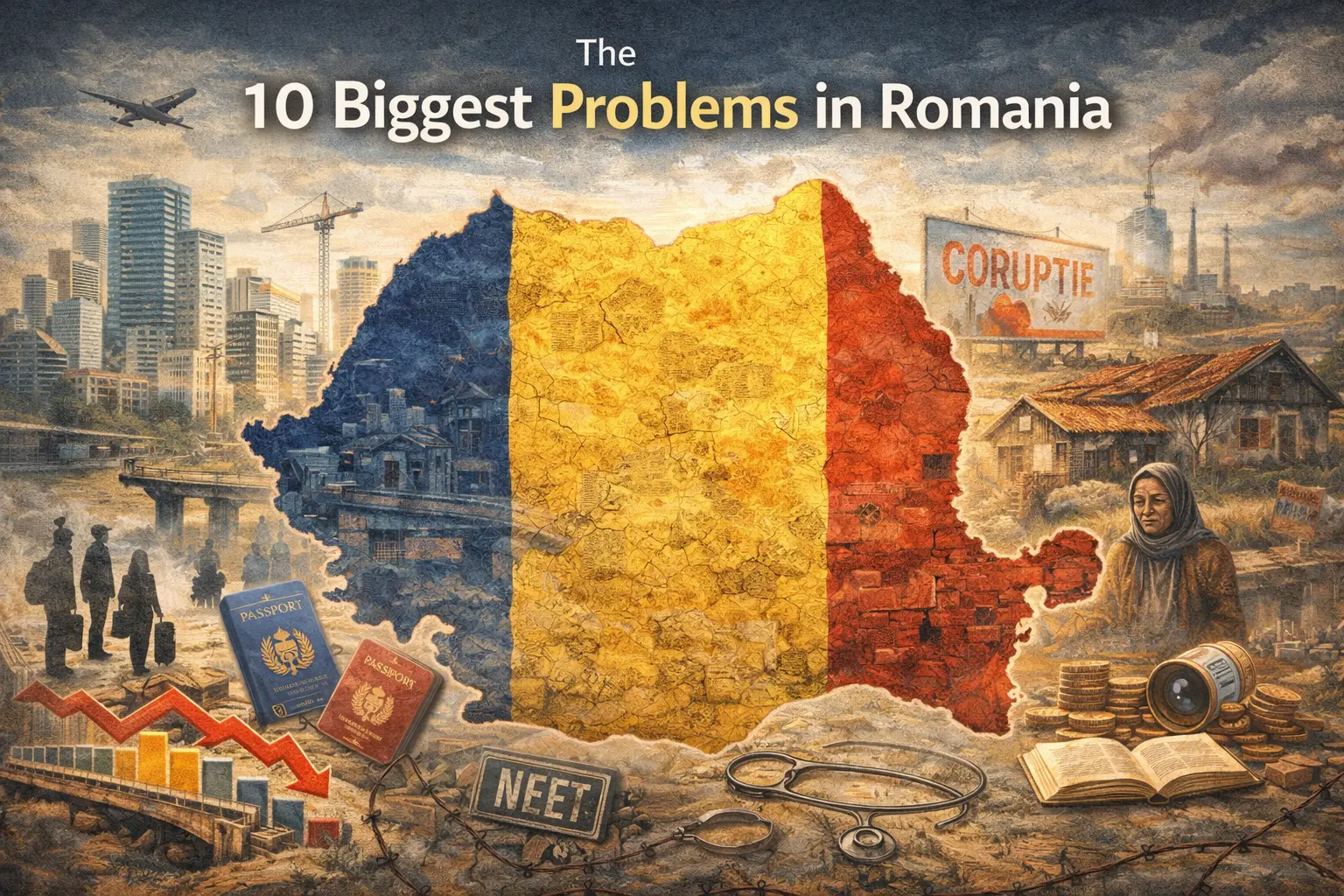
The 10 Biggest Problems in Romania
Persistent Corruption and Governance Challenges
Corruption remains one of the most frequently cited concerns in Romanian public life. Transparency International notes that risks persist in public procurement, political patronage, and local administration. Anti-corruption institutions have strengthened, but reforms remain uneven.Infrastructure Deficits
Romania has one of the EU’s least developed highway networks relative to its size. Underdeveloped transport infrastructure hampers trade, restricts regional mobility, and makes the country less attractive to investors.Regional Economic Inequality
Growth is concentrated in cities such as Bucharest, Cluj-Napoca, and Timișoara, while the countryside lags. Limited job opportunities, low wages, and inadequate infrastructure widen disparities, pushing people to migrate to cities or abroad.Demographic Decline
Romania’s population is shrinking due to low fertility and high emigration, creating long-term labor force challenges. Eurostat reports a significant decline since 2000, which is affecting Romania’s economic sustainability.Brain Drain of Skilled Workers
Many professionals leave for countries like Germany, Italy, and Spain, seeking higher wages and better opportunities. The result is a shortage of doctors, engineers, and IT specialists.Healthcare System Strain
Healthcare faces underfunding, staff shortages, and outdated infrastructure. Rural hospitals are particularly affected. WHO reports highlight an urgent need to modernize facilities and improve staffing.Education Inequality
Students in urban schools benefit from greater resources than their rural counterparts. OECD studies highlight that these disparities affect social mobility, perpetuating long-term inequality.Rural Poverty
Rural regions face limited job opportunities, aging populations, and inadequate infrastructure. These conditions perpetuate poverty and regional disparities.Environmental and Deforestation Concerns
Despite hosting Europe’s vital forests, Romania faces mounting threats from illegal logging and environmental pressures. Greenpeace and local environmental authorities call for stronger enforcement.Low Public Trust in Institutions
Political instability and corruption scandals have reduced public confidence. Low trust complicates policy reform and weakens democratic engagement.
Policy and Response Initiatives
- Government Initiatives – EU-funded infrastructure and modernization programs, anti-corruption task forces.
- NGO and Civil Society Programs – Rural development, education access initiatives, and environmental conservation.
- Emerging Trends – Growing tech hubs, pilot education reforms, digitalization of public services.
| Challenge | Impact Area | Long-Term Consequence |
|---|---|---|
| Corruption | Governance | Reduced public trust |
| Infrastructure gaps | Economy | Slower regional growth |
| Population decline | Labor market | Workforce shortages |
| Brain drain | Human capital | Loss of skilled professionals |
| Education inequality | Social mobility | Limited opportunity for rural youth |
Frequently Asked Questions (FAQs)
Why is Romania experiencing population decline?
Low birth rates and high emigration reduce the workforce and overall population.
How serious is corruption in Romania?
Transparency International highlights ongoing risks, even with anti-corruption reforms enhancing oversight.
Why do Romanians emigrate?
Better pay, career opportunities, and working conditions in other EU countries attract skilled workers.
What are the main infrastructure problems?
Fewer highways and slower rail development limit regional growth and trade.
How does rural poverty affect Romania?
Limited jobs, aging populations, and weak infrastructure drive regional inequality.
Is Romania’s economy growing?
Yes. Economic growth is strong, but structural challenges affect long-term resilience.
Is Romania’s healthcare system improving?
Yes, but staff shortages, underfunding, and outdated hospitals remain major challenges.
- The 10 Biggest Problems in Nigeria
- The 10 Biggest Problems in the Czech Republic
- The 10 Biggest Problems in Iran