

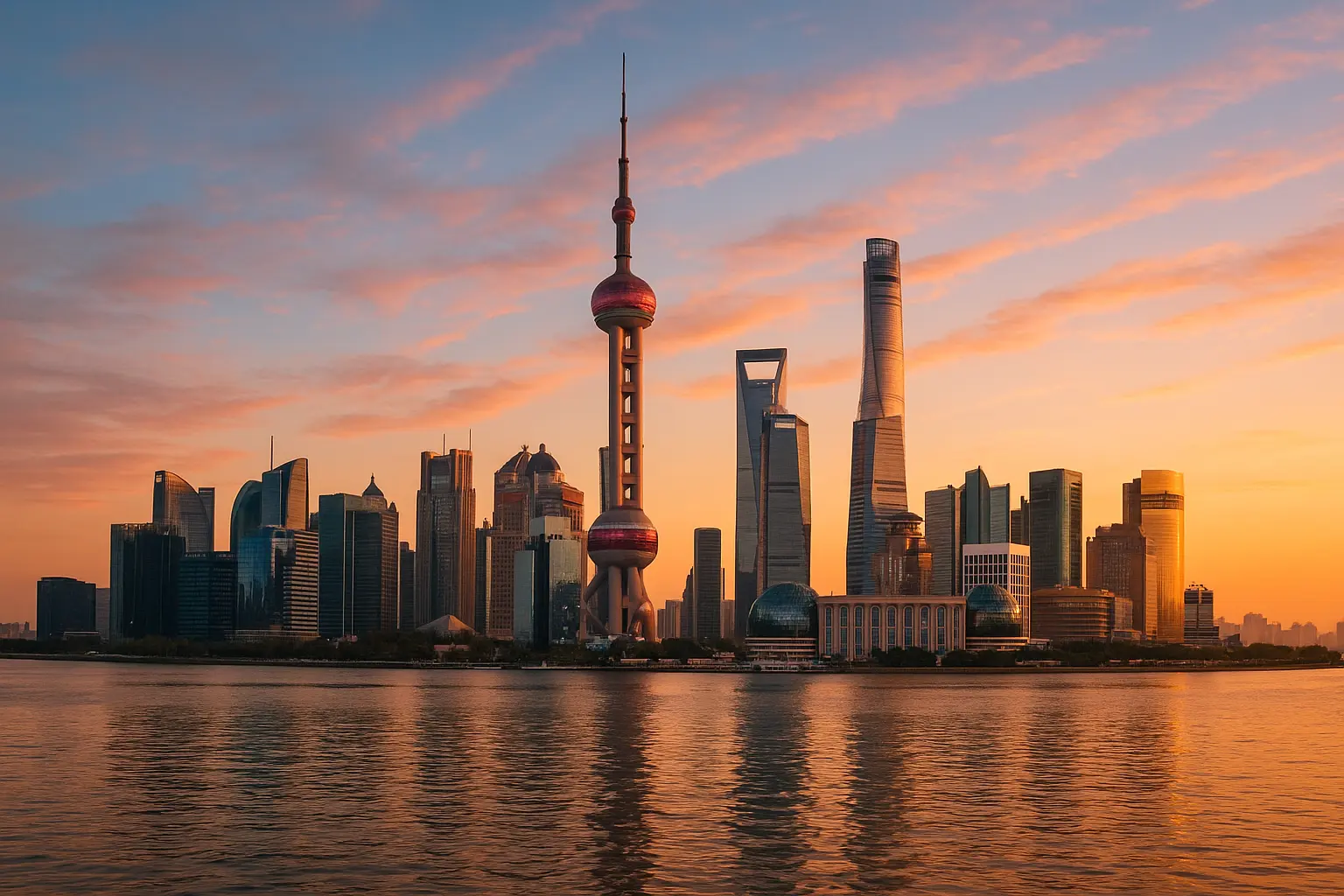
China remains a global powerhouse — from manufacturing behemoth to technology innovator. But beneath its economic strength lie profound structural challenges. China is grappling with a rapidly aging population, low fertility, rising inequality, and mounting geopolitical pressures.
Addressing these issues will be critical for sustaining its growth trajectory, social stability, and global role. In this article, we examine the 10 biggest challenges China faces today, grounding the discussion in evidence and policy reality.
10 Biggest Challenges in China
| # | Challenge | Description |
|---|---|---|
| 1 | Aging Population & Shrinking Workforce | China has a declining working-age population, which raises the dependency ratio and adds pressure on pensions and social services. |
| 2 | Low Birth Rate & Demographic Decline | Despite policy shifts such as the three-child policy, the fertility rate remains well below replacement, putting long-term demographic sustainability at risk. |
| 3 | Pension and Healthcare System Strain | As the number of retirees grows and the workforce shrinks, governments struggle to fund pensions and healthcare. |
| 4 | Youth Unemployment & “Involution” | Young people face intense job market competition and diminishing returns on effort (“neijuan”), contributing to social discontent. |
| 5 | Housing Affordability | High property prices in major cities make homeownership challenging and constrain household consumption. |
| 6 | Regional Inequality (Urban-Rural Divide) | Significant income and social service disparities persist between urban and rural areas, hindering equitable development. |
| 7 | Gender Inequality & Family Pressures | Women continue to face discrimination in employment and challenges in balancing career and childcare, particularly as family sizes remain limited. |
| 8 | Chronic Disease & Health Risks | Rapid aging is linked to a rise in chronic diseases, placing further burden on the healthcare system. |
| 9 | Economic Slowdown & Productivity Transition | In shifting from export-led growth to innovation-driven growth, China must confront productivity barriers and labor shortages. |
| 10 | Geopolitical Risks & Global Trade Tensions | China faces threats to its economic ambitions and supply-chain stability from trade tensions, strategic competition, and geopolitical risks. |
Frequently Asked Questions (FAQs)
Why is China’s population aging so rapidly?
China’s working-age population is shrinking due to decades of low birth rates and past family planning policies.
Has the two-child policy in China tackled the low birth rate?
Not really. Despite allowing three children per family, economic pressures, high housing costs, and cultural shifts mean many couples still avoid having more children.
What is “neijuan” and how does it affect young people in China?
“Neijuan” (involution) describes a condition where people compete harder but gain less. In China, this manifests as fierce competition in education and the job market, with declining returns for effort.
How serious is the challenge to China’s pension system?
Very serious. As fewer people enter the workforce and more citizens retire, governments face growing pressure to fund pensions, especially in less affluent regions.
What is China doing to close its urban-rural divide?
The government has launched development initiatives in rural areas, but income disparity, education consolidation, and migration trends continue to reinforce regional inequality.
Conclusion
China stands at a crossroads. Its transformation into a high-tech, high-service economy runs headlong into deep structural issues — demographic decline, social inequality, and economic transitions. Solving these challenges will demand bold policy decisions and sustained investment in human capital.
If China navigates this carefully, it has the potential to remain a global leader. But the cost of inaction is high: without addressing aging, fertility, and social infrastructure, its long-term growth could falter.
- 10 Biggest Challenges in South Korea
- The 10 Biggest Problems in Japan
- The 10 Biggest Problems in North Korea