

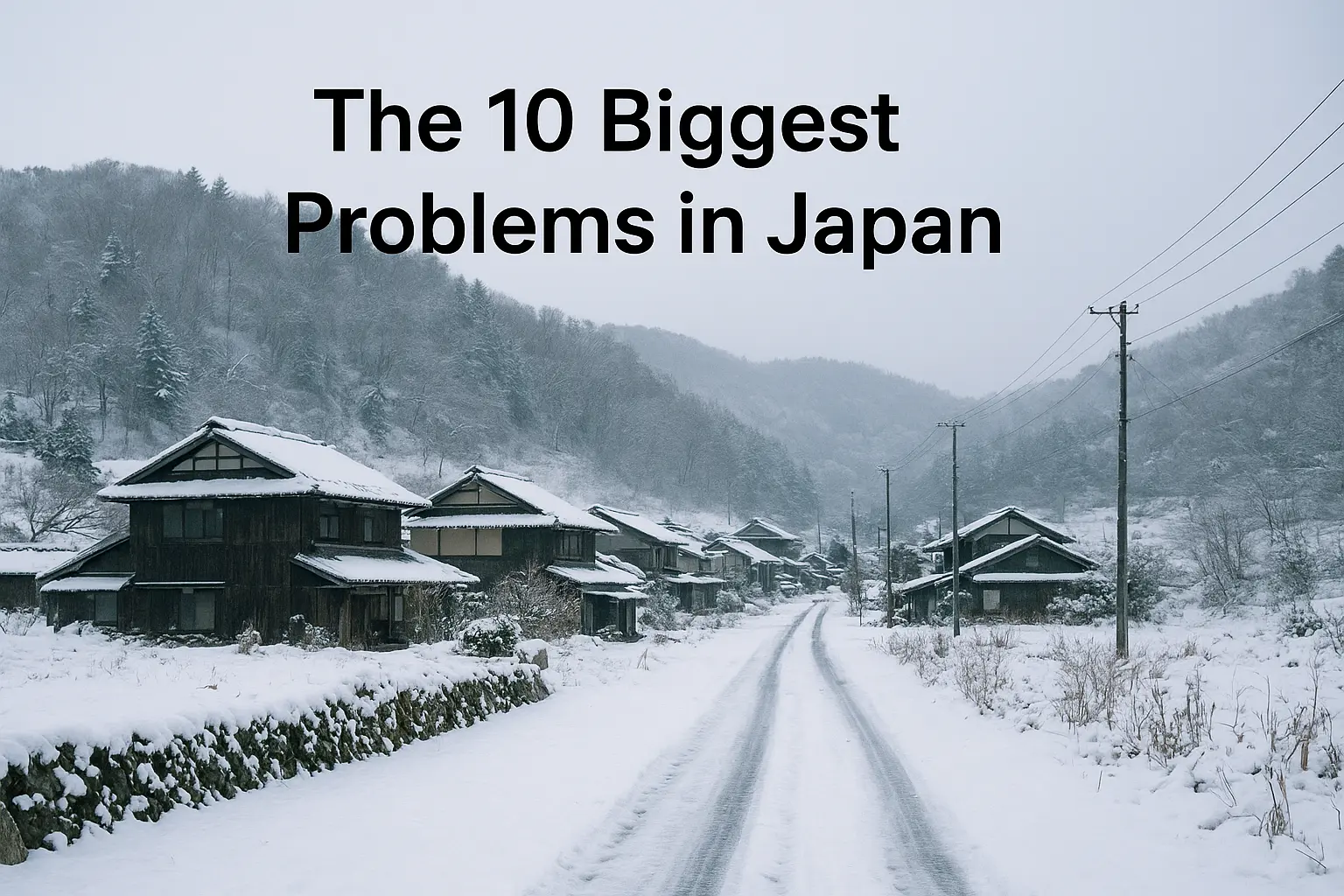
Japan is admired worldwide for its technological innovation, cultural heritage, world-class cities, and high quality of life. Yet behind its global success story, the country faces urgent demographic, economic, environmental, and social challenges that reshape its future.
From a rapidly aging population to labor shortages and natural disaster risks, Japan must navigate complexities that influence both daily life and long-term national stability.
This article examines the 10 most significant problems in Japan, supported by data, research, and credible global sources.
Transparency International – Japan ranking in the Corruption Perceptions Index as a global benchmark for governance challenges
Authoritative Reference
Here Are The 10 Biggest Problems in Japan
Rapid Aging Population
Japan has the world’s oldest population, with nearly 30% of residents aged 65 and above. It leads to:
• Higher healthcare and pension costs
• Shrinking workforce
• Pressure on social welfare systems
The imbalance threatens long-term economic sustainability.Declining Birth Rate
Japan’s fertility rate remains at 1.3, far below the replacement level of 2.1. Consequences include:
• School closures
• Reduced consumer demand
• Population decline expected to continue through 2050
Government incentives have not reversed the trend.Labor Shortages
Due to the shrinking working-age population, industries struggle to fill roles in:
• Healthcare
• Construction
• Manufacturing
• Agriculture
Japan has gradually opened more pathways for foreign workers, but shortages persist.Economic Stagnation & Deflation Pressures
Japan has faced decades of slow economic growth. Key concerns include:
• Deflation risk
• Low wage growth
• High public debt (over 200% of GDP)
Despite strong global industries, domestic spending remains weak.High Public Debt
Japan has one of the highest debt-to-GDP ratios among countries globally. Massive social welfare spending and repeated economic stimulus measures continue to add to the fiscal burden. Balancing this debt while maintaining essential public services remains a major national challenge.Urban–Rural Population Imbalance
Tokyo continues to grow, but rural areas face:
• Depopulation
• School and hospital closures
• Abandoned towns
Many remote communities are struggling to survive as young people move to major cities.Natural Disaster Vulnerability
Japan is prone to:
• Earthquakes
• Tsunamis
• Typhoons
• Volcanic activity
The 2011 Tōhoku earthquake demonstrated how disasters can cause long-term economic and human impact.Energy Dependence & Nuclear Debate
After the Fukushima disaster, public trust in nuclear energy declined. Japan now relies heavily on imported fossil fuels, raising concerns about:
• Energy security
• High electricity prices
• Carbon emissions
The government continues to debate the future energy mix.Gender Inequality in Workplaces
Japan ranks low in the Global Gender Gap Index, with persistent gaps in:
• Leadership roles
• Workplace equality
• Wage differences
Improving gender participation is crucial for addressing labor shortages.Low Immigration & Integration Challenges
Japan historically maintains strict immigration policies. Although foreign workers are increasing, challenges include:
• Integration barriers
• Language requirements
• Limited long-term residency options
It affects labor markets, demographics, and cultural dynamics.
Key Indicators of Japan’s National Challenges
| Issue | Latest Trends | Impact |
|---|---|---|
| Aging Population | 30% aged 65+ | Healthcare, pensions |
| Fertility Rate | 1.3 | Population decline |
| Public Debt | 200%+ of GDP | Fiscal pressure |
| Labor Shortage | Growing yearly | Productivity decline |
| Disaster Risk | High | Infrastructure vulnerability |
Frequently Asked Questions (FAQs)
What is Japan’s critical challenge today?
A rapidly aging population combined with a declining birth rate is the country’s most pressing issue.
Why is Japan experiencing labor shortages?
The working-age population is shrinking, and immigration levels remain relatively low.
How vulnerable is Japan to natural disasters?
Japan sits on the Pacific Ring of Fire, making it one of the world’s most disaster-prone nations.
Why does Japan have such high public debt?
Long-term stimulus measures, social welfare spending, and low economic growth contribute to debt accumulation.
What global index assesses Japan’s governance and integrity?
Transparency International’s Corruption Perceptions Index is a widely recognized global benchmark for measuring corruption.
What Lies Ahead for Japan?
Japan faces significant but not insurmountable challenges. The country actively pursues solutions through technological innovation, strong governance, and evolving policies on labor, gender equality, and energy. Decisions made today will determine its economic resilience, demographic balance, and global competitiveness for decades to come.
- The 10 Biggest Problems in Ireland
- The 10 Biggest Problems in Finland
- 10 Biggest Challenges in South Korea
- Why Japan Is Often Called the Loneliest Country in the World