
The Short Answer
A scooter belt works because the load is small.
A car would destroy that same belt in seconds.
The main reason lies in torque, heat buildup, and mechanical limits.
The Core Difference Most People Miss
Scooters and cars operate under entirely different mechanical force conditions, not just different sizes.
- Scooters = low torque, light load
- Cars = high torque, heavy load
A belt system depends on friction.
A car drivetrain depends on mechanical locking (gears).
That single difference changes everything.
Why Scooter Belts Work So Well
Scooters use a CVT (Continuously Variable Transmission) with a reinforced rubber belt.
What makes it effective:
- Smooth, gearless acceleration
- Lightweight system
- Cheap to produce and maintain
- Perfect for stop-and-go city riding
But here’s the limit:
The belt only works because it never faces extreme force.
Why a Belt Would Fail in a Car
1. Torque Would Overwhelm It
Car engines produce much higher torque, especially under:
- Steep uphill driving
- Full passenger load
- Rapid acceleration
A rubber belt system would:
- Slip under heavy load.
- Overheat quickly
- Wear out in a short time.
- Risk of sudden failure
- Possibly snap
2. Heat Would Destroy It
Friction = heat.
In cars:
- Higher speed + higher load = extreme heat buildup
- Rubber belts degrade under sustained temperature.
Result: material breakdown and failure
3. Reliability Standards Are Much Higher
Cars must handle:
- Long-distance travel
- Heavy loads
- High-speed stability
A belt system cannot maintain consistent performance under these conditions.
What Cars Use Instead (And Why It Works)
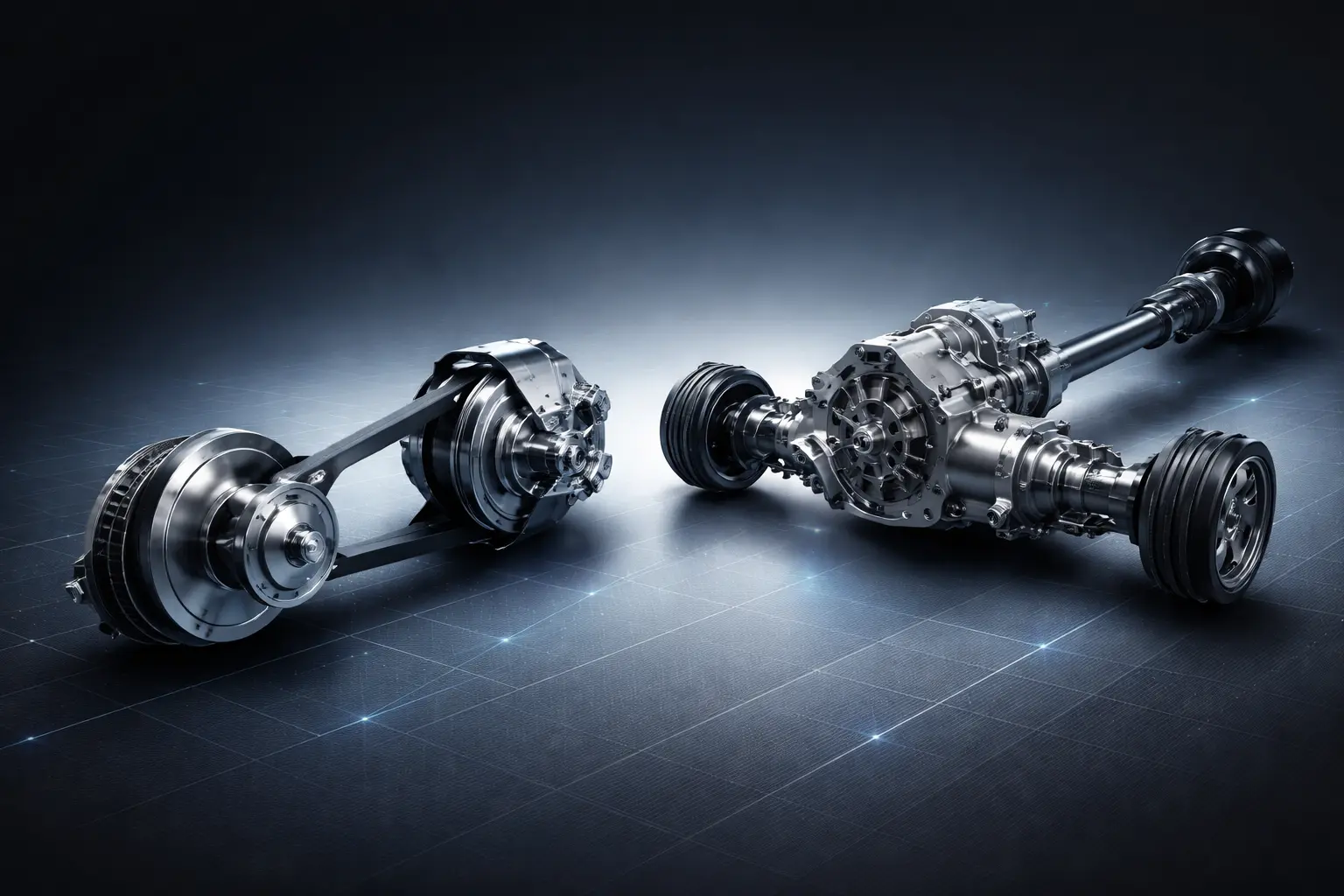
Cars rely on a gear-driven drivetrain:
- Transmission (gears): controls speed and torque
- Driveshaft: transfers power without slip
- Differential: balances wheel rotation
- Axles: deliver power directly to wheels
Why this system dominates:
- No slip (direct engagement)
- Extremely high strength
- Long lifespan under stress
| Factor | Belt System (Scooter) | Gear System (Car) |
|---|---|---|
| Force Handling | Limited | Extremely high |
| Slip Risk | High under load | None |
| Heat Resistance | Moderate | High |
| Durability | Medium | Very high |
| Best Use | Light vehicles | Heavy vehicles |
What About CVT Cars?
Some cars do use CVTs—but not like scooters.
Key difference:
- Car CVTs use steel belts or chains
- Operate in sealed, oil-cooled systems
- Designed for higher torque environments
Still, engineers carefully build them to address belt limitations.
The Bottom Line
A scooter belt works because the system is light and controlled.
A car needs something stronger.
At high torque levels, friction-based systems fail; mechanical engagement prevails.
That’s why cars use gears.
Frequently Asked Questions (FAQs)
Do cars use belts to move the wheels like scooters?
No. Cars do not use belts to drive the wheels directly. They use a gear-based transmission system, driveshafts, and differentials to transfer power.
Why do scooters use belts instead of gears?
Scooters rely on a CVT belt system for its low cost, light weight, and smooth acceleration. It is also sufficient for their lower engine power and lighter loads.
Can a scooter belt work in a car?
No. A scooter belt cannot withstand a car’s high torque, heat, and load stress, ultimately causing it to slip or break.
Do any cars use belts in their transmission?
Yes, but only in CVT cars, and even then, the belt is steel-reinforced and enclosed. It is not the same as a scooter’s exposed rubber belt system.
What is the main difference between car and scooter power systems?
Scooters use belt-driven CVT systems, while cars rely on gear-based drivetrains with metal shafts, which are stronger and more durable for heavy loads.
Why are gears stronger than belts in cars?
Gears provide direct mechanical engagement without slipping, allowing them to handle higher torque and long-term stress better than friction-based belts.
What happens if a car uses a weak belt system?
It would likely slip, overheat, accelerate poorly, and suffer mechanical failure, especially under load or when driving uphill.
Are belts completely useless in cars?
No. Cars use belts for engine accessories (like alternators and AC compressors) and sometimes timing systems—but not for moving the wheels directly.
- Top Honda ADV 160 Issues and How to Fix Them
- Honda ADV 160 vs. Yamaha NMAX: Which Maxi-Scooter Is Better for Daily Riding?
- Why Motorcycle Chains Are Stronger Than Scooter Belts