
Historically, Europe’s economy thrived on strong manufacturing, integrated trade, and stable energy costs.
That stability is now under pressure.
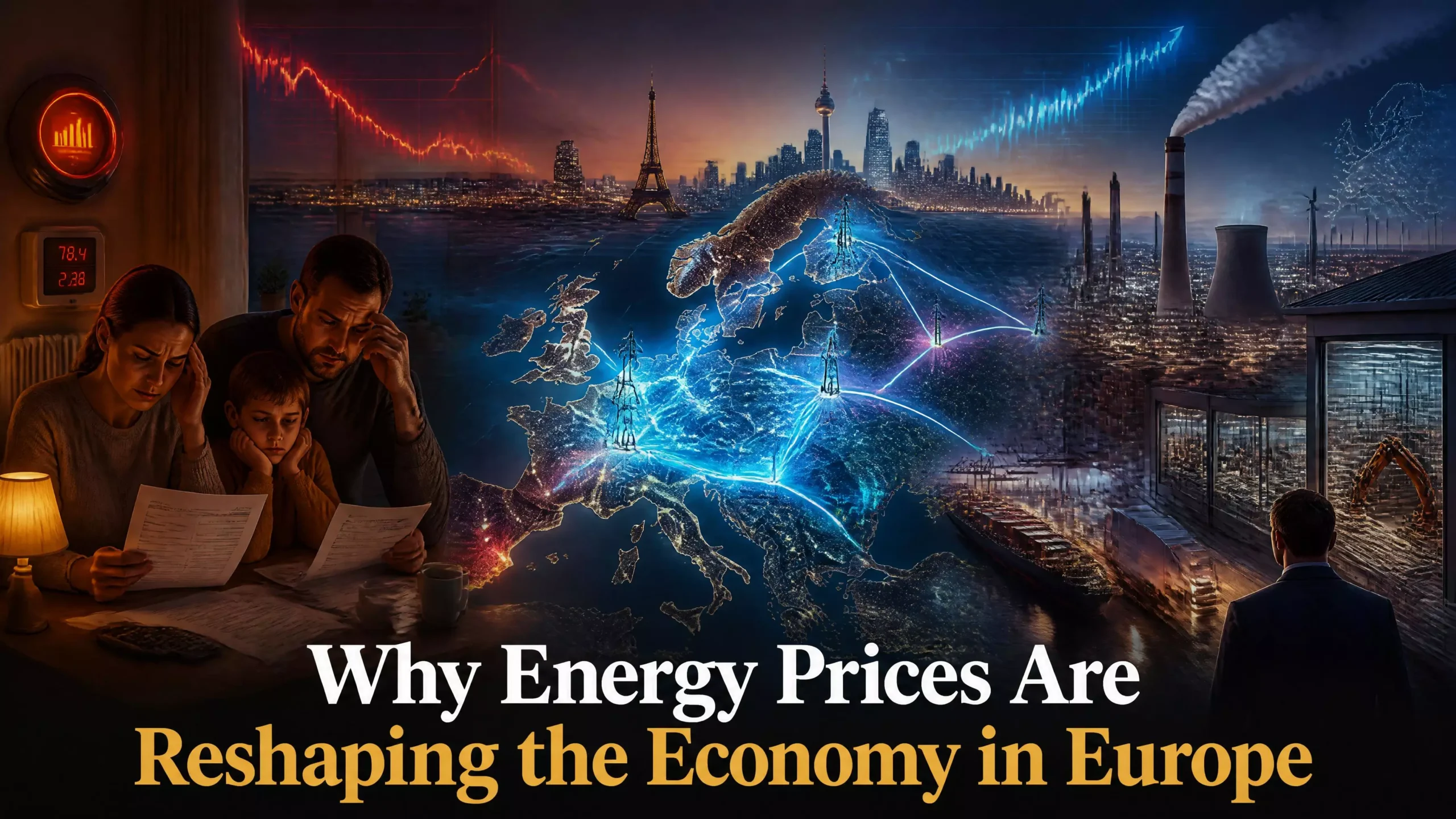
Energy prices across Europe have become more volatile, more politically sensitive, and more structurally important to everyday life. What was once a background utility cost has now become a central driver of inflation, household strain, and industrial competitiveness.
From electricity bills to heating costs, energy is no longer just an expense—it is a core factor shaping economic behavior, policy decisions, and long-term growth across the continent.
This shift aligns with broader pressures in The Cost of Living Crisis in Europe Worsens and Why Housing Is Becoming Unaffordable Across Europe—rising costs reshaping generational stability.
Quick overview
| Energy Factor | Main Economic Impact | Most Affected |
|---|---|---|
| Electricity price volatility | Household cost increases | Families & renters |
| Gas price fluctuations | Heating cost instability | Northern & Central Europe |
| Industrial energy costs | Reduced competitiveness | Manufacturing sector |
| Renewable transition costs | Infrastructure investment pressure | Governments & taxpayers |
| Import dependency | Economic vulnerability | Energy-importing countries |
| Grid modernization costs | Long-term price pressure | Entire economy |
1. Energy is now a core inflation driver in Europe
Energy prices directly influence inflation across almost every sector of the economy.
When electricity and gas prices rise, the effects quickly spread into:
- Food production costs
- Transportation prices
- Manufacturing expenses
- Household bills
It makes energy one of the most powerful inflation multipliers in the European economy.
According to institutions such as Eurostat and the European Commission, energy price fluctuations have been a key contributor to recent inflation cycles across multiple member states.
2. Household energy bills are reshaping daily life
For millions of European households, energy is no longer a fixed background cost.
Instead, it has become a variable and sometimes unpredictable expense that affects:
- Monthly budgeting
- Heating usage behavior
- Appliance consumption habits
- Financial planning
In colder regions, energy costs now represent a significantly larger share of total household expenses than in previous decades.
3. Industrial competitiveness is under pressure
Energy-intensive industries such as:
- Steel
- Chemicals
- Manufacturing
- Logistics
They are particularly sensitive to energy price fluctuations.
Higher energy costs can lead to:
- Reduced production margins
- Relocation of factories
- Lower investment attractiveness
- Competitive disadvantages versus non-European markets
This structural pressure is gradually reshaping Europe’s industrial landscape.
4. The energy transition is adding short-term cost pressure
Europe’s shift toward renewable energy is a long-term strategic move, but it comes with short-term financial implications.
These include:
- Infrastructure investment costs
- Grid modernization
- Storage and backup systems
- Transition subsidies
While the long-term goal is stability and sustainability, the short-term phase introduces additional pricing pressure across the system.
5. Import dependency increases economic sensitivity
Several European countries remain heavily dependent on imported energy sources.
It creates exposure to:
- Global price fluctuations
- Geopolitical instability
- Supply chain disruptions
As a result, energy pricing in Europe is influenced not only by internal policy but also by external global dynamics.
6. Energy prices influence housing and the cost of living
Energy remains central to broader economic pressures.
Rising energy costs directly impact:
- Heating and cooling in homes
- Rental expenses
- Utility-inclusive housing costs
- Overall cost of living
7. Governments face a balancing problem
European governments are under pressure to balance:
- Energy affordability
- Climate transition goals
- Fiscal stability
- Industrial competitiveness
Policy decisions in one area often create pressure in another, making energy policy one of the most complex economic challenges in the region.
Europe’s energy economy pressure
| Category | Current Situation | Long-Term Risk |
|---|---|---|
| Household energy costs | High volatility | Reduced affordability |
| Industrial energy use | Rising costs | Deindustrialization risk |
| Energy imports | High dependency | Economic vulnerability |
| Renewable transition | Accelerating | Short-term price pressure |
| Inflation impact | Strong influence | Structural inflation risk |
Frequently Asked Questions (FAQs)
Energy prices respond to global supply, geopolitical risk, infrastructure limits, and renewable adoption.
Energy costs influence nearly all sectors, including food production, transportation, and manufacturing, making them a key driver of overall inflation.
Countries with high import reliance and cold winters bear heavier economic impacts.
In the short term, transition costs can increase prices, but long-term goals aim for greater stability and reduced dependence on imports.
Higher energy costs raise utility expenses and can influence rental pricing—especially in utility-included markets.