
You’re not hungry.
You know you’re not hungry.
But somehow, you still end up eating.
A snack here.
Something sweet there.
Maybe even without thinking about it.
And later, you ask yourself:
The answer isn’t a lack of discipline.
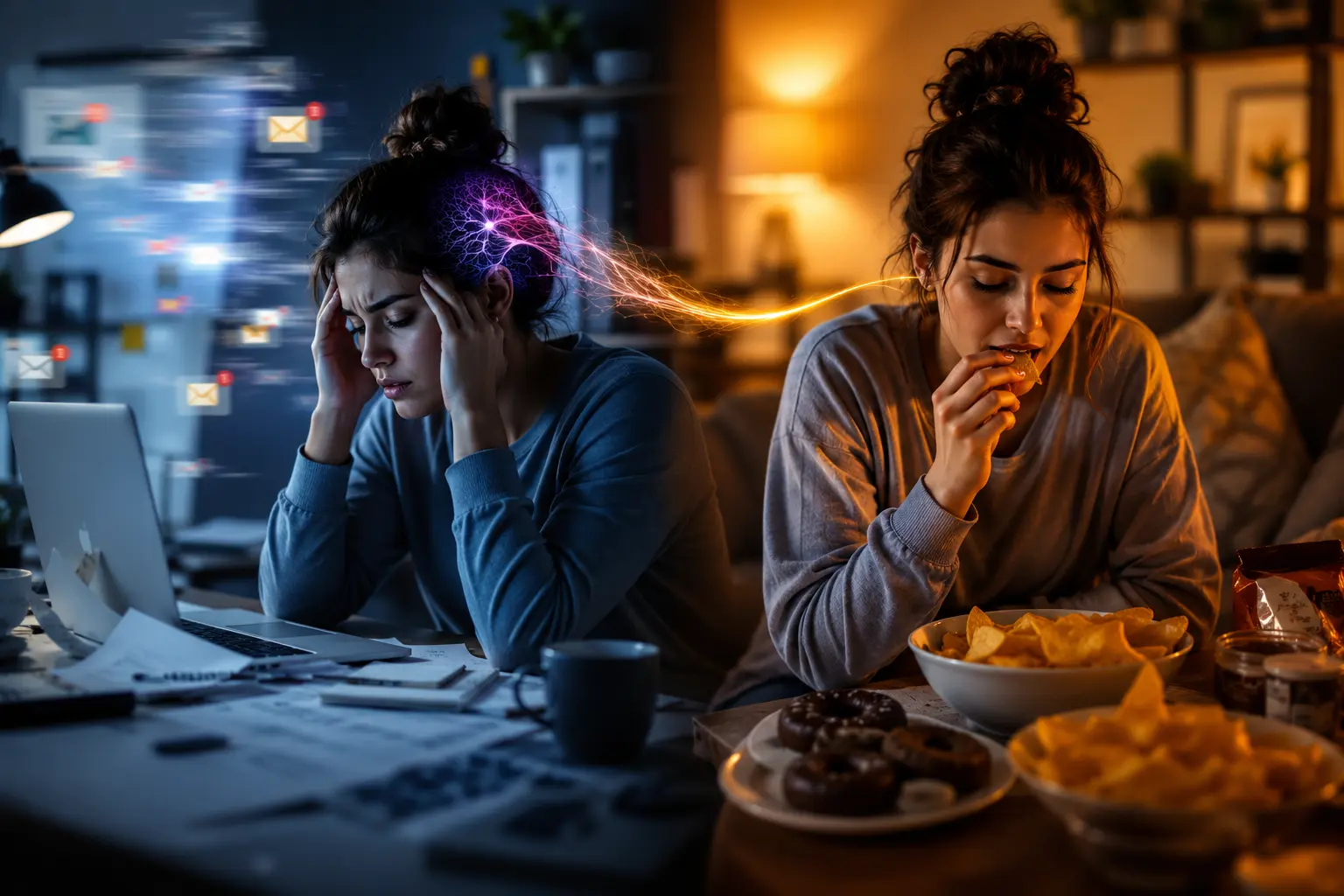
It’s how your brain reacts to Stress.
Because Stress doesn’t just affect your emotions.
It quietly changes how your body responds to food.
Quick Truth
What Stress Does to Your Brain
When you’re stressed, your body shifts into a survival state.
It triggers:
- emotional tension
- increased mental load
- reduced decision control
- stronger reward-seeking behavior
Your brain then looks for the fastest way to feel better.
And one of the quickest options is:
Especially high-sugar or high-fat foods.
Why Food Becomes Emotional Relief
Food is not just fuel for the brain.
It is also:
- comfort
- distraction
- reward
- temporary calm
So even if your body doesn’t need energy.
Your brain still pushes you toward eating.
The Hidden Pattern Most People Miss
Stress eating rarely feels like hunger.
It feels like:
- urge
- restlessness
- craving
- automatic behavior
And it often leads to:
- mindless snacking
- eating without awareness
- finishing food without feeling satisfied
Stress Eating vs Real Hunger
| Physical Hunger | Stress Eating |
|---|---|
| Builds gradually | Appears suddenly |
| Any normal food works | Craves specific comfort foods |
| Stops after fullness | Can continue even after eating |
| Body-driven | Emotion-driven |
Why This Happens (The Real Mechanism)
Stress influences eating through three key systems:
Reward system activation
Your brain seeks fast dopamine relief.Reduced self-control
Stress lowers decision-making clarity.Emotional substitution
Food becomes a substitute for emotional relief.
This behavior is not isolated—it connects directly to your broader eating psychology cluster:
→ True Hunger vs Emotional Hunger: The Hidden Difference That Quietly Controls How You Eat
explains how emotional signals often mimic real hunger, leading to confusion in eating decisions.
→ Why Skipping Meals Makes You Hungrier Later
shows how delayed eating patterns can intensify cravings and trigger rebound hunger.
→ Why Eating Habits Matter More Than Diets for Health and Weight Control
breaks down how long-term behavior patterns matter more than strict dieting rules.
Together, these articles reveal a consistent truth:
The Cycle of Stress Eating
Repeated exposure can gradually turn the behavior into an unconscious response:
Stress → craving → eating → temporary relief → repeat
Your brain learns:
So it repeats the behavior without conscious thought.
Why This Becomes Hard to Break
Stress eating is not just about food.
It is about:
- emotional regulation
- coping mechanisms
- unconscious habits
- learned reward responses
That’s why willpower alone often fails.
This cycle can become even stronger when poor sleep is added into the pattern, as it directly affects hunger hormones and weight regulation. Read more:
→ Why Lack of Sleep Makes You Gain Weight Over Time
The Truth
You’re eating because your brain is trying to reduce Stress quickly.
Final Insight
Stress doesn’t just affect your mind.
It quietly reshapes how your brain responds to food.
And once you understand that.
Focus less on what you see and more on how it starts.
Frequently Asked Questions (FAQs)
Because Stress activates reward-seeking behavior in the brain, it increases cravings for comfort foods.
No. It is usually emotional rather than physical hunger.
High-calorie foods trigger rapid dopamine responses, which temporarily reduce feelings of Stress.
Yes. It often leads to extra calorie intake without physical hunger.
Start by identifying emotional triggers and pausing before reacting with food.
Stress shifts brain function away from deliberate control toward automatic behavior loops.