
Education systems around the world are under increasing pressure to adapt.
The traditional model—built on memorization, standardized testing, and fixed career paths—is no longer aligned with reality. Automation is replacing routine jobs, artificial intelligence is reshaping industries, and the definition of “career readiness” is rapidly evolving.
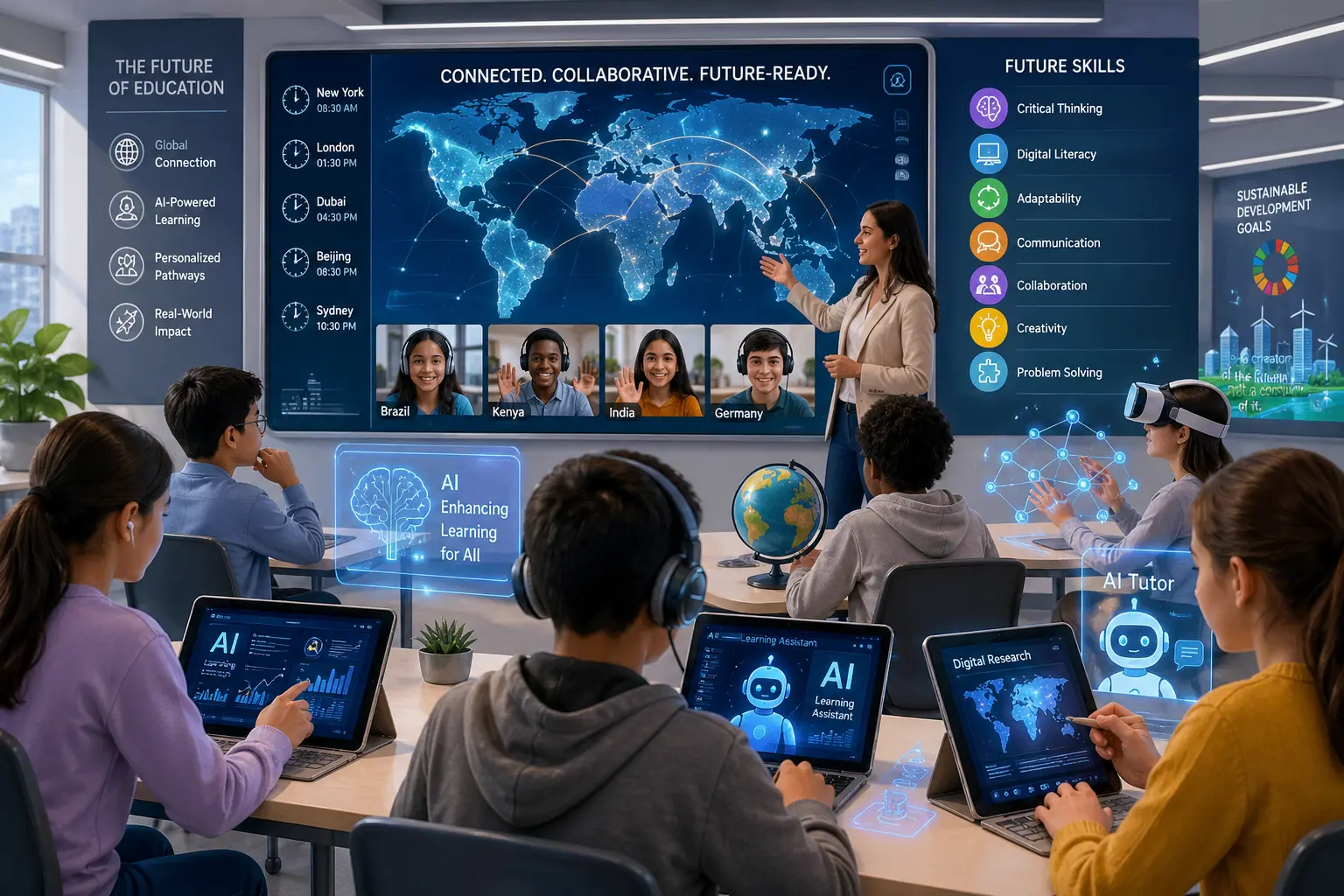
In response, schools are beginning to evolve—shifting toward skills-based learning, real-world application, and digital integration. Education is evolving to prepare students not just for exams, but for an increasingly uncertain world.
This article breaks down how schools across different countries are preparing students for the future of work, the strategies they are using, and the critical gaps that remain.
The Global Shift: Education Is Undergoing a Fundamental Shift
Education systems worldwide are undergoing a structural transformation.
The traditional model—standardized testing, memorization, rigid curricula—is being challenged by a new reality:
- Automation is replacing routine tasks
- AI is redefining knowledge work
- Employers are prioritizing adaptability over credentials.
Schools are no longer just preparing students for exams. Expectations are shifting—schools must now equip students for fast-changing, unpredictable career paths.
Important Global Trends Reshaping Education
1. From Knowledge to Skills
The emphasis is shifting toward:
- Critical thinking
- Problem-solving
- Communication
- Collaboration
Content knowledge still matters—but it is no longer enough.
2. Rise of Digital and AI Literacy
Students are now required to meet a wider range of expectations.
- Understand digital systems
- Use AI tools responsibly
- Navigate data-driven environments
Some systems are already embedding coding, robotics, and AI fundamentals into early education.
As artificial intelligence becomes more integrated into classrooms, debates are growing over how much of the learning experience AI could eventually handle. Will AI Replace Teachers in the Future? explores how AI tutors, digital learning systems, and automation may reshape educators’ future roles worldwide.
3. Flexible and Personalized Learning
Rigid one-size-fits-all models are being replaced by:
- Adaptive learning platforms
- Student-centered pathways
- Competency-based progression
4. Real-World Application
There is a growing focus on:
- Project-based learning
- Internships and industry exposure
- Entrepreneurial thinking
The goal is clear: make education more relevant to real life.
Global Education Systems Compared
Below is a simplified comparison of how leading countries are adapting:
| Country | Key Strength | Future-Focused Strategy | Challenges |
|---|---|---|---|
| Australia | Curriculum modernization | Skills integration, career pathways | Consistency across regions |
| Finland | Student-centered learning | Minimal testing, interdisciplinary learning | Scalability globally |
| Singapore | Strong STEM focus | Future economy alignment | High academic pressure |
| United States | Innovation diversity | EdTech, alternative pathways | Inequality in access |
| Germany | Vocational training system | Dual education model | Adapting to digital economy |
| Japan | Discipline and consistency | Gradual tech integration | Slow structural reform |
Country Spotlight: Australia
Australia has been actively aligning its education system with future workforce demands.
Key developments include:
- Integration of general capabilities (critical thinking, ICT skills)
- Career-focused pathways in secondary education
- Increased emphasis on adaptability and lifelong learning
How Australian Schools Are Preparing Students for Future Careers offers a detailed breakdown of these reforms and how curriculum updates and skills-based education reshape student outcomes.
Skills That Define the Future Workforce
Across countries, a consistent skill pattern is emerging.
| Skill | Why It Matters | How Schools Teach It |
|---|---|---|
| Critical Thinking | Complex problem solving | Inquiry-based learning |
| Digital Literacy | Tech-driven workplaces | Coding, EdTech tools |
| Communication | Team collaboration | Presentations, group work |
| Adaptability | Rapid change | Flexible learning environments |
| Entrepreneurship | Innovation economy | Startup projects, simulations |
Structural Reforms Driving Change
Project-Based Learning
Students work on real-world problems rather than memorizing isolated facts.
Integration of Technology
From AI tutors to digital classrooms, technology is becoming embedded in everyday learning.
Industry Collaboration
Schools are increasingly partnering with:
- Tech companies
- Local businesses
- Startups
It helps bridge the gap between education and employment.
The Reality Gap: Are Schools Keeping Up?
Despite progress, a critical gap remains.
As schools attempt to adapt to future careers, critics continue to question whether traditional education systems are evolving fast enough to meet modern realities. Concerns about outdated learning models, exam-driven teaching, and the lack of real-world life skills are becoming increasingly common—an issue explored in greater depth in The Hidden Damage of an Incompetent Education System.
1. Curriculum vs Reality
Many systems still prioritize:
- Standardized testing
- Outdated content
- Academic performance over practical skills
Guides such as How to Find Schools That Prepare Students with Real-World Skills help identify institutions that go beyond standardized testing and prioritize real-world readiness.
2. Unequal Access
Not all students benefit equally from reforms:
- Urban vs rural disparities
- Public vs private school gaps
- Access to technology
3. Teacher Preparedness
Teachers themselves must adapt to:
- New technologies
- New teaching methods
- Rapid curriculum changes
This transition is uneven across countries.
Why This Matters More Than Ever
The future of work is not stable—it is fluid.
Students entering school today may:
- Work in jobs that don’t yet exist
- Switch careers multiple times
- Compete globally in digital environments.
Education systems no longer function as institutions; they now act as adaptation engines.
Frequently Asked Questions (FAQs)
Do schools actually prepare students for the future?
Partially. Many systems are evolving, but gaps remain between curriculum and real-world demands.
Which country has the best future-ready education system?
There is no single leader. Countries like Finland, Singapore, and Germany excel in different areas.
What skills matter most for future careers?
Employers consistently rank critical thinking, digital literacy, adaptability, and communication as essential skills.
Is traditional schooling becoming outdated?
Not entirely—but it is being reshaped. Hybrid models combining traditional and modern approaches are emerging.