

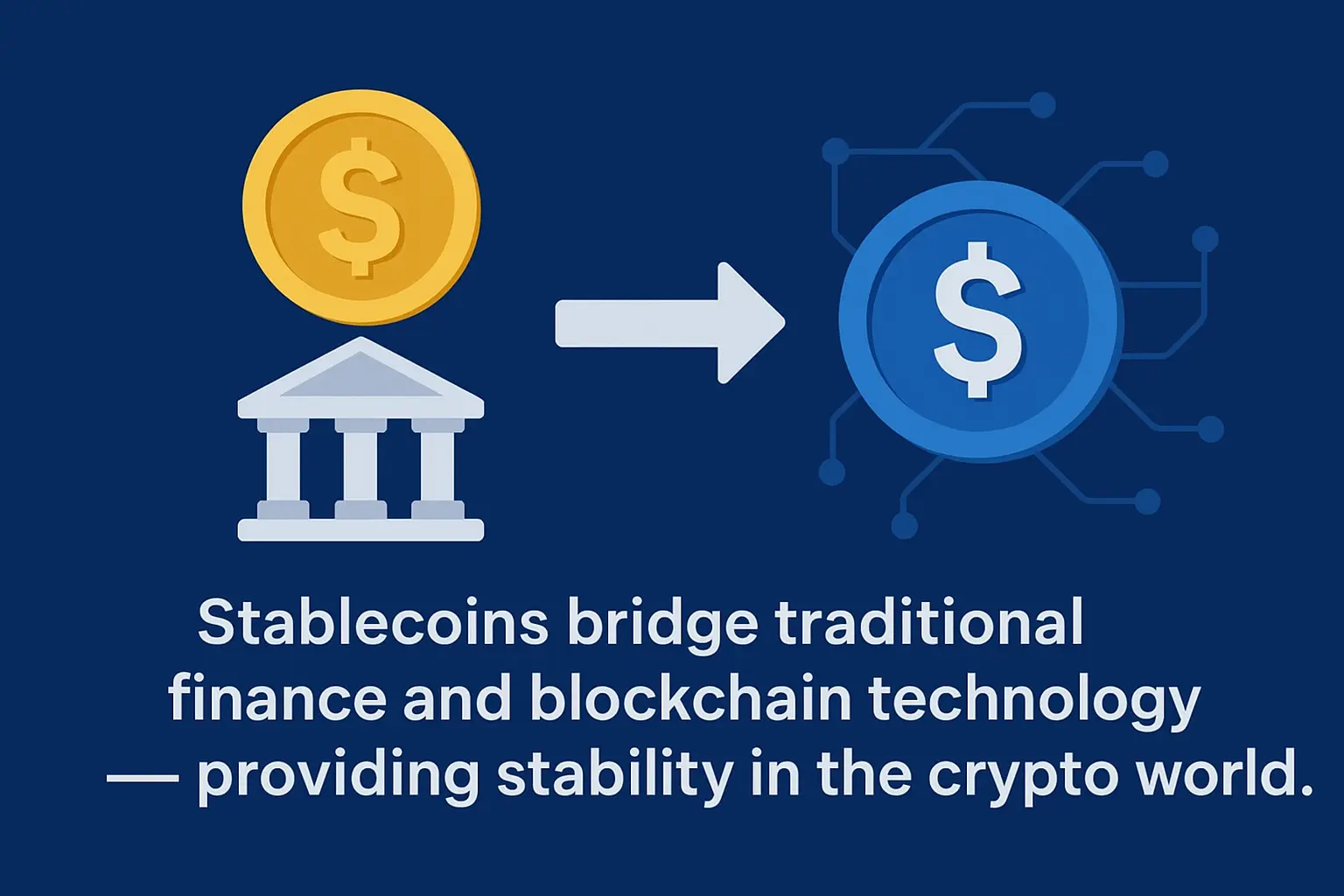
What Are Stablecoins?
Stablecoins are cryptocurrencies designed to maintain a stable value, typically pegged to a fiat currency such as the US Dollar (USD), the Euro (EUR), or even gold.
Bitcoin and Ethereum can swing in price, but stablecoins maintain a stable value close to 1 USD.
They combine the speed and innovation of blockchain with the stability of real-world assets, making them ideal for payments, trading, and decentralized finance (DeFi).
How Do Stablecoins Work?
Stablecoins rely on specific backing models to help maintain a stable price.
Here’s how it works:
- Fiat Reserves: Every stablecoin is backed 1:1 by fiat money stored in bank accounts.
- Crypto Collateral: Cryptocurrencies like ETH are used as collateral to guarantee the value of every coin.
- Algorithms: Smart contracts automatically adjust the supply to ensure the stablecoin remains close to its fixed value.
It ensures the coin’s price remains stable even during market volatility.
Types of Stablecoins
| Type | Backed By | Example | Description |
|---|---|---|---|
| Fiat-Backed Stablecoins | Real-world currency (USD, EUR) | USDT, USDC, BUSD | Each coin is backed by traditional currency held in reserve. |
| Crypto-Backed Stablecoins | Other cryptocurrencies | DAI (MakerDAO) | Collateralized by crypto and often over-collateralized to protect value. |
| Algorithmic Stablecoins | Smart contracts & code | FRAX, UST (defunct) | Adjust supply algorithmically without physical collateral. |
| Commodity-Backed Stablecoins | Assets like gold or silver | PAX Gold (PAXG) | Each token represents a portion of a physical asset. |
Why Stablecoins Matter in 2026
Stablecoins are transforming digital finance by making crypto practical and usable in everyday life.
Here’s why they’re essential:
- Bridge Between Fiat and Crypto – Seamlessly move funds between banks and blockchains.
- Reduced Volatility – Protects users from market swings.
- Powering DeFi – Used in lending, staking, and yield farming.
- Faster Global Payments – Send funds globally within seconds.
- Ideal for Traders – Offers a safe spot to park funds during market downturns.
Stablecoins play a vital role in the digital economy by increasing liquidity and making cryptocurrency markets more accessible.
Are Stablecoins Safe?
While stablecoins aim for price stability, not all are created equal.
Some risks include:
- Reserve Transparency: Not all issuers publicly verify their backing assets.
- Regulatory Risks: Governments worldwide are establishing new oversight measures to ensure greater stability and transparency in 2026.
- Algorithmic Collapse: Some algorithmic stablecoins, such as TerraUSD, have failed to maintain their peg.
To ensure safety and transparency, consider using stablecoins that are both regulated and audited, like USDC by Circle or PAXG by Paxos.
Beyond stability and regulation, participants in crypto markets actively use stablecoins to earn passive income.
Learn more: Top 8 Best Stablecoins for Earning Yield
Top 5 Stablecoins in 2026
| Rank | Name | Symbol | Type | Issuer |
|---|---|---|---|---|
| 1 | Tether | USDT | Fiat-Backed | Tether Ltd. |
| 2 | USD Coin | USDC | Fiat-Backed | Circle |
| 3 | DAI | DAI | Crypto-Backed | MakerDAO |
| 4 | TrueUSD | TUSD | Fiat-Backed | ArchBlock |
| 5 | PAX Gold | PAXG | Commodity-Backed | Paxos |
Frequently Asked Questions (FAQ)
What makes stablecoins different from Bitcoin or Ethereum?
Unlike BTC or ETH, stablecoins maintain a fixed value linked to assets such as the US dollar, making them more predictable for trading and payments.
Can I earn rewards from holding stablecoins?
Yes! Many exchanges and DeFi platforms offer staking or lending rewards on stablecoins, providing passive income without exposure to volatility.
Are stablecoins legal?
Most stablecoins are legal, but specific regulations vary by country. In 2025, global standards are taking shape to promote transparency and protect users.
What are the safest stablecoins to use?
USDC and PAXG are among the safest due to regular audits and government-compliant reserves.
Can I use stablecoins for payments or remittances?
Absolutely! Stablecoins enable fast, low-cost, and borderless transactions — ideal for freelancers, businesses, and international money transfers.
- Kaspa vs. Bitcoin: Can BlockDAG Outpace the Original Blockchain?
- The 5 Fastest Decentralized Cryptocurrencies in the World
- Top 10 Deflationary & Decentralized Coins to Make You Rich in 5–10 Years
- The 10 Most Promising Cryptocurrencies to Watch in 2026