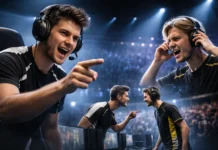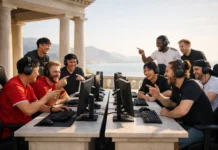


Trash talk isn’t only about insults.
Trash talk serves as a strategic tool, a social ritual, and a psychological weapon.
Gamers use it to motivate themselves, distract opponents, and energize teams.
From casual online matches to professional esports, trash talk has become an essential part of competitive play.
Trash talk isn’t just noise—it’s a global game-changer, shaping how players compete and win.
The world’s best trash talkers show that culture can make or break a verbal jab.
👉 The World’s Top 10 Trash Talkers in Gaming
What Is Trash Talk?
Trash talk refers to spoken or written remarks used to provoke, tease, or establish dominance over an opponent.
It can be playful or aggressive, depending on intent.
In gaming, it appears in:
- Team voice chat
- Streaming commentary
- Social media roasts
- Pre-game or in-match taunts
Why Trash Talk Matters in Competition
Words affect performance.
Research indicates that players can gain or lose focus depending on what their opponents say.
Trash talk can:
- Increase confidence
- Distract opponents
- Boost viewer engagement
It’s a psychological game as much as a digital one.
The Psychology Behind Trash Talk
Confidence and Self-Expression
Players who engage in trash talk often project confidence and a sense of control.
It can psychologically intimidate opponents even before gameplay begins.Tilt and Distraction
Skilled trash talk can cause opponents to make mistakes or lose focus, known as “tilt” in competitive terms.Team Cohesion
Mutual banter can strengthen team identity and build camaraderie.
Cultural Variations in Trash Talk
Trash talk style differs worldwide.
- Filipino gamers: witty, meme-driven, rapid-fire.
- American players: bold, confident, strategic.
- Brazilian players: loud, energetic, passionate.
- South Korean players: precise, tactical, skill-based.
Each culture brings a unique timing, tone, and sense of humor to competitive banter.
Trash Talk and Performance
| Effect | Positive Outcome | Negative Outcome |
|---|---|---|
| Confidence boost | Higher focus, motivation | Overconfidence |
| Opponent distraction | Increased opponent errors | Can escalate conflict |
| Team cohesion | Stronger communication | Potential tension |
| Entertainment | Viewer engagement | Risk of toxicity |
Trash Talk as a Strategy
Professional gamers often use words as deliberately as moves.
Timing, delivery, and context matter:
- Before a match: psychological intimidation.
- During gameplay: subtle taunts to force mistakes.
- Post-match banter: reputation building and fan engagement.
Caution: Aggressive trash talk can backfire and damage team morale.
Positive vs Negative Trash Talk
Positive: playful, creative, consensual, strategic.
Negative: personal attacks, discriminatory comments, harassment.
Healthy trash talk motivates and entertains. Toxic trash talk alienates players and viewers.
Frequently Asked Questions (FAQs)
What is the psychology of trash talk in gaming?
The study of words reveals their impact on confidence, focus, and team performance.
Can trash talk improve performance?
Yes, when used strategically and in a playful context.
Does culture influence trash talk?
Absolutely—The timing, humor, and style of trash talk vary across cultures.
How do professional gamers use trash talk?
To intimidate opponents, boost confidence, and entertain audiences.
Can trash talk backfire?
Yes — it can stress teammates or energize opponents.
Is trash talk always toxic?
No — Trash talk only turns toxic when it becomes personal or abusive.
How does trash talk impact esports viewers?
It increases engagement, entertainment, and loyalty to players or teams.
Are some games more prone to trash talk?
Games that are team-based, competitive, or popular on streaming platforms—such as Dota 2, CS:GO, and League of Legends—see the highest levels of trash talk.