
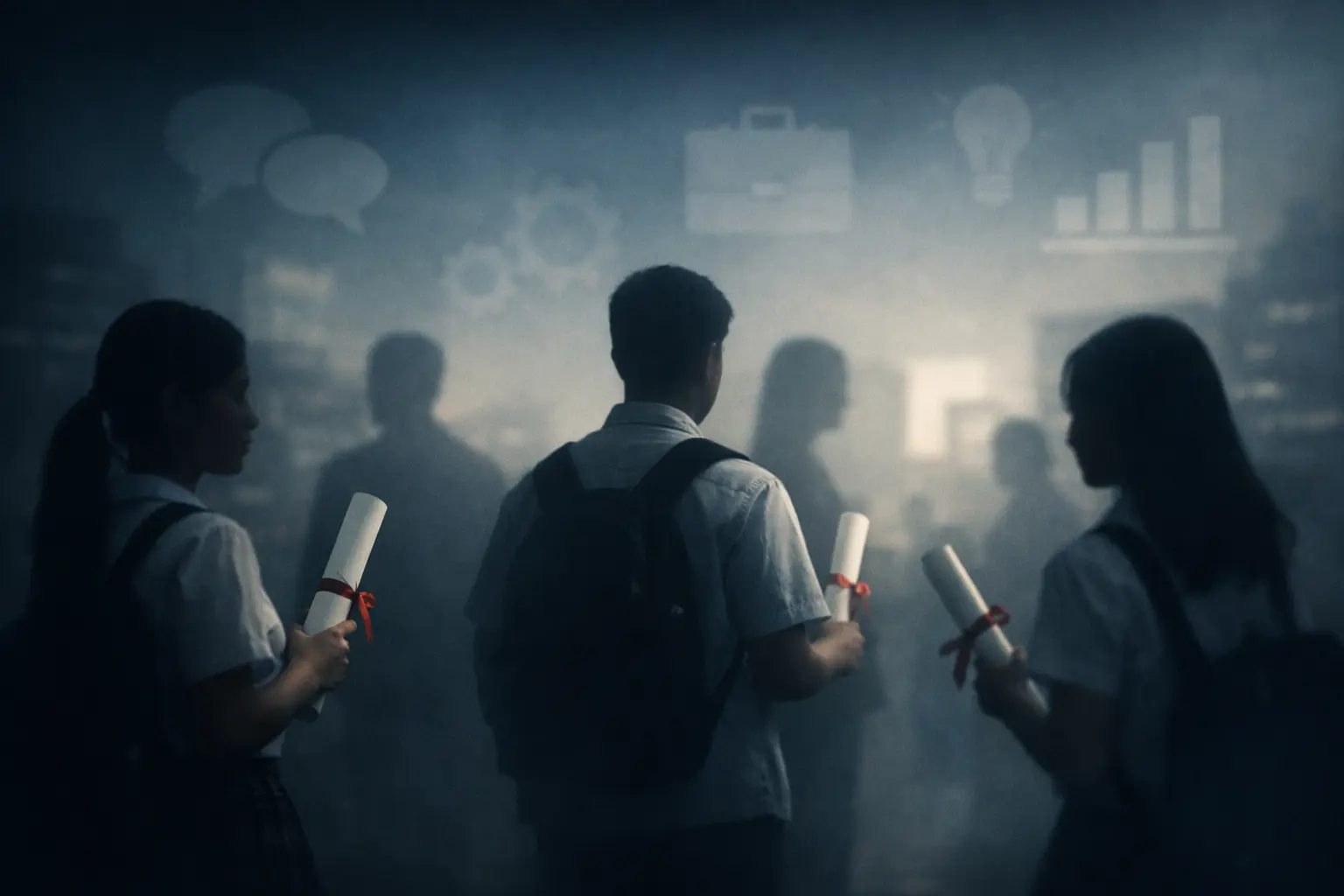
Every year, hundreds of thousands of students graduate across the Philippines with diplomas in hand. On paper, this suggests a functioning education system.
Yet a closer look reveals a silent skills crisis: students may pass exams and earn grades, but many lack the essential skills required for employment, decision-making, and real-world problem-solving.
This crisis poses a threat to individual livelihoods, workforce readiness, and national competitiveness.
What Is the Silent Skills Crisis?
The silent skills crisis is the mismatch between what students learn and what the real world demands, including:
- Critical thinking
- Communication
- Adaptability
- Problem-solving
- Financial literacy
It’s “silent” because graduation rates and exam scores appear high, hiding the true deficit in practical competence.
Data-Backed Evidence of the Crisis
1. Functional Literacy Gaps
- About 7 in 10 Filipinos aged 10 to 64 are considered functionally literate.
- ~93.1% can read/write at a basic level, but many cannot apply skills in real-world contexts. (Philippine Statistics Authority)
2. Early Learning Poverty
- ~90% of 10-year-olds cannot read a simple text at grade level. (UNICEF Philippines)
- Roughly 83% of students struggle to achieve even basic math skills.
3. Declining Proficiency Through Grades
- Proficiency falls from 30.5% in Grade 3 to 0.47% by Grade 12. (EDCOM II Report)
4. Skills Mismatch in Higher Education
- Graduate unemployment rose 2.6% from 2024 to 2025, despite low overall unemployment.
- Only ~3,000 out of 25,000 job seekers secured relevant employment in recent job fairs.
5. Fragmented Skills Standards
- TESDA, CHED, and PSA use differing frameworks for “middle skills,” leaving graduates underprepared for key industries. (PIDS)
6. Quality and Resources Challenges
- Learning poverty is linked to poor teaching quality; only a small fraction of instruction reflects high-quality pedagogy.
- Public education spending (~3.9% of GDP) is below OECD standards, affecting teacher capacity and classroom resources.
Why the Crisis Matters
Without intervention:
- Skills mismatch reduces economic competitiveness
- High graduation numbers mask real capability deficits.
- Students enter the workforce unprepared, limiting productivity and career growth
The Core Problem
The system prioritizes measurable outputs over meaningful learning:
| Current Focus | Needed Shift |
|---|---|
| Memorization | Application |
| Compliance | Critical thinking |
| Grades | Competence |
| Theory | Real-world practice |
Solutions for Bridging the Gap
- Skill-Based Assessment – Projects, simulations, and applied learning instead of only exams
- Life Skills Integration – Communication, financial literacy, problem-solving
- School-to-Work Programs – Internships, industry partnerships, applied experience
- Teacher Empowerment – Training in skill-focused pedagogy, reduced administrative load
Frequently Asked Questions (FAQs)
What is the silent skills crisis?
It is the gap between what students learn in school and the practical skills they need in real life, such as critical thinking, problem-solving, communication, and adaptability.
Why are Filipino students unprepared for the real world?
The education system emphasizes memorization, exams, and grades over the practical application of knowledge.
Which skills are most commonly lacking among students?
Students often lack critical thinking, problem-solving, effective communication, adaptability, and basic financial literacy.
How does this skills gap affect employability?
Difficulty handling workplace responsibilities can leave graduates underemployed, in unsuitable positions, or unready to meet the demands of professional life.
Is this problem limited to public schools?
No. While resource constraints in public schools worsen the problem, both public and private schools are affected due to an emphasis on exams over practical skill development.
Are there statistics that demonstrate the skills gap in the Philippines?
Yes. Approximately 90% of 10-year-olds cannot read at grade level, functional literacy among Filipinos stands at 70.8%, and proficiency rates drop sharply from 30.5% in Grade 3 to just 0.47% by Grade 12.
Why is this called a “silent” crisis?
Because graduation rates and exam scores appear high, the lack of real-world skills remains largely invisible to policymakers and the public.
What solutions can address the silent skills crisis?
Vital solutions include implementing skill-based assessments, integrating life skills into curricula, strengthening school-to-work programs, and empowering teachers to prioritize applied, real-world learning.
- Why High Grades Don’t Guarantee Success in Life
- Barrio Luz National High School: Why Parents Are Concerned
- The Missing Lessons in Modern Education Systems Worldwide